

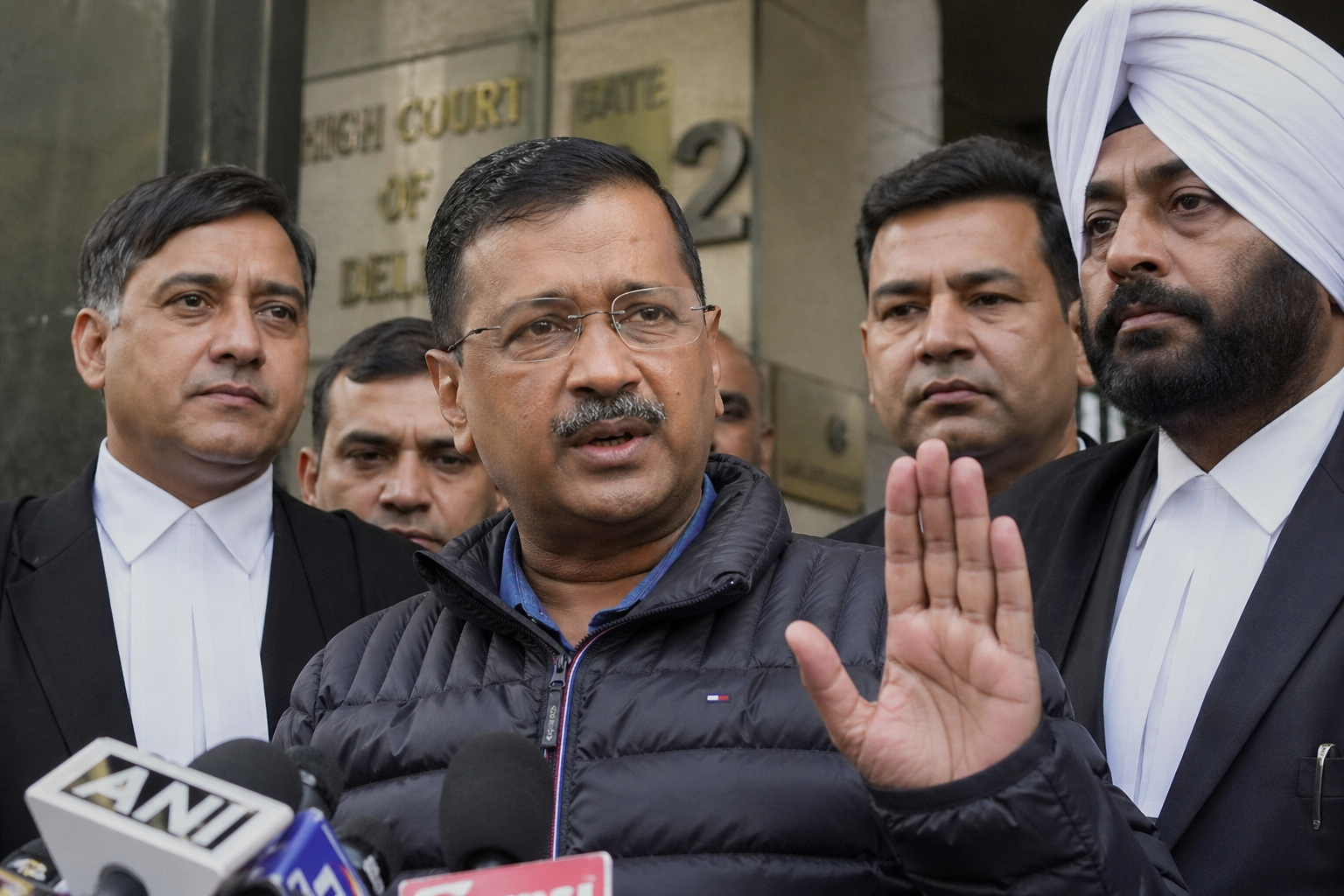
The Kejriwal satyagraha Justice Sharma issue has created a major stir in India’s political and legal circles. Arvind Kejriwal openly refused to appear before Justice Swarana Kanta Sharma in the excise policy case. He declared that he had lost faith in the court’s impartiality after his recusal request was rejected. Instead of continuing legal arguments, he chose the path of satyagraha inspired by Mahatma Gandhi. He said he would neither appear personally nor send his lawyers to represent him. This decision marks a rare and bold move in an ongoing legal battle. At the same time, he kept the option open to approach the Supreme Court. The controversy has now raised serious questions about judicial neutrality and public trust.
Why Kejriwal Took the Satyagraha Stand
Kejriwal took this step after the court rejected his request to transfer the case from Justice Sharma’s bench. He clearly stated that the rejection did not address his concerns about fairness. He felt that the court treated his plea as a personal allegation rather than a legal argument. Because of this, he started believing that he would not receive a neutral hearing. He openly expressed that his confidence in the process had completely broken. This loss of trust pushed him to withdraw from the proceedings entirely.
Allegations of Bias and Conflict of Interest
A major part of the Kejriwal satyagraha Justice Sharma controversy involves allegations of bias. Kejriwal pointed out Justice Sharma’s association with
Akhil Bharatiya Adhivakta Parishad. He argued that this group belongs to the ideological ecosystem of the ruling side, which directly opposes his party. Because of this, he believes that a perception of bias naturally arises. He insisted that even the appearance of bias can weaken public confidence in the judiciary. This argument forms the base of his protest.
He also raised concerns about a possible conflict of interest involving the judge’s family. He claimed that her children work as lawyers on government panels. The opposing side includes Tushar Mehta, who assigns cases to such lawyers. Kejriwal argued that this professional link could create indirect influence. He supported his claims with data about case allocations and financial implications. According to him, these factors make the situation serious and difficult to ignore.
Also Read: Doctors Stir Today as BMC Fails to Implement Revised DA
Legal Impact and What Happens Next
The Kejriwal satyagraha Justice Sharma move carries significant legal risks. By refusing to attend court, he may lose the chance to present his arguments. The court can continue proceedings even without his participation. This situation could lead to decisions that go against him. Legal experts often warn that boycotting court rarely helps a litigant. Still, Kejriwal has accepted these risks openly.
Looking ahead, he may challenge the recusal decision in the Supreme Court. He has clearly stated that he will explore all legal remedies available. The case will likely continue to attract national attention due to its political and constitutional implications. It may also influence future discussions on judicial recusal and transparency. Ultimately, this controversy highlights the delicate balance between legal procedure and public perception.
Also Read: Raghav Chadha May Join BJP, AAP MPs Likely to Merge
[…] Also Read: Arvind Kejriwal Satyagraha: Justice Sharma Explains Court Boycott […]