

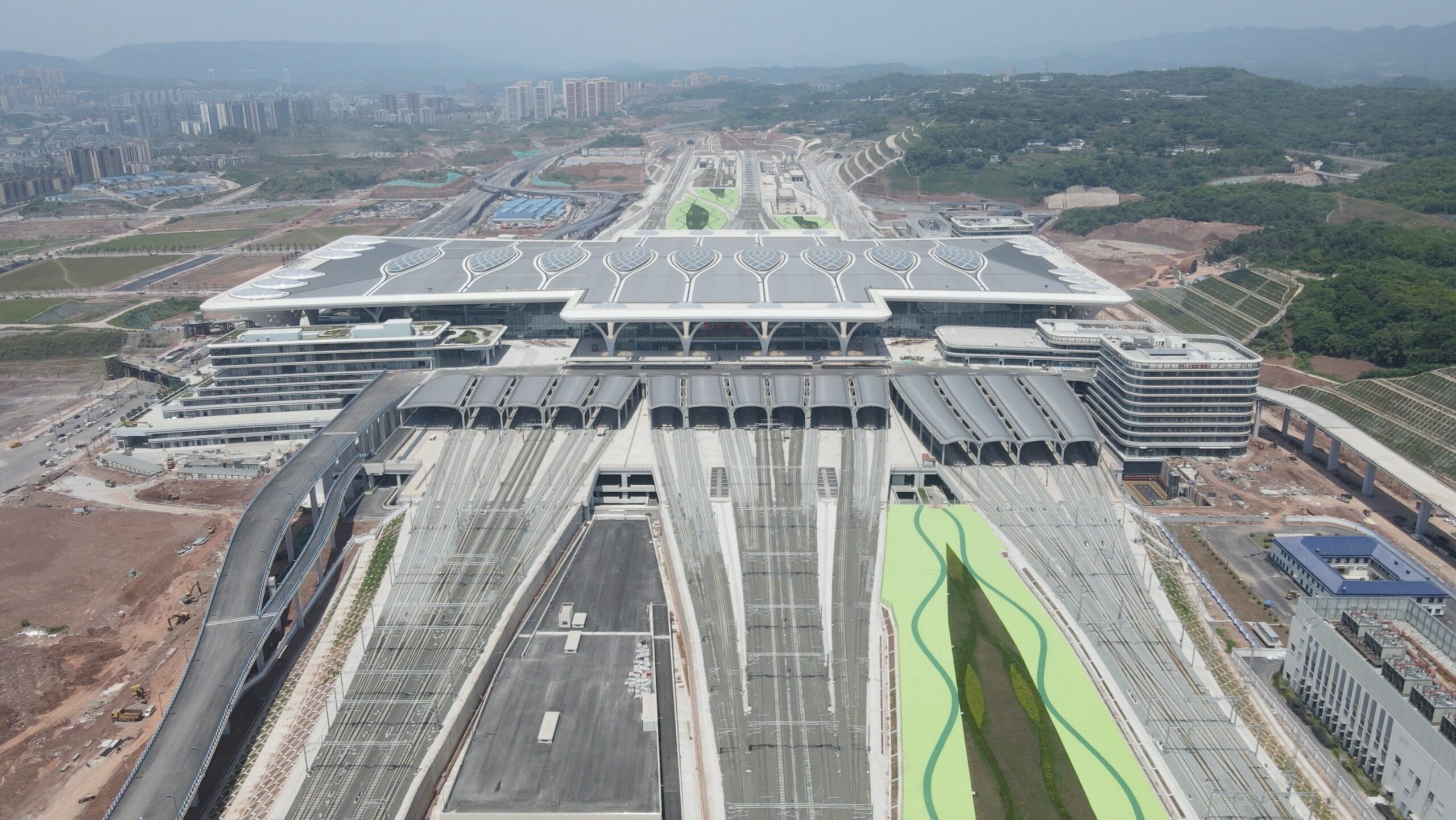
China has once again demonstrated its ability to deliver massive infrastructure projects at extraordinary speed with the completion of Chongqing East Railway Station. The railway hub opened after just 38 months of construction and now stands as the world’s largest railway station by floor area. Engineers used advanced robotics, artificial intelligence, and automated construction systems throughout the project. The station covers more than 1.22 million square metres and serves as a key transport gateway for Southwest China. Officials designed the facility to handle thousands of passengers every hour while connecting several major cities through high-speed rail. The achievement highlights China’s growing expertise in smart construction technologies. Industry experts believe the project could influence future infrastructure development across the world.
Robots Accelerated Every Stage of Construction
Construction teams deployed a wide range of intelligent machines to complete critical tasks faster and more accurately. Laser-guided screed robots levelled concrete surfaces with millimetre precision, while automated welding systems worked continuously to strengthen structural components. These technologies allowed workers to maintain high quality standards despite difficult terrain and extreme summer temperatures. Project managers coordinated robotic systems through digital monitoring platforms that tracked progress in real time. The approach significantly reduced delays and improved overall efficiency on the construction site.
Engineers also used specialised robots to install large glass panels and inspect completed sections of the station. The machines carried heavy materials safely and completed repetitive tasks much faster than traditional methods. Continuous monitoring helped teams identify potential issues before they became major problems. As a result, workers reduced safety risks and maintained a steady construction schedule. Officials reported substantial savings in labour costs while achieving higher productivity. The successful use of automation demonstrated how technology can transform large-scale infrastructure projects.
Also Read: Thailand scraps 60-day free visa policy, Indians affected
Strategic Investments Transformed Chongqing Into an Economic Hub
Chongqing’s rise as a major industrial centre began decades ago when China invested heavily in inland development. Government planners expanded manufacturing facilities, transportation networks, and energy infrastructure across the region. These investments created strong economic foundations that attracted new industries and skilled workers. Today, Chongqing supports major automobile, electronics, and equipment manufacturing sectors. The city’s location also allows businesses to connect efficiently with domestic and international markets. Strong infrastructure continues to play a central role in its economic growth.
The new railway station strengthens Chongqing’s position as one of Western China’s most important logistics centres. High-speed rail links now connect the city more effectively with major economic regions across the country. Businesses can move goods faster, while travellers gain easier access to commercial opportunities. Improved connectivity supports tourism, trade, and regional cooperation. Local authorities expect the station to generate long-term economic benefits for surrounding communities. The project reinforces Chongqing’s role in China’s broader development strategy.
Also Read: Nvidia Reports Record Revenue as AI Spending Boosts Growth
New Transport Links Promise Faster Regional Connectivity
The station integrates high-speed rail services with metro systems, buses, taxis, and long-distance coach networks. Passengers can transfer between different transport modes without leaving the complex, making travel more convenient. Modern navigation systems guide travellers through the facility and reduce congestion during peak periods. Authorities designed the station to accommodate growing passenger demand over the coming decades. The integrated transport model reflects China’s focus on creating efficient urban mobility solutions. These improvements support both daily commuters and long-distance travellers.
Enhanced rail connections will significantly reduce travel times between Chongqing and several major cities. Travellers can reach Chengdu, Wuhan, Xi’an, and other destinations much more quickly through the expanding high-speed rail network. Faster journeys encourage business activity and strengthen economic ties between regions. The new infrastructure also helps distribute development opportunities beyond coastal areas. Transportation experts view the station as an important milestone in China’s national rail expansion plans. Its success could inspire similar projects in other rapidly growing cities.
[…] Also Read: Chongqing East Railway Station: Built by Robots in 38 Months […]