

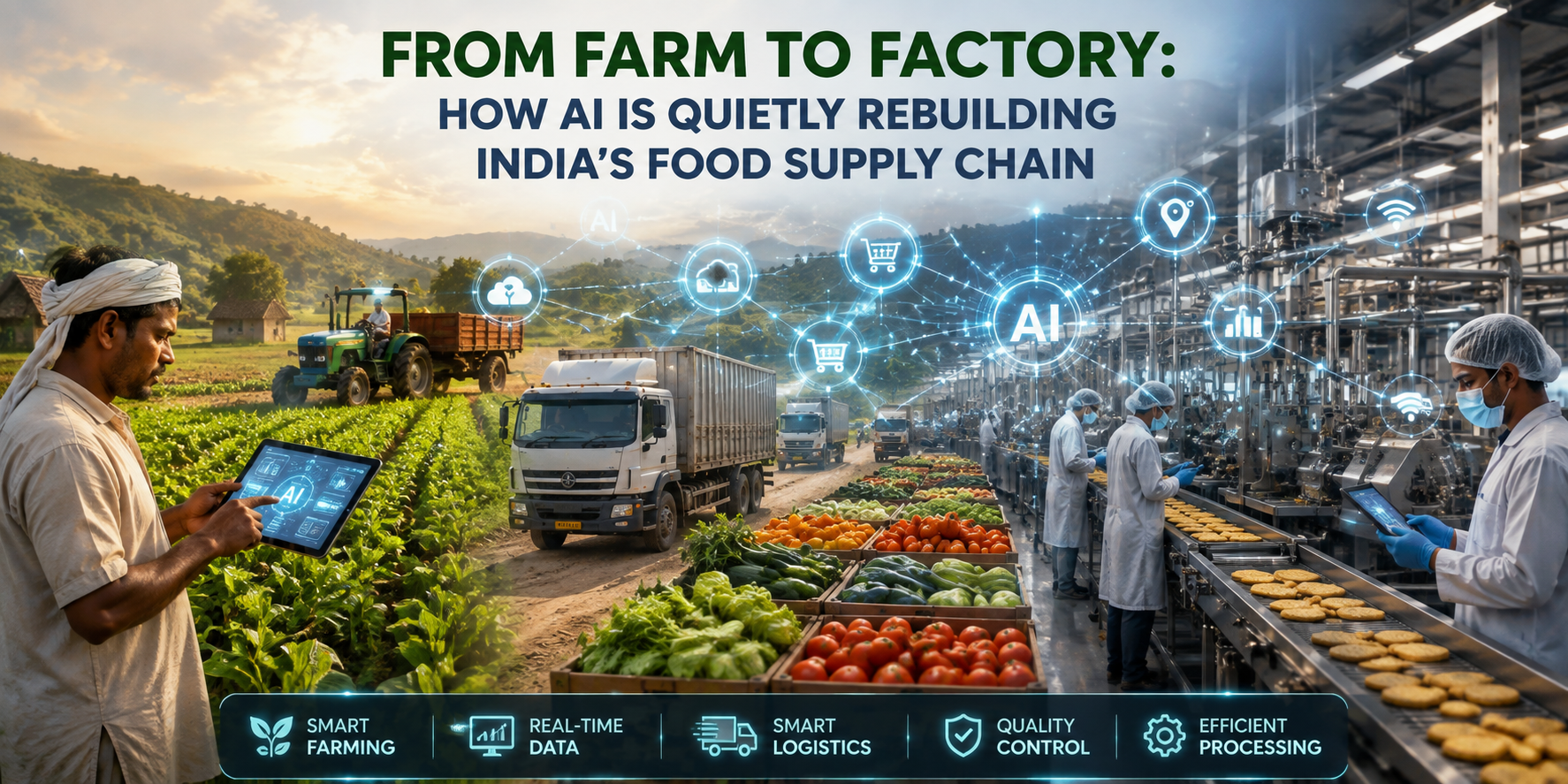
Artificial intelligence is changing the way India’s agricultural supply chain operates, from farms to processing units. FarMart is using AI to tackle common problems such as delayed payments, manual paperwork and inefficient logistics. The technology helps connect farmers, suppliers and large buyers while making transactions faster. It also helps reduce delays and minimize losses during the movement of food products. The company currently operates across 11 states and more than 40 food categories.
AI Speeds Up Payments, Verification and Farm-to-Market Operations
FarMart uses AI at different stages of its operations to improve efficiency. Its Voice AI system can contact more than 1,000 suppliers within minutes and communicate with them in Hindi. The system collects information about crop availability, prices and purchase requirements without requiring users to rely on complicated digital interfaces. The company also uses AI-powered workflows to handle several tasks after a transaction. These systems help teams verify documents and identify potential issues more quickly.
The platform processes documents such as loading slips, invoices, transport bills and quality reports through automated checks. It also verifies truck registration details using the government’s Vahan database and flags suspicious information for further review. FarMart uses GST-linked systems to generate invoices and e-way bills within seconds. According to the company, its network includes around 3.2 lakh registered suppliers and more than 600 buyers. Its buyer network includes major companies such as Britannia, Godrej, Parle, Patanjali, Cargill and Roquette.
FarMart Uses Voice AI and Automation to Connect Farmers With Buyers
AI has also helped FarMart reduce the time required for several routine operations. The company says its supplier KYC process has dropped from nearly an hour to about five minutes. Bid matching, which earlier took around two hours, can now take about 15 minutes. Invoice and e-way bill generation has also fallen from roughly two hours to a few seconds. Payment settlement now takes around 2.5 hours for more than half of the transactions, while some reconciliation tasks can be completed almost instantly.
FarMart says its business has also recorded strong financial growth alongside its technology expansion. The Gurugram-based company reported a gross order value of ₹2,879 crore in FY26, marking a 50% rise from the previous financial year. It also became EBITDA profitable in the fourth quarter of FY26 and maintained profitability into FY27. The company believes its biggest advantage comes from the large amount of operational data generated through years of transactions. This data covers pricing, quality, logistics, payments and fraud patterns, helping the company improve its AI systems as its network grows.
[…] Also Read : From Farms to Factories: How AI Is Transforming India’s Food Supply Chain […]