

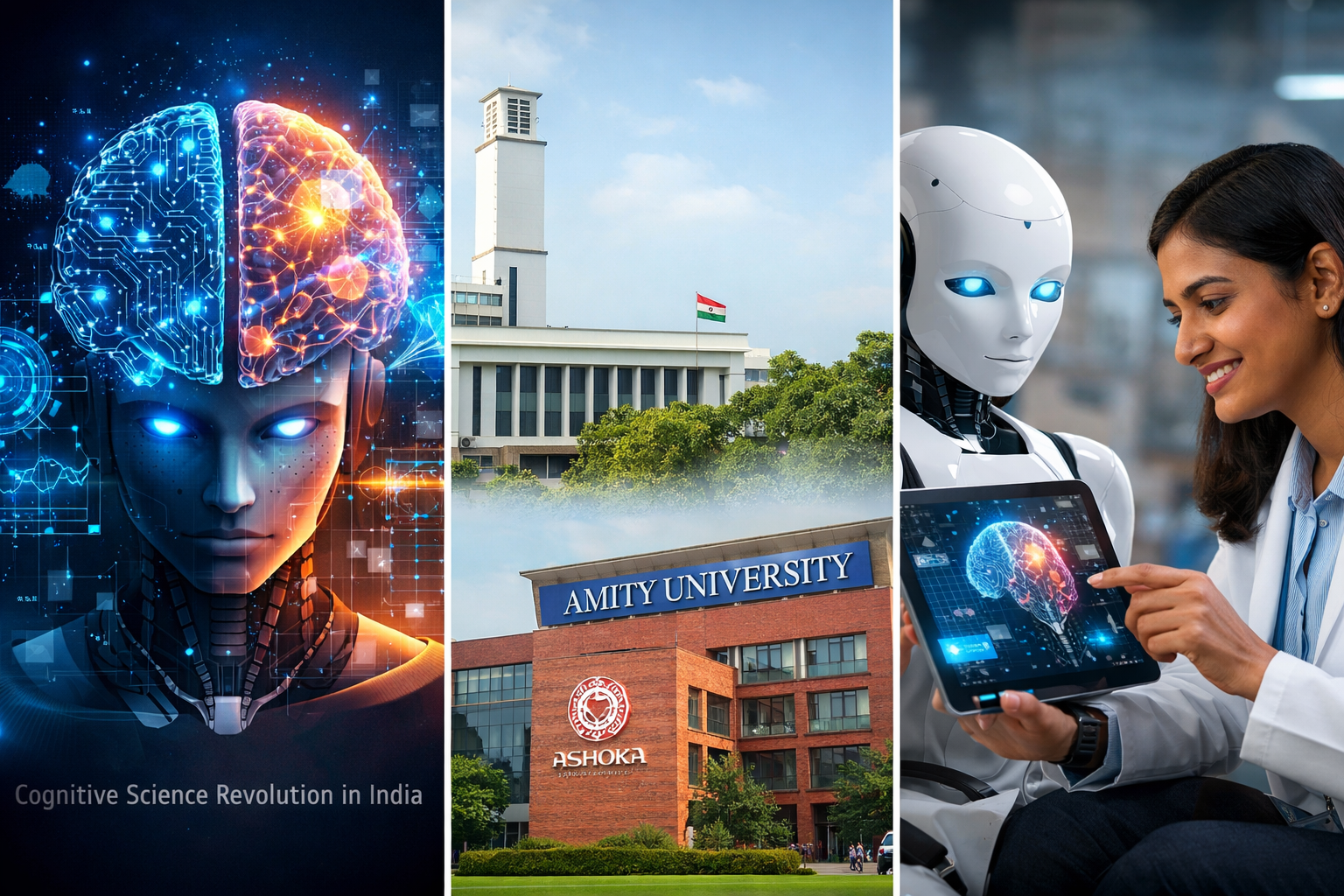
The cognitive science revolution in India is reshaping how the country builds artificial intelligence and advanced technologies. Leading institutions such as Indian Institutes of Technology, Amity University, and Ashoka University are expanding programs that combine psychology, neuroscience, and computer science. Experts now recognize that AI systems must align with human thinking to deliver meaningful results. Universities are actively investing in interdisciplinary research to support this shift. The cognitive science revolution in India emphasizes human-centered innovation rather than purely technical development. This movement is strengthening India’s position in global AI research. Institutions are preparing students to design smarter and more adaptive systems. The trend reflects a major transformation in education and technology.
Why Cognitive Science Revolution in India Matters for AI
The cognitive science revolution in India is changing how researchers design intelligent systems. Scientists now focus on understanding human reasoning instead of relying only on data processing. They build AI models that simulate multiple perspectives to improve decision-making. This approach helps machines solve complex problems more effectively. Researchers actively use psychology and neuroscience insights to refine algorithms.
Experts also highlight the importance of human-AI collaboration in real-world applications. Professionals achieve better results when they understand how AI systems function. Cognitive alignment improves productivity across industries like healthcare and education. Universities train students to integrate human behavior with machine intelligence. This shift ensures that AI systems remain practical and efficient.
Also Read: Rain alert from IMD as Delhi airport sees IndiGo flight disruptions
Growth of Cognitive Science Revolution in India Across Universities
The cognitive science revolution in India is expanding rapidly across academic institutions. IIT Gandhinagar and IIT Delhi offer specialized programs that combine multiple disciplines. These programs attract students who want to explore both technology and human sciences. Institutions encourage collaboration between departments to drive innovation. This approach strengthens research and academic output.
Private universities are also contributing to this transformation. Amity University has launched a cognitive science center that integrates various fields. Ashoka University has expanded its psychology department to include cognitive sciences. These initiatives promote interdisciplinary learning and research. They help build a strong ecosystem for AI development in India.
Also Read: Security Tightened, Internet Cut in 5 Manipur Districts After Two Children Die
Future of Cognitive Science Revolution in India
The cognitive science revolution in India presents major opportunities for growth and innovation. India has a large pool of engineers, but it needs more experts in cognitive science. Universities must train students in interdisciplinary skills to meet future demands. They must combine technical knowledge with an understanding of human behavior. This strategy will strengthen AI development across sectors.
Government policies are also supporting this transformation. The National Education Policy 2020 encourages multidisciplinary education and research. Institutions are creating flexible programs that integrate science and humanities. Experts believe that India can become a global leader in AI through this approach. The cognitive science revolution in India will define the next phase of technological advancement.