

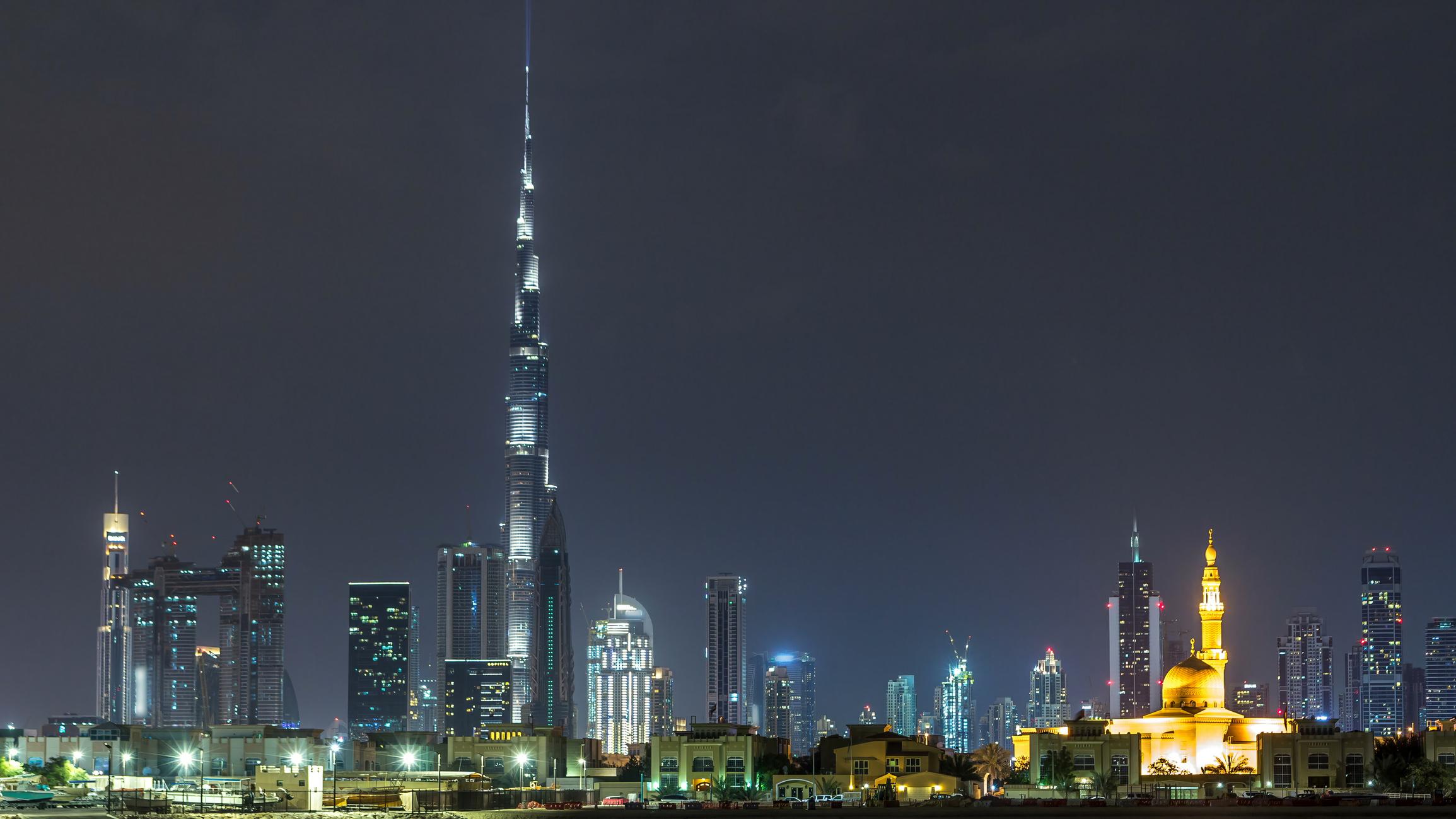
Dubai, long known for its glittering skyline, tax-free salaries, and strong business environment, has built a reputation as one of the safest and most stable cities in the Middle East. For decades, the United Arab Emirates’ financial hub appeared insulated from regional conflicts.
However, that perception changed dramatically last Saturday. Iranian drone and missile strikes reached Dubai following escalating tensions in the Middle East after US-Israel joint strikes reportedly killed Iran’s Supreme Leader Ayatollah Ali Khamenei.
For the first time in its modern history, Dubai faced direct military threats. The attacks targeted several critical areas, including Dubai International Airport, Palm Jumeirah, Burj Al Arab, and Jebel Ali Port. Images of damage to some of the city’s most iconic landmarks shocked residents and observers around the world.
Also Read: NIA says GoPro linked to Pahalgam attack was activated in China
How Dubai Built Its Global Safe Haven Reputation
Dubai’s transformation from a modest fishing and pearling port into a global financial powerhouse took decades of strategic planning and investment.
Key milestones helped build what many call “Brand Dubai.”
- 1985: Launch of Emirates Airline, which helped connect Dubai to global markets.
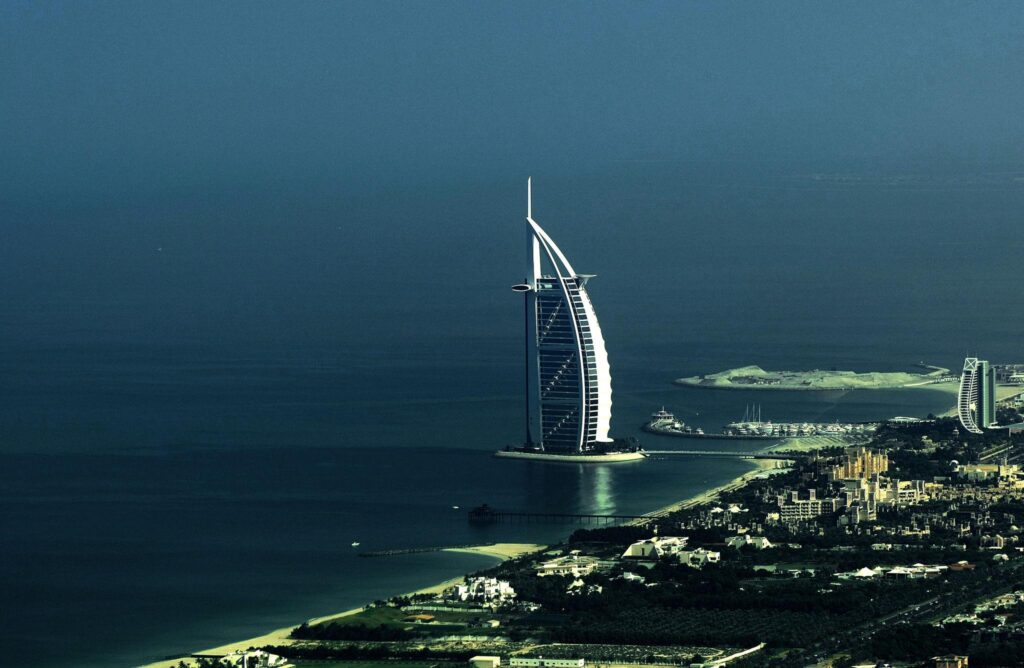
- 1999: Opening of the iconic Burj Al Arab luxury hotel.
- Early 2000s: Introduction of property laws allowing foreign ownership, which triggered a real estate boom.
Today, oil contributes less than 2% of Dubai’s GDP. Instead, the economy relies heavily on:
- International trade
- Tourism
- Luxury real estate
- Financial services
Dubai’s financial regulations were designed to resemble those of global financial hubs like London and New York, strengthening investor confidence.
Meanwhile, neighbouring Abu Dhabi, which holds over 90% of the UAE’s oil reserves, remains more dependent on hydrocarbons.
Regional Instability Helped Dubai Grow
Interestingly, Dubai’s success was partly driven by instability elsewhere in the region.
For example:
- Lebanon’s Beirut once served as the Middle East’s financial capital before civil war in the 1970s weakened its position.
- Bahrain briefly filled the financial gap before Dubai surpassed it.
Over time, investors and wealthy individuals moved their assets to Dubai, attracted by its stability.
Several global crises accelerated this trend:
- Syrians relocating during the Syrian civil war
- Wealthy families moving after the Arab Spring
- Russian investors relocating during the Ukraine conflict
As a result, the UAE’s population expanded dramatically—from about 1 million in 1980 to nearly 11 million in 2024.
According to Henley & Partners, the UAE was projected to attract 9,800 millionaire migrants in 2024, the highest globally.
Dubai’s booming real estate market also drove developer Emaar Properties to reach a record valuation of 149 billion dirhams ($40.6 billion) on February 25.
Another major milestone was the creation of the Dubai International Financial Centre (DIFC) in 2004. By the end of 2025, DIFC had become a major global finance hub hosting:
- More than 290 banks
- 102 hedge funds
- 500 wealth management firms
- 1,289 family offices and related entities
The Saturday That Shook Dubai
Despite its strong reputation for security, Dubai experienced unprecedented tension after the Iranian strikes.
Authorities quickly attempted to reassure residents and investors. Senior officials even visited Dubai Mall, one of the world’s largest shopping centres, to demonstrate that the city remained safe.
Nevertheless, fear spread among residents.
According to Nabil Milali, a multi-asset portfolio manager at Edmond de Rothschild Asset Management, the situation created anxiety across the financial sector.
“People are afraid of what’s happening. It’s the first time they have to hide in underground shelters,” Milali said.
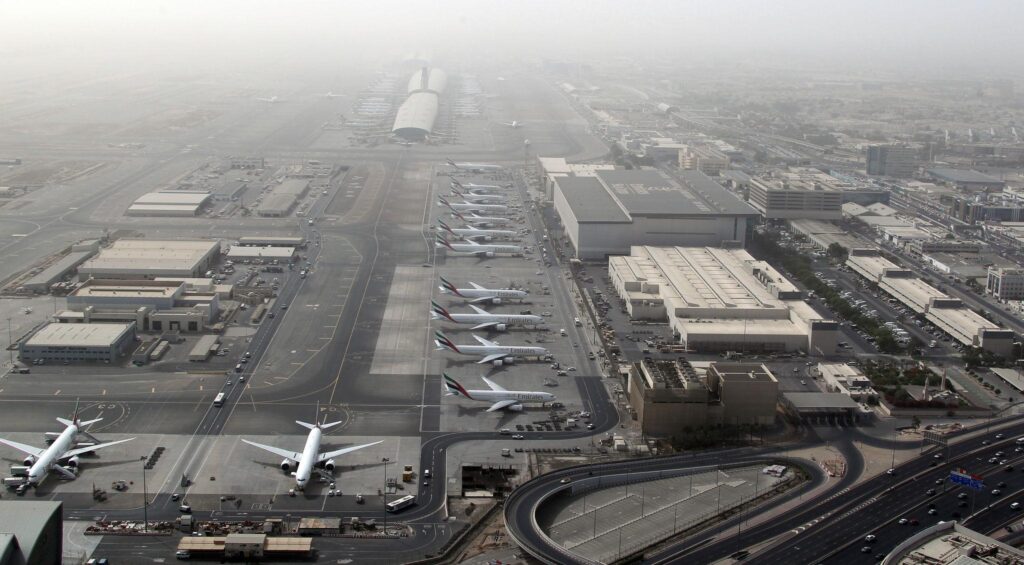
Dubai International Airport—one of the busiest airports in the world—was forced to shut down for several days following the attacks.
Damage to Key Landmarks
The strikes caused visible damage to several strategic and symbolic locations across the city.
According to the UAE Ministry of Defence:
- Dubai International Airport was struck during the attack.
- A berth at Jebel Ali Port caught fire.
- The luxury hotel Burj Al Arab was damaged by interceptor debris.
The incident resulted in three deaths and 58 injuries.
Strait of Hormuz Crisis Raises Global Concerns
The regional conflict also triggered a crisis in the Strait of Hormuz, one of the world’s most important energy shipping routes.
The narrow waterway lies close to the UAE and carries around 20% of global seaborne crude oil shipments.
Following the escalation, Iran declared the Strait of Hormuz “closed” and warned that ships attempting to pass through could be attacked or set on fire.
As a result:
- Commercial shipping traffic through the strait has sharply declined.
- Oil tankers are avoiding the route due to security risks.
- Global energy markets are watching the situation closely.
Dubai’s Safe Haven Image Faces Its Biggest Test
For more than four decades, Dubai marketed itself as a place where businesses could operate safely despite turbulence across the Middle East.
However, the recent attacks have challenged that perception.
Although authorities are working to restore confidence and maintain stability, the incident marks a historic moment for a city that built its identity on security, global connectivity, and economic resilience.
[…] Also Read: Dubai Safe Haven Status Shaken After Iranian Missile and Drone Attacks […]