

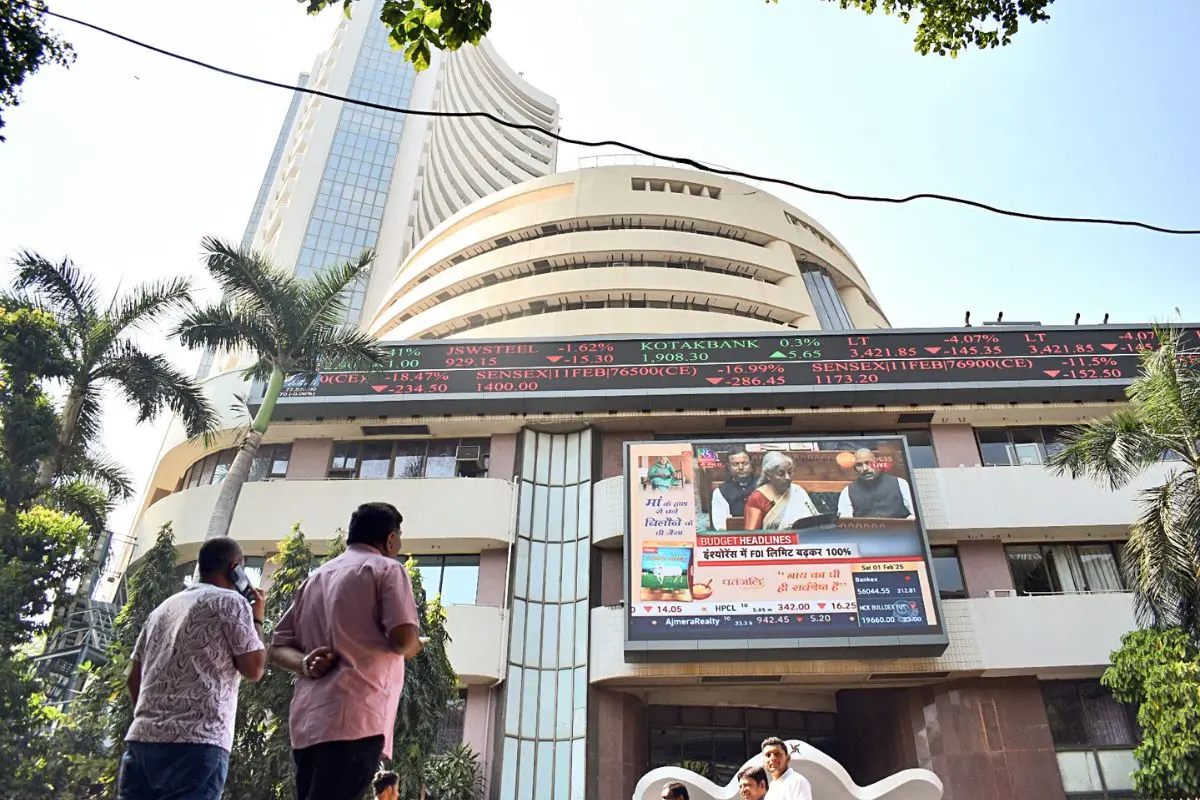
After two record-breaking years, India’s IPO market is now losing momentum as the Iran war rattles the stock market and shakes investor confidence. Rising geopolitical tensions have increased volatility, reduced risk appetite, and clouded corporate valuations, pushing Dalal Street toward what could become a prolonged issuance slowdown.
According to Bloomberg data, Indian companies have raised $1.5 billion through primary offerings this quarter, compared with $2.3 billion during the same period last year. The sharp decline signals that one of the world’s most vibrant IPO markets is cooling rapidly.
Mounting macroeconomic concerns have added to the pressure. Fears of an economic slowdown, persistent foreign capital outflows, and a weakening rupee have intensified market stress. The benchmark NSE Nifty 50 fell as much as 2.3% on Wednesday, extending its year-to-date losses to nearly 7%. Meanwhile, the rupee weakened past 92 per dollar for the first time.
The challenging environment has forced several companies to downsize their IPOs. Post-listing performance has also disappointed investors. Six of the nine mainboard IPOs launched this year are currently trading below their issue prices.
Also Read: Dubai Safe Haven Status Shaken After Iranian Missile and Drone Attacks
Clean Max Enviro Solutions Ltd., which debuted on Monday, is already trading about 20% below its IPO price. Despite the broader gloom, deal activity has not completely stalled.
A few companies are moving ahead cautiously:
- Sedemac Mechatronics Ltd. opened a ₹1,352 crore IPO on Wednesday.
- NHAI InvIT plans to launch a ₹6,000 crore offering on March 11, 2026.
- Bagmane Prime Office REIT is preparing a ₹4,000 crore IPO this month.
- Rajputana Stainless Ltd. is set to launch a smaller issue on March 9.
Meanwhile, PhonePe is targeting a lower valuation of $9–10.5 billion for its IPO later this year, although those plans could change if market volatility persists.
Foreign institutional investors (FIIs) have shown selective interest. They have invested nearly ₹7,000 crore in IPOs this year, while simultaneously offloading around ₹21,200 crore worth of shares in the secondary market.
Historically, markets tend to price in geopolitical risks quickly. If volatility eases and macroeconomic clarity improves, institutional confidence could return, allowing dealmakers to revive IPO activity. For now, however, the Iran war’s impact continues to weigh heavily on India’s stock market and primary issuance pipeline.
Also Read: Asia stocks fall as oil rises for a third day on Iran war concerns