

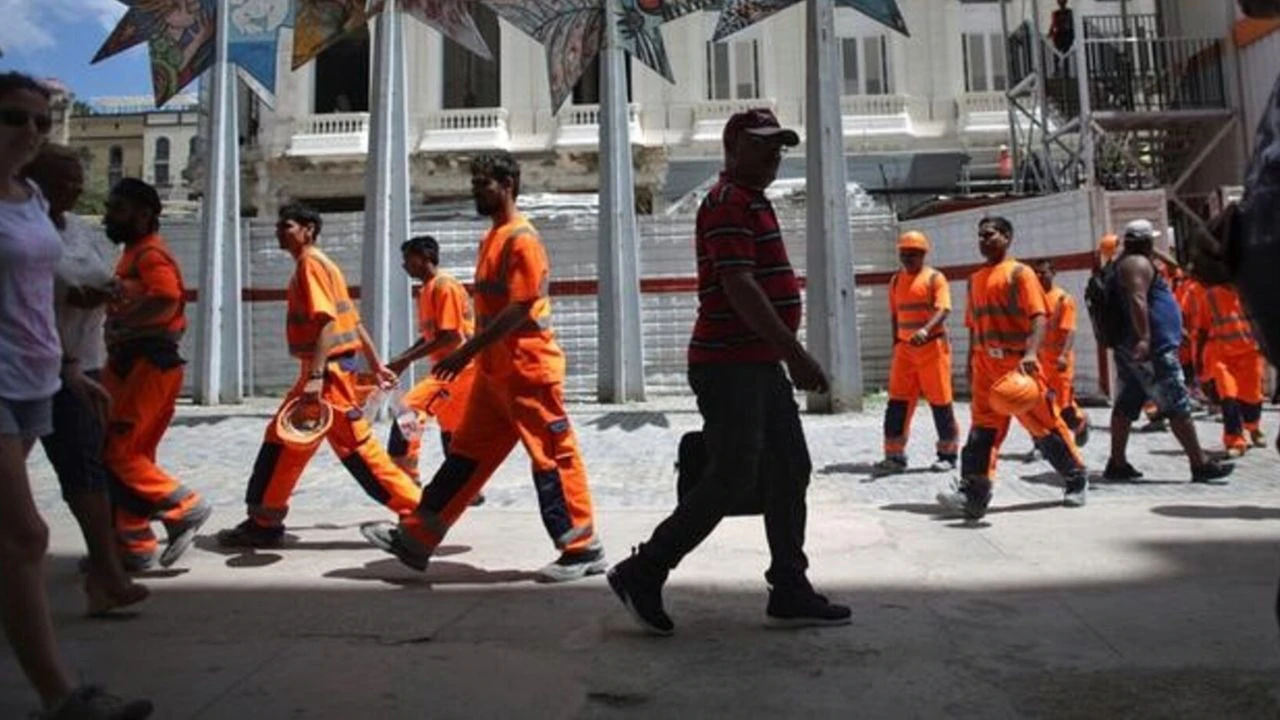
In Moscow, a group of tired Indian men arrived at a busy airport one evening. They carried sports bags and queued quietly at passport control. After flying over 2,700 miles via Uzbekistan, they sought employment opportunities. Ajit said he signed a one-year contract in the rubbish disposal sector. He added that the company offered good pay and stable conditions.
Meanwhile, Russian authorities reported an immediate shortage of 2.3 million workers. The Ukraine war intensified pressure on industries and reduced available manpower. Traditionally, Central Asian migrants filled many low-skilled positions across Russia. However, their numbers declined due to currency weakness and stricter migration rules. As a result, Moscow actively turned to India as a new labour source.
Also Read: Tarique Rahman Wins Bangladesh Poll, Set to Be PM
Indian Workers Become Key To Russia’s Labour Strategy
In 2021, officials approved around 5,000 work permits for Indian nationals. By contrast, last year authorities granted nearly 72,000 permits to Indians. Consequently, Indians accounted for almost one-third of the migrant worker quota. Alexei Filipenkov said Indian expatriates currently remain the most popular employees. He explained that fewer Central Asians arrived despite visa-free access.
Furthermore, Moscow strengthened ties with New Delhi to secure workforce supplies. President Vladimir Putin and Prime Minister Narendra Modi signed a mobility agreement. Denis Manturov stated that Russia could accept unlimited numbers of Indian workers. He noted that manufacturing required 800,000 employees immediately. Additionally, service and construction sectors needed another 1.5 million workers.
Across Russia, companies hired Indians for factories, farms, and textile units. For example, Brera Intex recruited South Asian workers to sew curtains. Gaurav said he moved after hearing about better wages. Similarly, Sahil worked at Sergiyevsky farm processing vegetables for steady income. Although US pressure over oil purchases persists, Moscow continues welcoming Indian workers.
Also Read: Sussan Ley at the Crossroads: Power, Pressure and Perception