

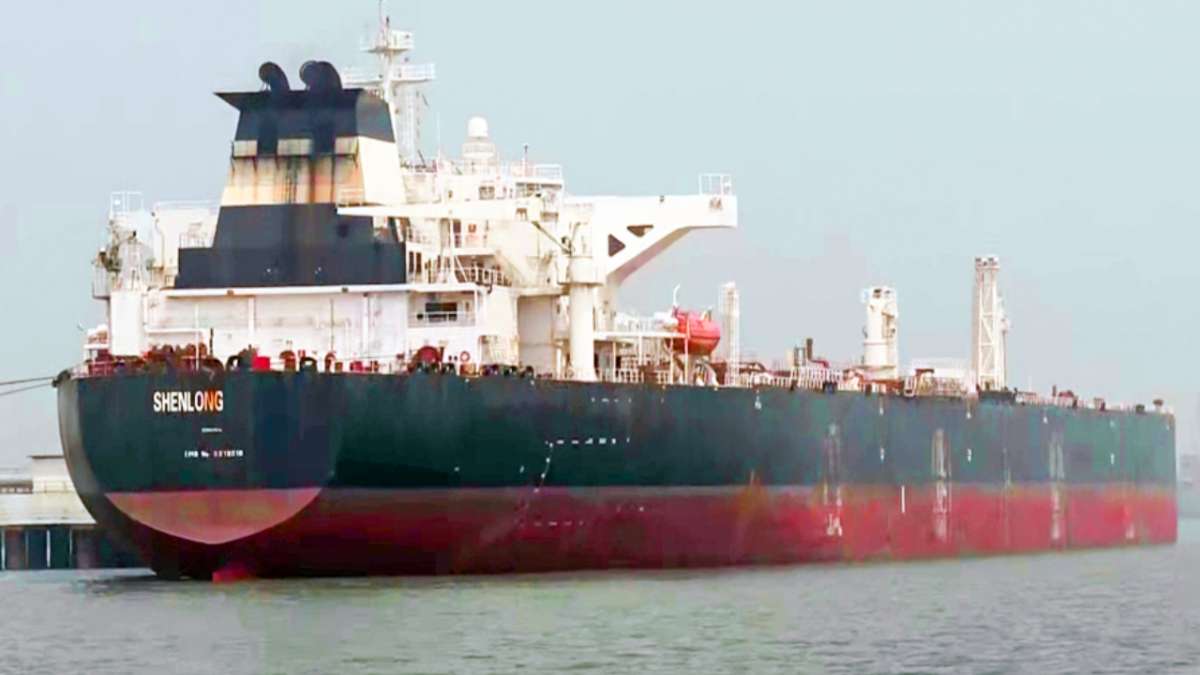
The Liberia-flagged oil tanker Shenlong Suezmax oil tanker reached Mumbai on March 11 after passing through the tense waters of the Strait of Hormuz. The region has become a conflict zone because of tensions between the United States and Iran. The tanker carried about 1,35,335 metric tonnes of crude oil from Ras Tanura. It docked at the Jawahar Dweep (Butcher Island) terminal. It became the first vessel to deliver crude to India through the strait after the conflict began on February 28.
The ship left Ras Tanura on March 3 as tensions in the region were rising. As it approached the Strait of Hormuz, the crew faced a complete shutdown of electronic navigation systems. The narrow waterway is about 33 km wide and carries nearly one-fifth of the world’s oil supply. Signals from the ship’s Automatic Identification System (AIS) and transponders stopped for a large part of the journey.
Tracking data showed the vessel in the Strait of Hormuz on March 8. Soon after, it disappeared from monitoring systems. It reappeared again on March 9. Officials said the tanker experienced heavy GPS spoofing and signal jamming. This type of electronic warfare disrupts satellite navigation systems. As a result, the crew had to sail through a digital blackout.
Also Read: LPG energy shortage may push Technopark firms to WFH
Shenlong’s Risky Oil Journey Through the Strait of Hormuz
With GPS signals unavailable, the crew relied on traditional navigation methods. Captain Sukshant Singh Sandhu said the journey involved many uncertainties. Second Officer Abhijit Alok explained that the team switched to backup techniques. These were similar to the methods used before modern navigation systems existed. The 29-member crew included sailors from India, Pakistan, and the Philippines.
Although the tanker reached Mumbai safely, the regional conflict continues to affect shipping routes. Indian officials reported casualties among Indian sailors on other vessels. Several ships are still operating in the Persian Gulf under close monitoring. Authorities have identified some ships that may require naval escort if the situation worsens. The Strait of Hormuz remains a critical yet risky route for global oil trade.
Also Read: Tesla Unveils Gen 3 Humanoid Robot in China