

Amid the ongoing US-Israel-Iran tensions, the situation in the Middle East is likely to take a turn next week as USS Tripoli prepares to enter the warzone in the North Arabian Sea. The 50,000-ton amphibious assault ship will deploy with over 2,000 Marines from the 31st Marine Expeditionary Unit (MEU), significantly strengthening the US military presence in the region.
Currently positioned south of Sri Lanka in the Indian Ocean, the warship is moving towards the Gulf of Oman to reinforce the USS Abraham Lincoln carrier strike group. The 844-foot-long vessel carries advanced assets including F-35 fighter jets, MV-22 Osprey aircraft, and MH-60S Seahawk helicopters. It is also supported by landing ship docks, enabling rapid deployment of Marines onto hostile territory. The vessel is expected to enter the war theatre around March 22–23.
Meanwhile, Donald Trump has kept options open regarding troop deployment to Iran. He stated that there are currently no plans to send ground forces, but emphasized that decisions will depend on how the conflict evolves.
Also Read: Turbulence injures several on Delta flight to Sydney
Focus on Strait of Hormuz
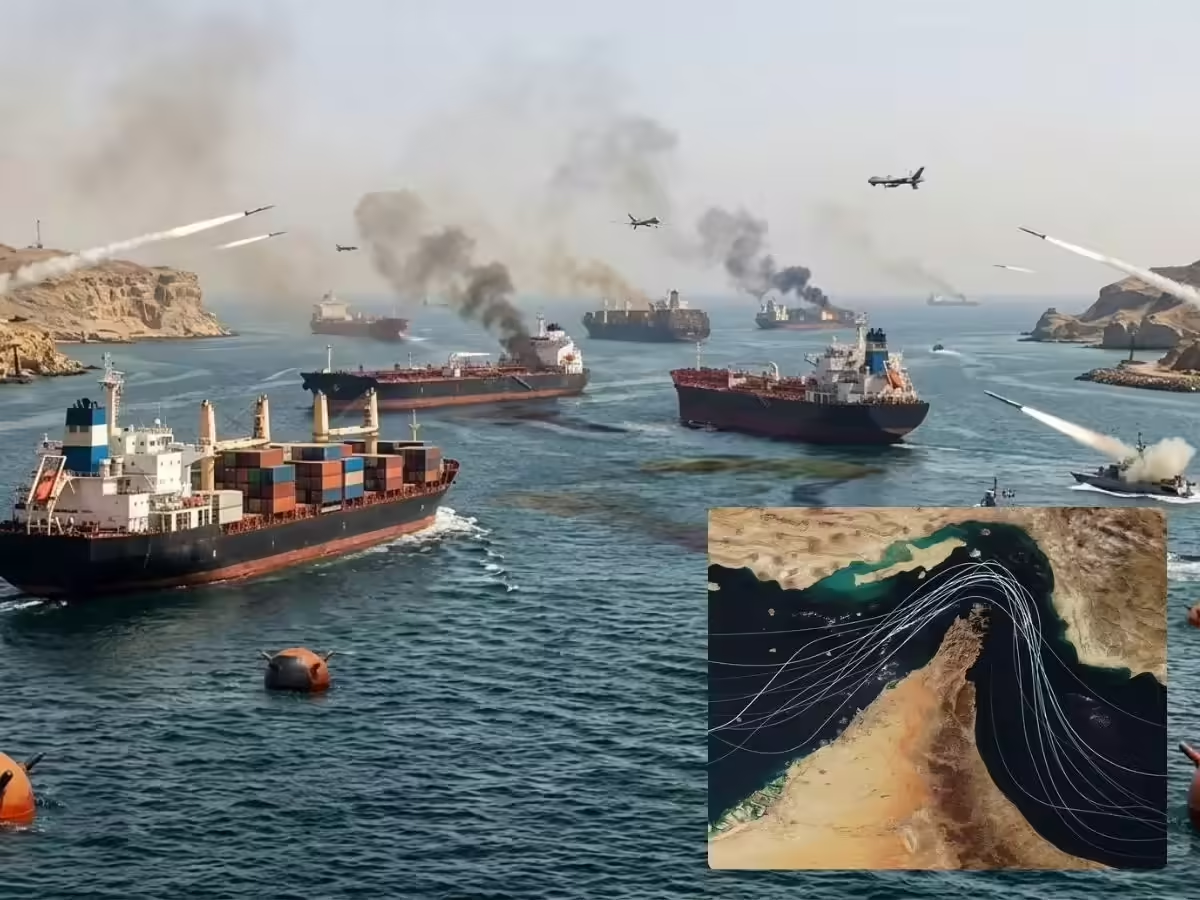
Experts suggest that USS Tripoli could play a key role in reopening the Strait of Hormuz, a critical global oil transit route. At its narrowest point, the strait is just 33 km wide, and its geography gives Iran a strategic advantage to disrupt shipping and trigger an oil supply crisis.
Threat to Global Oil Supply
Any disruption in the Strait of Hormuz could push global crude oil and fuel prices sharply higher. Ensuring freedom of navigation in the Persian Gulf has therefore become a priority for the international community.
However, the situation remains highly volatile as Iran continues to target shipping using ballistic missiles, drones, and fast attack craft. Analysts believe that restoring safe passage may require a multinational coalition under the United Nations.
India Steps Up Preparedness
India is actively engaging with Gulf nations and European partners to find a diplomatic resolution. At the same time, it has increased domestic LPG production to around 38 percent to cushion the impact on consumers and industries.
With Iran showing no signs of backing down, any closure of the Strait of Hormuz could trigger a major global economic crisis. Keeping this vital maritime route open remains crucial for global stability.
Also Read: Aircraft Losses Mount As US Loses 16 In Iran Conflict