

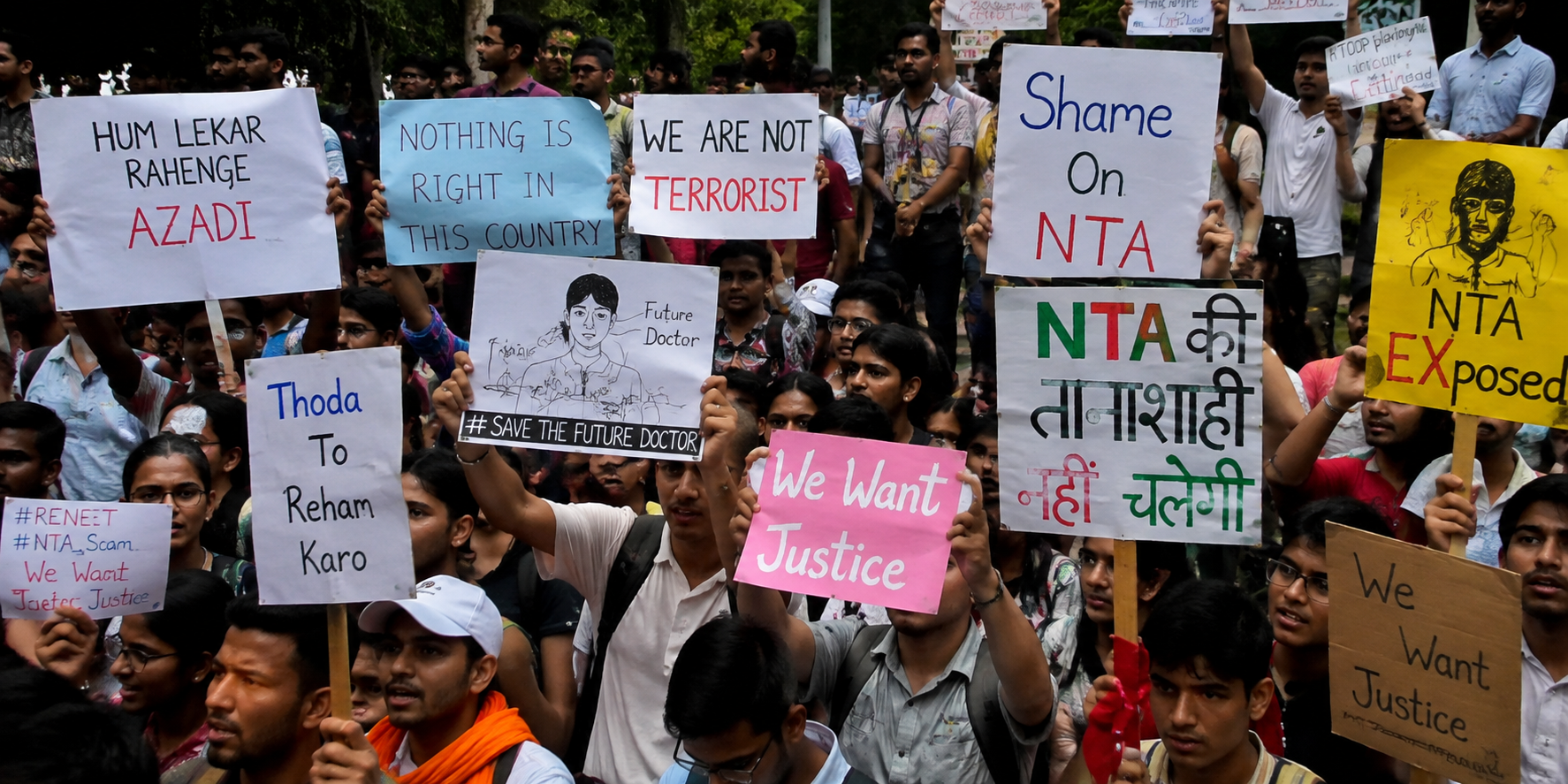
Gen Z has emerged as one of the most vocal groups on social and political issues in India, but its presence in elected offices remains limited. The recent CJP-led student protest in Delhi once again highlighted the influence of young voices in public movements. Protesters used social media, creative posters, and slogans to draw attention to their demands. Despite this growing visibility, Gen Z continues to have minimal representation in active politics.
Also Read : ₹4,200-Crore UP Expressway Develops Damage Weeks After Inauguration
Gen Z Leads Social Movements but Remains Underrepresented in Electoral Politics
According to available data, India currently has only six Members of Parliament and 20 Members of Legislative Assemblies who belong to Generation Z. This means just 26 elected representatives come from a generation that makes up more than one-fourth of the country’s population. Experts say the low number reflects the gap between youth participation in activism and their presence in legislative institutions.
One of the biggest reasons for this gap is the minimum age requirement to contest elections. Generation Z includes people born between 1997 and 2012, and many members of this age group have not yet reached the required age of 25 years to contest Lok Sabha or Assembly elections. During the 2024 Lok Sabha elections, only 98 out of 8,360 candidates belonged to Gen Z. Among them, only six candidates secured victories.
Young Voters Expected to Play a Major Role in the 2029 Lok Sabha Elections
The six Gen Z MPs represent different political parties and states, including Uttar Pradesh, Karnataka, Rajasthan, and Bihar. At the state level, only 20 out of 4,131 MLAs belong to this generation. Political analysts also point out that several of these young legislators come from established political families, making it difficult for first-generation leaders to enter mainstream politics.
Despite the current numbers, Gen Z is expected to play a decisive role in India’s political future. Reports suggest that by the 2029 Lok Sabha elections, this generation will become the country’s largest voting bloc. By 2031, Gen Z is projected to account for 26.3% of India’s population. As more young citizens become eligible to contest elections, their representation in legislatures could increase significantly in the coming years.
Also Read : ₹4,200-Crore UP Expressway Develops Damage Weeks After Inauguration