

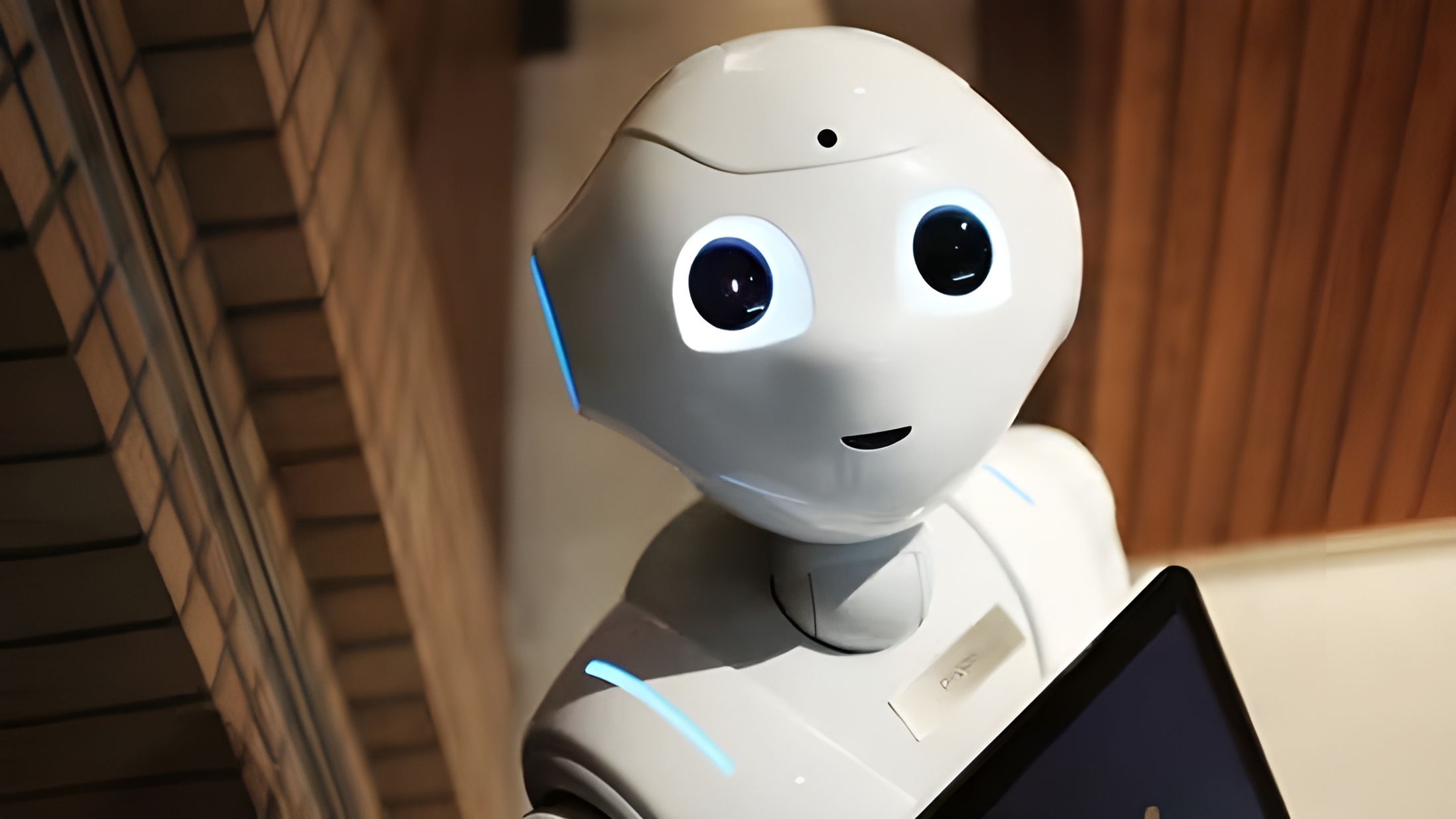
By 2030, the workday may begin with robots already on the floor—having mapped aisles, gathered components, and queued tasks before human workers arrive. What is now limited to pilot programs is rapidly becoming standard operating procedure. Humanoid robots powered by AI are moving beyond novelty and into essential roles. The key question is no longer if they will join the workforce, but where their intelligence will be housed. With Edge AI, perception, decision-making, and control occur directly on the device, allowing split-second responses, stronger data privacy, and continued operation even when network connections fail.
From Possibility to Practicality in Humanoid Robotics
As robotics converges with general-purpose AI, industry leaders say the advantage will go to those who can demonstrate safety at scale and convert fleet-wide learning into reliable productivity. Humanoid robots are now showing measurable progress in environments designed for humans, where narrow aisles, variable loads, and difficult-to-read labels have long challenged traditional automation. The discussion among product leaders has shifted away from whether humanoids will play a role, focusing instead on where deployment should begin, which tasks are appropriate, and what safeguards are required.
Also Read: Syria’s Sole Female Minister Advocates for Real Reform: ‘I’m Not Just Here for Show’
Tesla, for example, had targeted production of 5,000 Optimus robots by 2025 but has so far built only a few hundred units. Manufacturing was paused as the company worked through design refinements and component constraints, underscoring the complexity of scaling humanoid robotics. At present, Optimus is limited to basic material-handling tasks in controlled environments, offering a glimpse of potential rather than full autonomy. Tesla’s longer-term roadmap focuses on lowering production costs and significantly improving hand dexterity—an essential capability for performing complex, human-like tasks.
Two Paths Forward for Humanoid Robots
Leading humanoid robots are advancing along different but complementary paths. Boston Dynamics’ Atlas has shifted to a fully electric design, replacing hydraulics with motors that are easier to maintain and enable greater precision and uptime, though it remains primarily a research and pilot platform rather than a direct substitute for human labor. Agility Robotics’ Digit is already operating in warehouse environments, capable of autonomous docking, multi-hour shifts, and carrying loads of up to 35 pounds, with higher capacities planned. Designed to meet safety certification standards, Digit can work alongside people, lowering adoption barriers.
Across the broader ecosystem, progress is steady: locomotion is more stable, manipulation more refined, sensors more integrated, and battery life longer. The central challenge, however, remains achieving human-level reliability at human speed. This has pushed edge AI to the forefront, allowing perception, mapping, and motion planning to run directly on the robot for low-latency response and resilience to network disruptions, with the cloud reserved for updates and fleet learning. Autonomy is expanding incrementally—from warehouses and factories to hospitals, offices, construction sites, and homes—but complex, unfamiliar situations still demand safeguards.
Also Read: Despite US Military Expansion, Iran’s Lead Diplomat Expresses Hope for Dialogue