

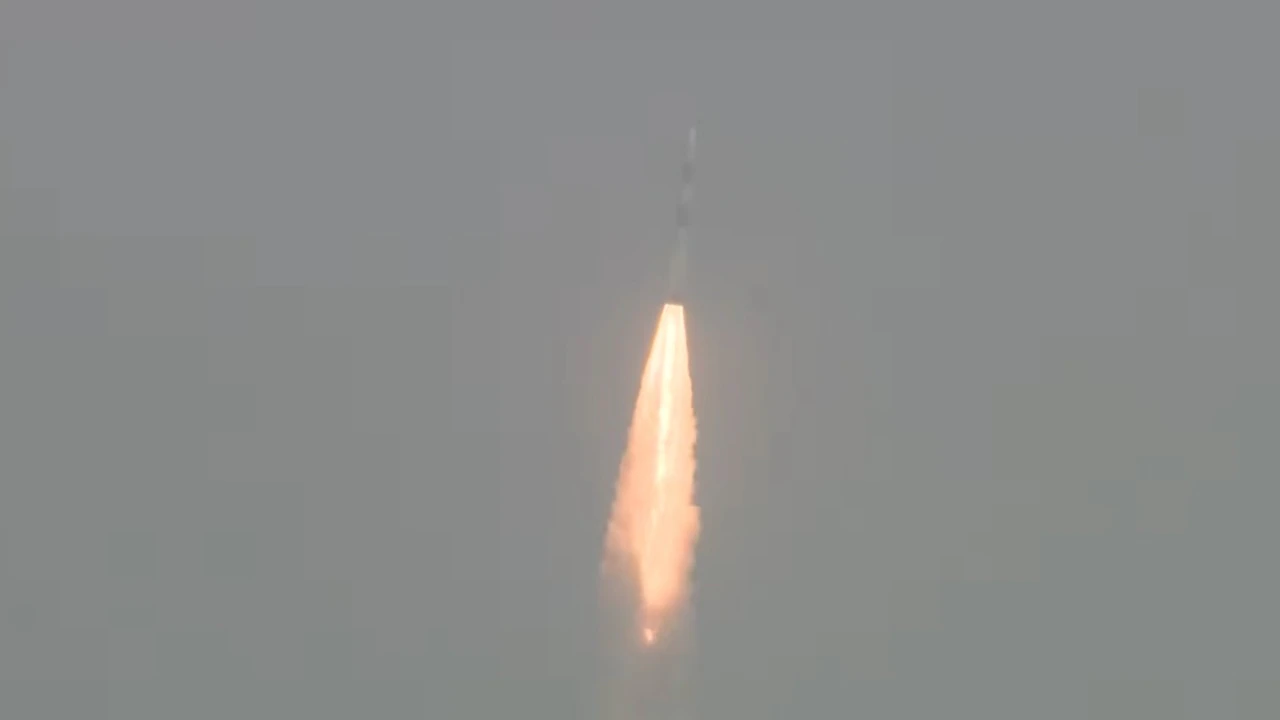
Against all odds, the KID satellite successfully separated from the 15 other satellites that got lost in space during ISRO’s PSLV C62 mission, part of the EOS N1 launch. The 44.4-meter-tall, four-stage rocket lifted off from Sriharikota, Andhra Pradesh, at 10:18 am on Monday. The mission aimed to deploy a primary Earth Observation satellite along with multiple co-passenger satellites into a 512 km Sun-Synchronous Orbit after a flight of about 17 minutes.
Also Read: India’s Tea & Rice Exporters Reel as Trump Targets Iran Trade
The mission director approved the automatic launch, and ISRO scientists shared live updates as the rocket ascended smoothly at first. The third stage ignited, but 15 of the 16 satellites, including a foreign payload, failed to reach orbit after the rocket experienced an anomaly. ISRO is investigating the cause of the flight path deviation. Despite this, the Spanish startup Orbital Paradigm’s KID capsule successfully separated, switched on, and transmitted data, and the team is now reconstructing its trajectory.
PSLV-C62 Mission Faces Setback as 15 Satellites Fail to Reach Orbit
PSLV-C62 lost several satellites, including DRDO’s Anvesha, AayulSAT, CGUSAT, and an Earth Observation satellite from Thailand-UK, after an anomaly in the third stage. A previous PSLV attempt in May 2025 had also failed due to motor issues. ISRO confirmed the deviation from the expected flight path and said it is analysing data from all ground stations to determine the cause, while the lost satellites may now drift as space debris.
Also Read: Cambodia halts sales at properties linked to alleged cyberscam network