

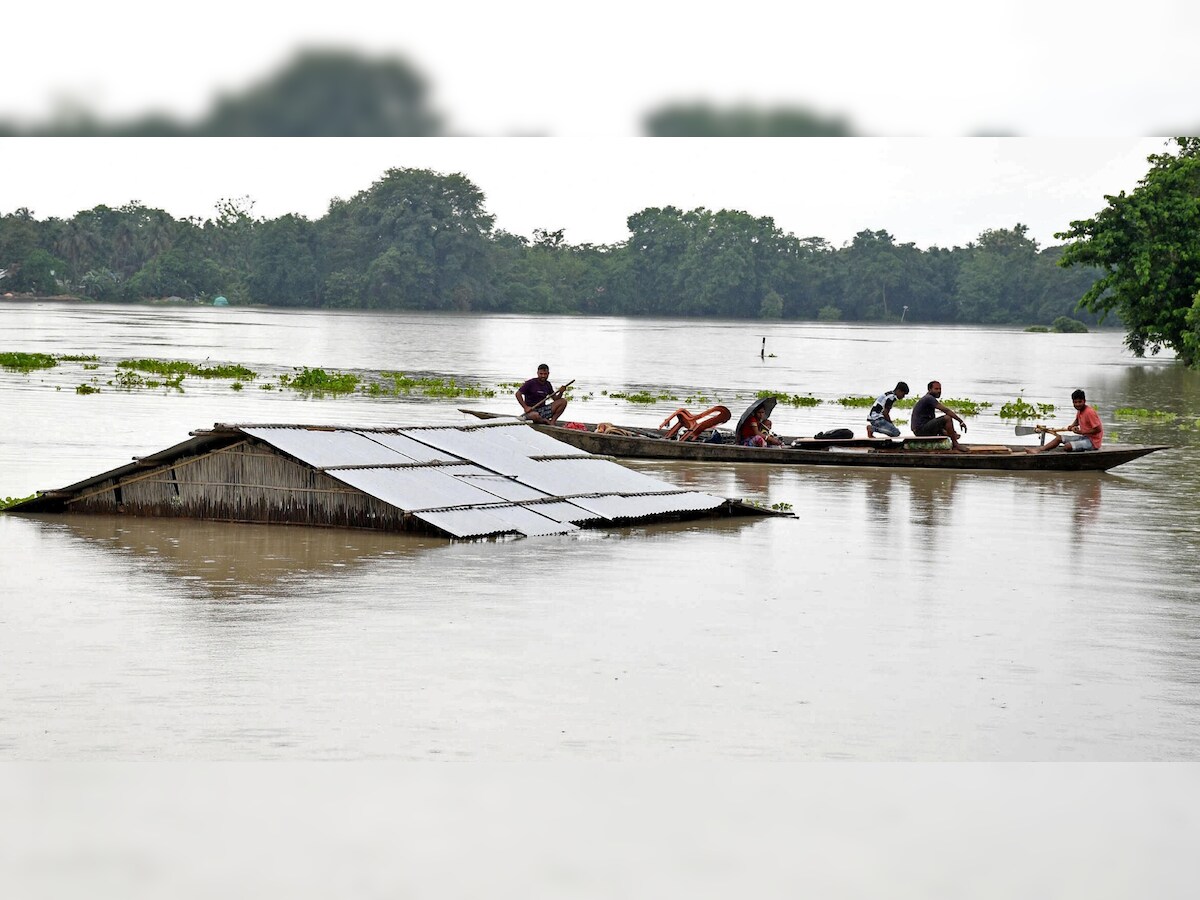
India 2025 monsoon brought a sharp change in rainfall trends, with rains arriving early and striking with unusual intensity and irregularity across many regions Climate change–induced western disturbances triggered floods, landslides, and cloudbursts in Jammu & Kashmir, Uttarakhand, Himachal Pradesh, and Maharashtra, putting infrastructure and disaster response mechanisms under severe strain.
Also Read : Nitin Gadkari Major Warning After Operation Sindoor: ‘World War III Could Erupt Anytime
Himalayan Floods in India and the Role of Rising Temperatures
Rainfall in India may not be evenly distributed, but its destructive impact is felt across the country. Unpredictable rains, floods, droughts, and landslides have damaged livelihoods on a large scale. In early August, heavy downpours and cloudbursts triggered massive floods in several Himalayan states, including Dharali (Uttarakhand), Kathua (Jammu & Kashmir), and parts of Himachal Pradesh, wiping out agriculture, transport networks, and local incomes. Scientists link these events to rising regional temperatures, which drive higher evaporation and add more moisture to the atmosphere.
Also Read : Strong earthquake tremors felt in Delhi-NCR, epicentre in Haryana’s Jhajjar
Climate Change Disrupts Agriculture and Drives Vegetable Prices Up
Rising prices of key vegetables have created widespread disruption across India. The “TOP” crops—Tomato, Onion, and Potato—are especially susceptible to unpredictable and unseasonal rainfall, with excessive rains in northern regions driving tomato prices up to Rs 100 per kilogram in some areas. Climate change is also contributing to the spread of new crop diseases. India’s tea output in June fell by nine percent, with experts attributing the decline to changing climate conditions and increased pest attacks. Higher temperatures are activating heat-loving microorganisms, adding further challenges to the already strained agricultural sector.
Also Read : India family in AI video appears totally normal – until you look closer