

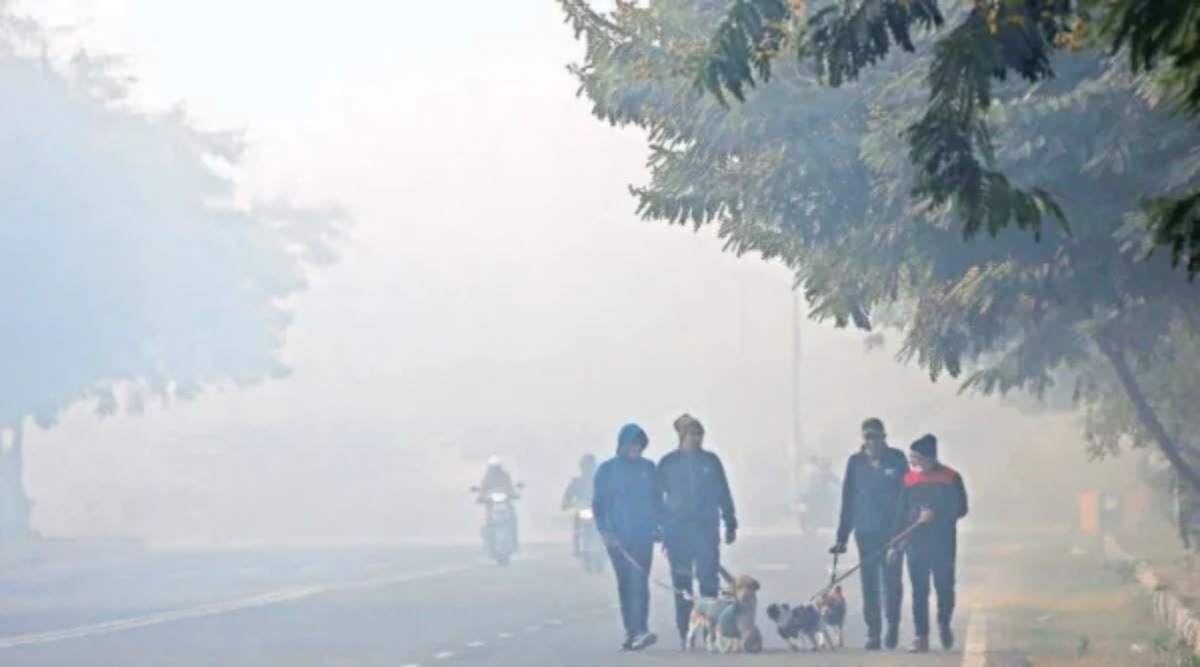
Delhi woke up on Tuesday with its air quality index (AQI) in the ‘very poor’ category, raising concerns among residents. The Hayli Gubbi volcano in Ethiopia erupted on Sunday after thousands of years, sending ash clouds toward northwest India. Experts, however, said the ash’s impact on surface-level AQI would be minimal. According to the CPCB’s Sameer app, Delhi’s overall AQI stood at 362 at 8 am. Rohini recorded the highest AQI at 416, while Mandir Marg had the lowest at 289. The overall pollution slightly improved from Monday’s 382 reading. Authorities advised residents to wear masks outdoors and limit prolonged exposure, especially vulnerable groups like children and the elderly. Monitoring stations continue to provide real-time updates to track air quality fluctuations. Residents were also warned that local pollution sources, including traffic and industries, remain the major contributors to poor air quality.
The volcanic ash cloud reached northwest India late Monday, causing temporary haziness in the sky over Delhi. IMD Director General M. Mohapatra stated that the ash is present in upper atmospheric layers and will not significantly affect ground-level AQI. Any minor changes may appear as clouds or slightly higher temperatures for a few hours. Residents can expect the haze to move eastwards, further reducing potential surface impact. Authorities assured the public that volcanic ash would not lead to a sudden deterioration in air quality. The CPCB and meteorological departments are continuously monitoring air pollution and weather data to provide timely guidance. Preventive measures such as wearing masks and avoiding prolonged outdoor activities remain recommended. Citizens should rely on official apps and alerts for updates on pollution and health safety.
Also read: Dhanashree Verma Responds to Chahal’s Denial, Says She Caught Him Cheating Early On
Delhi AQI ‘Very Poor’ Amid Concerns Over Ethiopian Volcanic Ash
Mumbai’s air quality remained in the ‘moderate’ category, with an AQI of 178, slightly higher than Monday’s 174. Mazgaon recorded the worst AQI at 276, while Sion had the cleanest reading at 80. Volcanic ash is unlikely to affect Mumbai, according to IMD, because it remains at higher altitudes. Local pollutants from traffic and industries continue to play the primary role in influencing AQI levels. Authorities advised residents to take standard precautions, especially during peak pollution hours. Monitoring stations are actively tracking pollution data to ensure timely alerts. Citizens were encouraged to follow official forecasts and advisories to protect their health. Temporary haziness may appear, but no significant health risks are expected. Awareness campaigns continue to educate residents about air quality precautions.
Experts reassured citizens that volcanic ash would only cause minimal, short-lived visual effects and haze. Delhi residents are advised to continue wearing masks and limit outdoor exposure, particularly during early mornings and evenings. Schools, hospitals, and workplaces have been advised to monitor AQI levels and take preventive measures. Authorities emphasized that local sources of pollution are the main contributors to the city’s very poor air quality. Continuous tracking of AQI and meteorological data ensures timely safety alerts for sensitive populations. Any impact of ash on temperatures will be minor and temporary. Residents are encouraged to follow CPCB and IMD updates for guidance on air quality. Public awareness remains a key factor in protecting health during pollution episodes.
Also read: Sources: Mohsin Naqvi Presents Trophy to UAE Board as BCCI Considers Impeachment Action
[…] Also Read: Delhi wakes up to hazardous air levels amid Ethiopian volcanic ash threat […]