

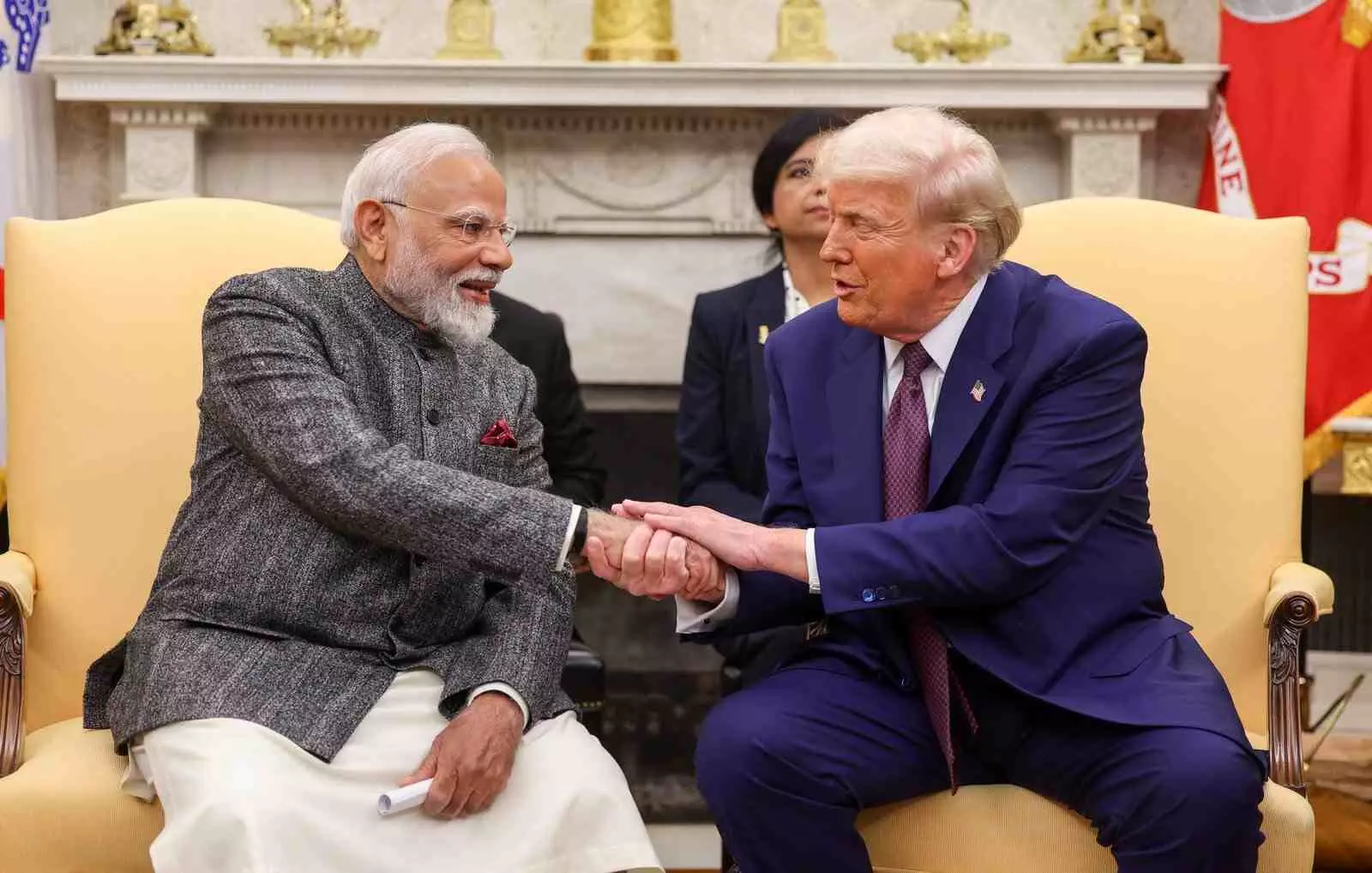
The White House quietly revised its fact sheet on the India-US trade framework, removing claims that New Delhi would cut tariffs on “certain pulses,” scrap digital services taxes, and commit to buying $500 billion worth of American goods. Officials made the changes after India flagged wording and items that both sides had not agreed to, according to people familiar with the matter who spoke on condition of anonymity.
White House Corrects Trade Document After India Flags Errors
The White House released an updated fact sheet after Monday’s original version, deleting “certain pulses” from the list of farm goods on which it said India would cut tariffs. The earlier document had named pulses alongside products such as tree nuts, soybean oil, wine, and spirits.
Because pulses—like lentils, chickpeas, and dry beans—are politically sensitive in India, the world’s largest producer and consumer, the change indicates New Delhi pushed back on the description.
The White House also dropped its claim that India “will remove its digital services taxes,” revising the language to say only that India “committed to negotiate” digital trade rules. India had already scrapped its 6% equalisation levy on digital advertising services from April 1, 2025, under the Finance Bill 2025, nearly 10 months before officials announced the trade framework.
White House Deal Terms Risk India Deficit Surge, Currency Pressure
Economists say India will struggle to fulfill its pledge to import $500 billion worth of US goods over five years, warning that the commitment could widen the current account deficit and renew pressure on the rupee.
India currently imports about $40–45 billion annually from the US while exporting roughly $85 billion, giving it a rare trade surplus that helps offset deficits with major partners such as China. A joint statement issued by both countries on February 6 set the five-year timeline for the pledge—averaging $100 billion in imports annually, more than double current levels—though a fact sheet the White House posted Monday omitted that timeframe.
Trade economist and former Jawaharlal Nehru University professor Biswajit Dhar said the import commitment “will impact India’s trade balance and, in turn, the overall balance of payments.”
Also read:https://centraltimes.in/blog/gadchiroli-could-have-been-jamshedpur-tata-steel-vp/
[…] Also Read : White House Revises India-US Trade Deal Fact Sheet […]