

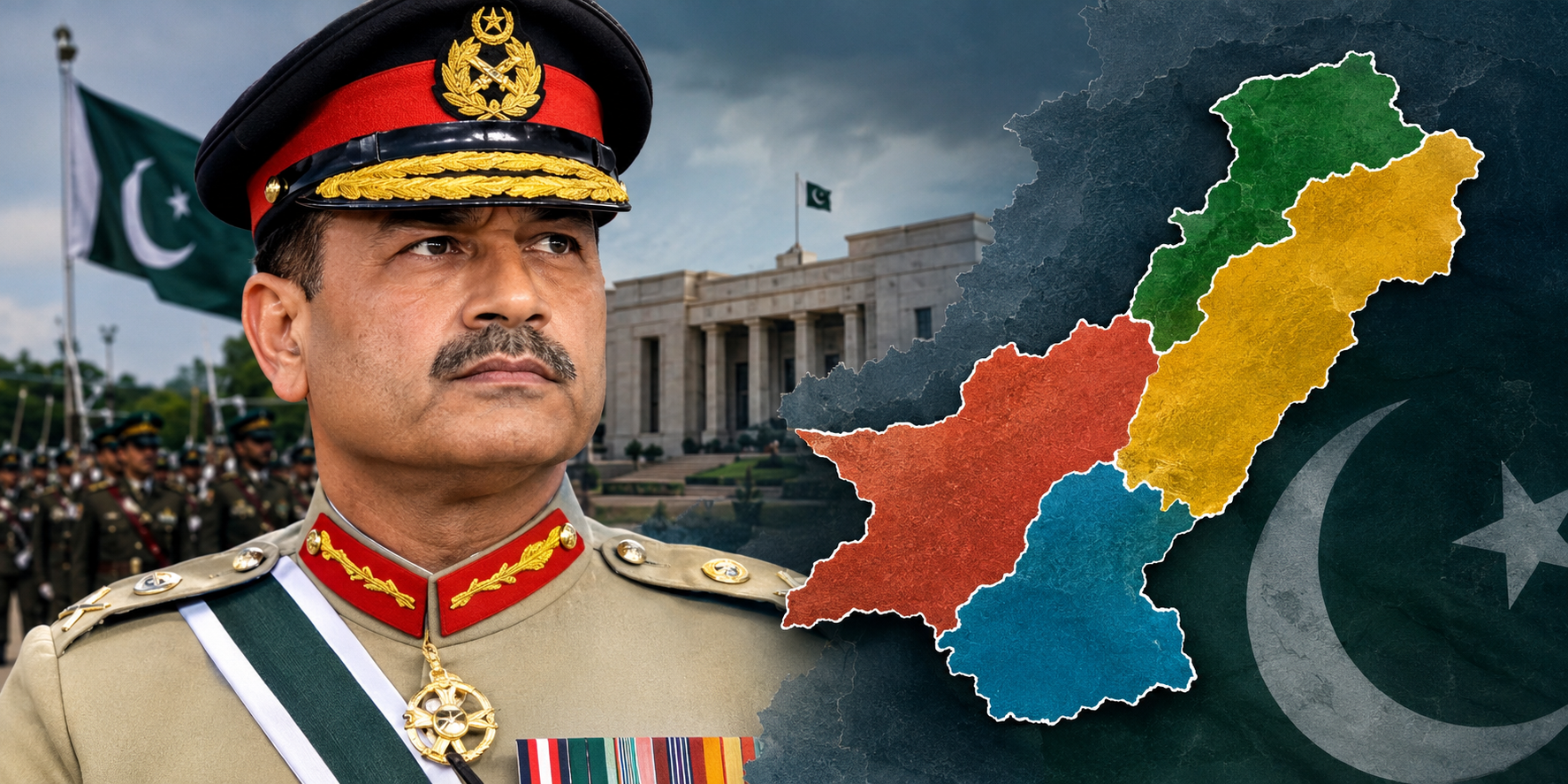
Pakistan could witness a major political and administrative change as Army Chief Field Marshal Asim Munir reportedly considers dividing the country’s four provinces into smaller units. According to The Economist, the proposal could create 12 to 15 provinces or establish around 160 smaller administrative territories. Pakistan currently consists of Punjab, Sindh, Khyber Pakhtunkhwa and Balochistan. The proposed restructuring could change how the government distributes political power and manages public services. Supporters may argue that smaller provinces would improve administration and bring government facilities closer to residents. However, critics could view the move as an attempt to weaken powerful provincial governments. The proposal has therefore raised questions about its potential impact on Pakistan’s political system and military influence.
Restructuring Could Change Pakistan’s Political Balance
Pakistan’s four provinces differ considerably in population, geographical size and governance requirements. Punjab has approximately 128 million residents, making it the country’s most populous province. Balochistan covers the largest geographical area but has a population of around 15 million. These differences create challenges for provincial governments when they deliver essential services. Residents in remote areas often travel long distances to reach government offices and healthcare facilities. According to the report, fewer than one-quarter of Punjab’s residents have reliable access to safe drinking water at home. Munir has reportedly argued that smaller administrative units could help governments respond more effectively to public needs. However, Pakistan also faces inflation, weak economic growth and mounting debt obligations. Dividing provinces alone would not resolve these deeper economic and governance problems.
Pakistan’s military has played a significant role in national politics throughout the country’s history. Elected governments have frequently faced pressure from military leaders, raising concerns about civilian authority. The Economist has questioned whether the military can address Pakistan’s governance problems without examining its own influence. The publication has highlighted the army’s involvement in businesses, landholdings and access to state resources. Dividing large provinces could weaken established political power centres and strengthen federal authorities. Punjab has traditionally supported the Pakistan Muslim League-Nawaz, while Sindh remains the principal stronghold of the Pakistan Peoples Party. Creating smaller provinces could redistribute electoral influence among political parties. Although smaller administrative units might improve local representation, their effectiveness would depend on constitutional safeguards and financial independence. The proposal could therefore reshape Pakistan’s political relationships alongside its administrative structure.
Also Read : UP Shock: Two Saints Murdered, Bodies Burnt Inside Shahjahanpur Temple
Earlier Proposals And Political Tensions
The idea of creating additional provinces in Pakistan is not new. Planning Minister Ahsan Iqbal has previously discussed establishing more provinces and smaller administrative units. The reported proposal has gained attention as Munir maintains considerable influence over the country’s political establishment. Meanwhile, Imran Khan’s imprisonment has fuelled protests by supporters of his Pakistan Tehreek-e-Insaf party. PTI governs Khyber Pakhtunkhwa, where tensions with federal authorities have complicated political relations. Any restructuring could affect the distribution of political influence between provincial administrations and the central government. Supporters of reform may argue that smaller provinces would improve accountability and bring decision-making closer to citizens. However, opponents could question whether the changes would reduce provincial autonomy. The government would need to consider constitutional requirements, public opinion and regional representation before implementing any major boundary changes.
Pakistan already faces significant security and governance challenges across several regions. Khyber Pakhtunkhwa continues to experience militancy and political tensions, while Balochistan faces separatist violence and longstanding disputes over resources and regional autonomy. Pakistan-occupied Kashmir has also witnessed protests over economic conditions, taxation and governance. These problems could complicate any attempt to redraw Pakistan’s administrative map. Dividing Balochistan, in particular, would require careful consideration of local communities, territorial boundaries and resource distribution. Smaller provinces could improve access to government services if authorities provide adequate funding and administrative support. However, poorly planned changes could create fresh disputes over representation and political control. Pakistan’s leadership must therefore weigh the potential administrative benefits against the risks of greater political tension. Ultimately, the proposed restructuring could change not only how Pakistan governs its regions but also how power operates between provincial governments, federal authorities and the military establishment.