

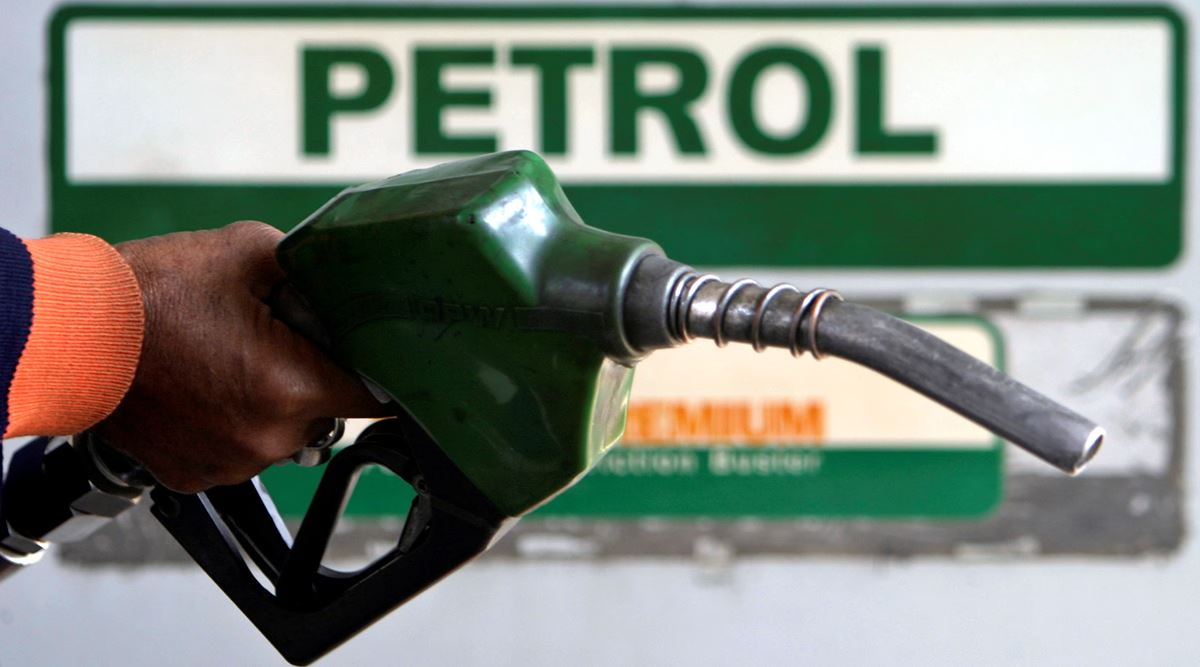
Car owners often wonder whether they should choose regular petrol or premium power petrol for their vehicles. Power petrol generally comes with a higher octane rating and stronger resistance to engine knocking. It also contains advanced additives designed to support engine cleanliness and reduce friction. Regular petrol, meanwhile, offers standard performance for compatible petrol engines. The right choice depends mainly on the vehicle manufacturer’s recommendations and engine specifications.
Also Read : Rahul Gandhi alleges cops were told by ‘top’ not to file FIR in pellet gun case
Normal Petrol vs Power Petrol: Key Differences
Regular petrol typically has a 91 RON octane rating, while power petrol can offer a rating of around 95 RON. Both fuel types currently contain 20 per cent ethanol under the prevailing blending system, although specific products can vary. Premium fuel provides better resistance to knocking, which can benefit engines operating under higher pressure. It also uses advanced cleaning agents and friction modifiers. Regular petrol remains suitable for many naturally aspirated petrol engines.
Ethanol blending has also become an important consideration for vehicle owners. The government has mandated ethanol blending across petrol grades, while certain premium products such as XP100 are an exception. Therefore, switching from regular petrol to premium fuel does not automatically mean getting lower ethanol content. Drivers should check the specifications of the particular fuel product before making a choice. Older vehicles may also require owners to follow the manufacturer’s fuel recommendations carefully.
Also Read : Teen Threatens Suicide From Maharashtra Hill, Parents Die While Trying To Save Him
Which Petrol Is Better for Turbo Engines?
Engine knocking occurs when the air-fuel mixture burns abnormally instead of following the intended combustion process. This can create vibrations, unusual sounds and additional stress on engine components. Premium petrol’s higher octane rating gives it greater resistance to this problem. Turbocharged engines generate higher temperatures and pressures, making knock resistance particularly important. As a result, premium petrol can be a suitable choice when the manufacturer recommends a higher-octane fuel.
Fuel economy does not depend on the petrol grade alone. Driving habits, traffic conditions, vehicle maintenance, tyre pressure and air-conditioning use can all affect mileage. IndianOil claims that its XP95 premium petrol can deliver up to 3.95 per cent additional mileage in compatible vehicles. However, drivers should not assume that every vehicle will achieve the same improvement. The actual benefit depends on the engine and its compatibility with the fuel.
Premium petrol costs more because it offers a higher octane rating along with additional additives and advanced friction modifiers. In Delhi, the prices mentioned in the source are ₹102.12 per litre for regular petrol and ₹109.24 per litre for power petrol, although prices vary across states. Turbocharged petrol engines can make better use of higher-octane fuel because they operate under greater heat and pressure. Naturally aspirated engines may not gain enough benefits to justify the additional cost. Therefore, vehicle owners should follow the manufacturer’s recommended fuel grade rather than choosing premium petrol solely for higher mileage.
Also Read : Rahul Gandhi alleges cops were told by ‘top’ not to file FIR in pellet gun case