

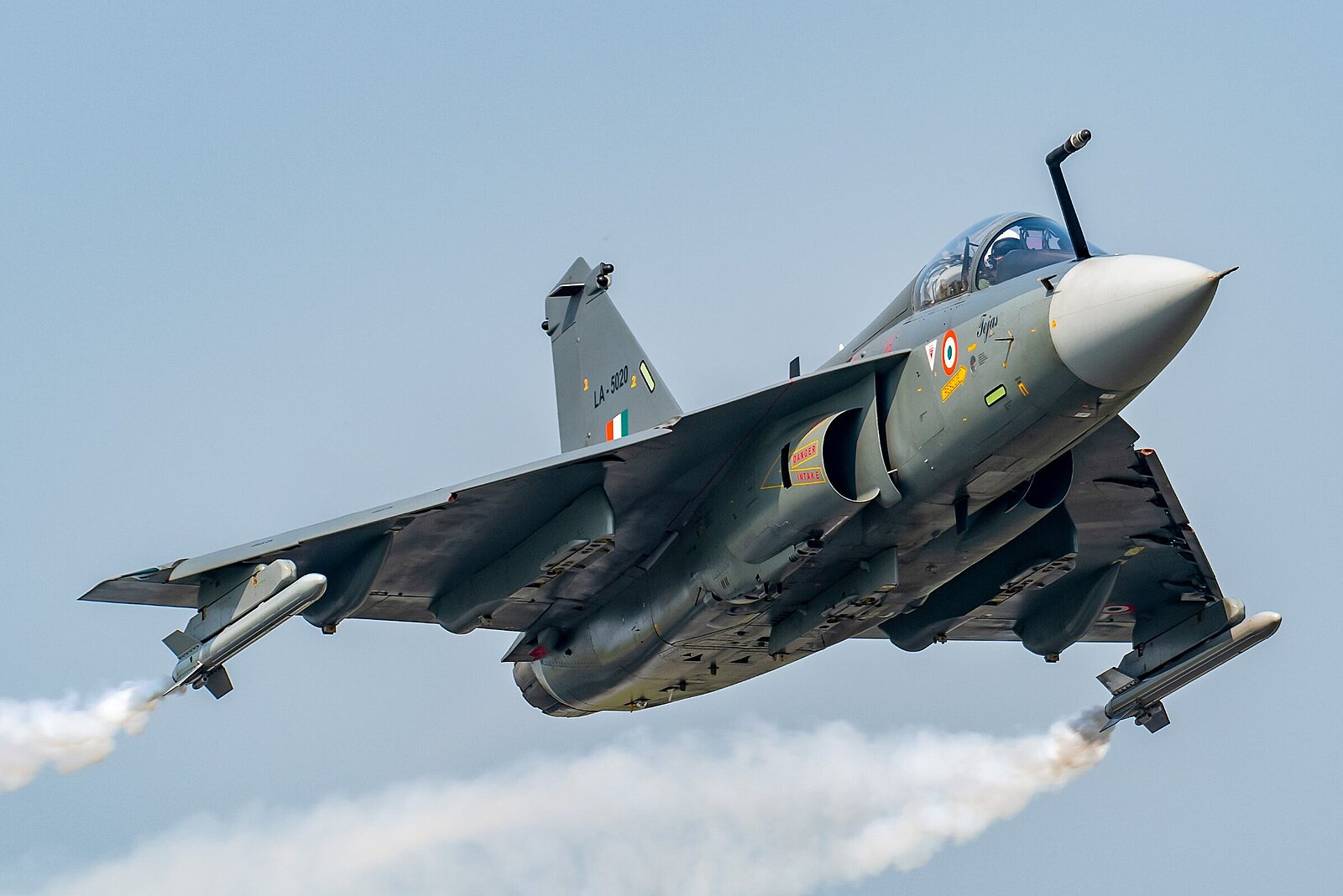
The Indian Air Force Tejas crash earlier this month has prompted the Indian Air Force (IAF) to ground its entire fleet of single-seat HAL Tejas fighter jets. The incident occurred during landing after a routine training sortie at an operational air base. While the pilot ejected safely and avoided serious injury, the aircraft suffered severe airframe damage. This marks the third Tejas aircraft lost since induction, raising concerns about technical reliability and ongoing modernization plans.
What Happened in the Latest Crash?
The Indian Air Force Tejas crash took place earlier this month when the fighter jet was returning from a routine training mission. Preliminary assessments suggest a suspected technical glitch, possibly involving onboard systems during the landing phase. Landing is considered one of the most critical stages of flight, where even minor system failures can have serious consequences.
Following the accident, the aircraft was heavily damaged and may be written off after evaluation. However, the pilot’s safe ejection prevented any loss of life. The IAF has not yet issued a detailed public statement, as technical investigations are currently underway to determine the exact cause of the crash.
Also Read: Mumbai Traffic Diversion on Feb 17 for PM France President Visit
Fleet Grounded for Technical Investigation
After the Indian Air Force Tejas crash, the IAF grounded approximately 30 single-seat Tejas aircraft as a precautionary measure. Such fleet-wide grounding is standard protocol in military aviation to ensure there are no systemic faults across similar aircraft. Engineers and technical teams are now conducting extensive inspections of avionics, flight control systems, and structural components.
This decision reflects a strong emphasis on pilot safety and operational reliability. Grounding allows investigators to thoroughly analyze maintenance records, onboard data, and system performance. The findings of this probe will determine when the fleet can safely resume operations.
Impact on the Tejas Mk1A Programme
The Indian Air Force Tejas crash comes at a sensitive time for the upgraded HAL Tejas Mk1A programme. The Mk1A variant, designed with enhanced radar, avionics, and electronic warfare capabilities, is already facing delivery delays of nearly two years. The IAF has placed orders for 180 Mk1A fighters to strengthen its combat fleet.
Repeated incidents could increase scrutiny on production quality, testing standards, and timelines. While investigations continue, the crash may influence future operational planning and defense procurement strategies. The outcome of the technical probe will be crucial in restoring confidence in India’s indigenous fighter jet programme.
Also Read: UK Police Take Royal into Custody Over Alleged Public Office Misconduct