

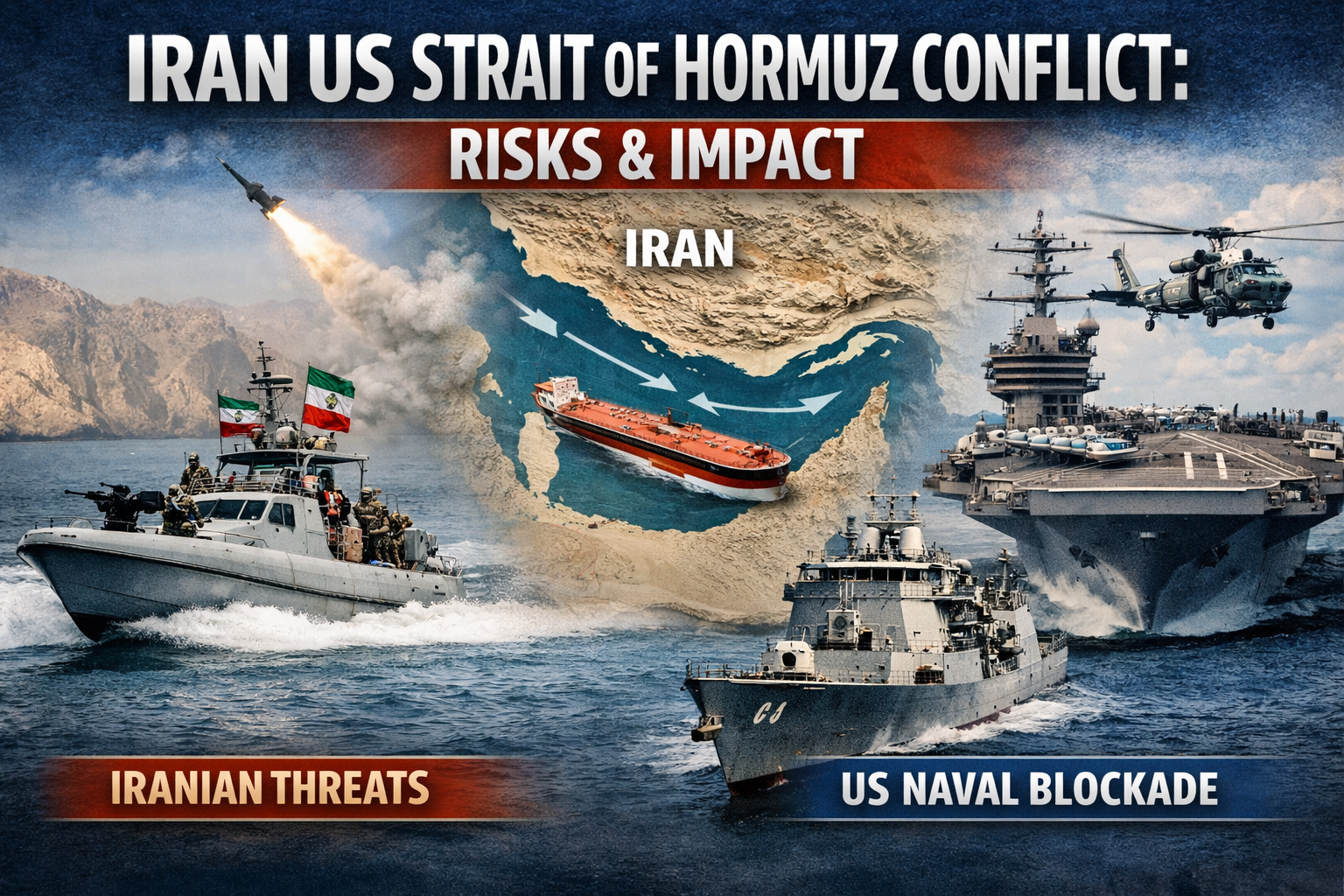
The Iran US Strait of Hormuz conflict has entered a dangerous new phase as both nations escalate maritime tensions. The United States has announced a counter-blockade targeting Iranian ports while keeping the Strait open for global shipping. In response, Iran has altered shipping routes and warned of potential threats in key transit lanes. This strategic confrontation follows failed diplomatic talks and ongoing military pressure in the region. The Strait of Hormuz remains a critical chokepoint for global energy supply, with nearly one-fifth of the world’s oil passing through it. Any disruption could trigger sharp increases in oil prices and destabilize international markets. As naval forces move into position, the world watches closely for signs of escalation or de-escalation.
Iran US Strait of Hormuz Conflict Escalates at Sea
The United States has deployed multiple naval strike groups to secure shipping lanes and enforce its counter-blockade strategy. It has intensified mine-clearing operations and increased surveillance across the Strait. US forces aim to prevent vessels from entering or exiting Iranian ports while ensuring uninterrupted global trade. This approach allows Washington to apply economic pressure without fully closing the waterway.
Iran has responded by shifting shipping routes through its territorial waters and signaling control over maritime access. It has warned commercial vessels about risks in traditional shipping lanes, raising concerns among global operators. Iranian forces continue to rely on asymmetric tactics, including mines and fast attack boats, to challenge US naval dominance. These moves highlight Iran’s strategy to disrupt rather than directly confront.
Also Read: Pakistan Airlifts Fighter Jets to Middle East as US-Iran Talks Near
Global Economic Impact of the Strait of Hormuz Conflict
The Iran US Strait of Hormuz conflict has already started affecting global oil markets and shipping costs. Traders have reacted to rising uncertainty by pushing oil prices upward. Insurance premiums for vessels operating in the region have also increased significantly. These developments have added pressure on energy-importing nations, especially in Asia.
Countries like India, China, and Japan depend heavily on oil shipments through the Strait of Hormuz. Any prolonged disruption could strain their economies and increase inflation. Supply chain instability may also affect industries beyond energy, including manufacturing and transportation. As a result, global markets remain sensitive to every development in the region.
Also Read: IT stocks slide after Anthropic AI launch Infosys TCS drop up to 3 percent
Possible Outcomes of the Iran US Strait of Hormuz Conflict
The conflict could remain limited, with both sides avoiding direct confrontation while maintaining pressure. In this scenario, the US would continue enforcing its blockade while Iran disrupts operations intermittently. This outcome would keep tensions high but prevent a full-scale war. However, it would still create long-term uncertainty in global markets.
A more severe escalation could involve direct military engagement between US and Iranian forces. Such a scenario could lead to attacks on naval assets and infrastructure in the region. Alternatively, Iran could attempt a temporary closure of the Strait, triggering a global energy crisis. Each outcome carries significant risks, making diplomatic resolution increasingly important.