

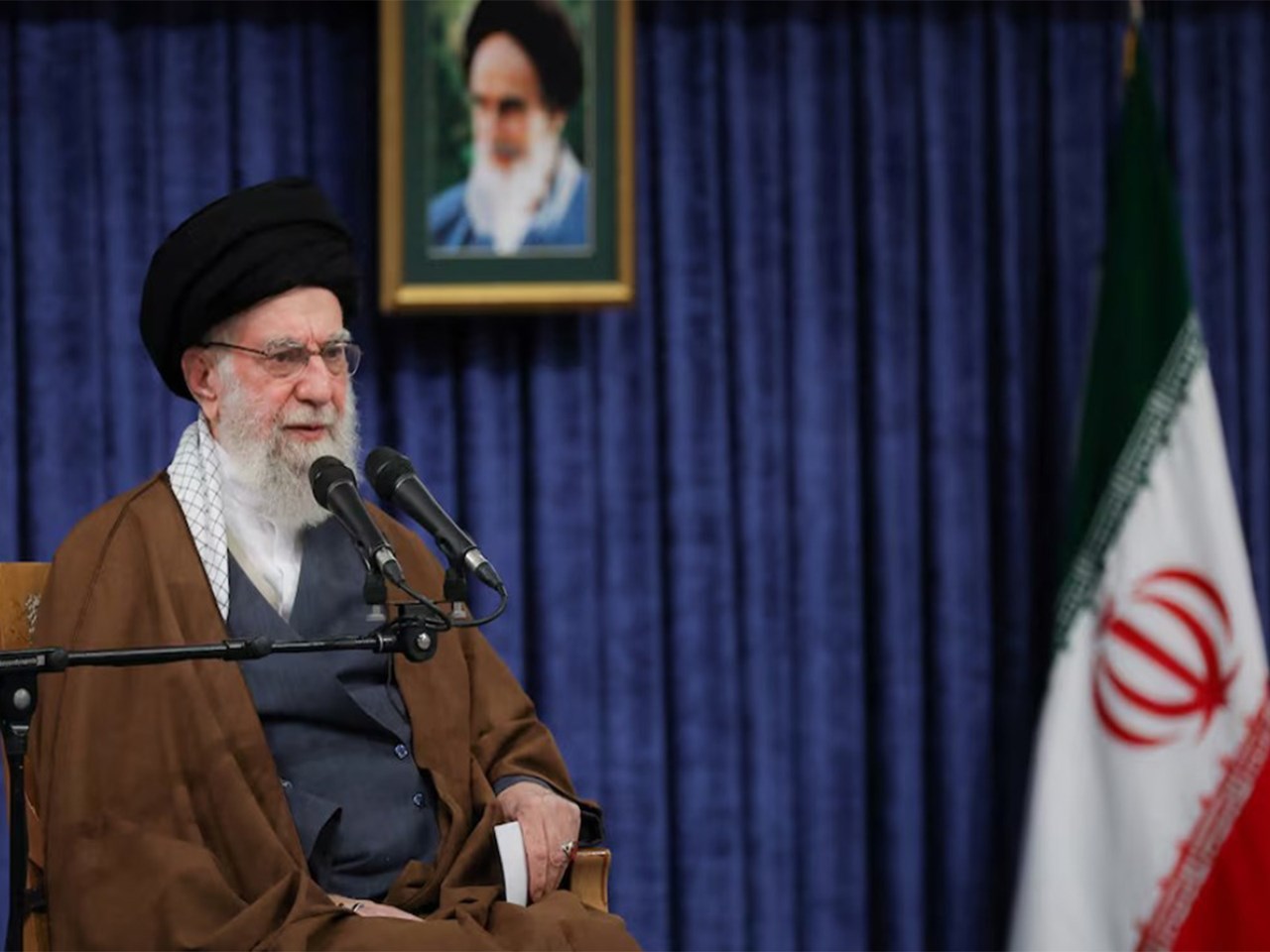
Vladimir Putin has strongly condemned the killing of Ayatollah Ali Khamenei in joint US-Israeli air and missile strikes on Tehran, calling it a “cynical murder” that threatens to destabilize the entire Middle East.
The unprecedented attack targeted key centers of Iran’s military and political leadership. Along with Khamenei, senior officials including Ali Shamkhani, Defence Minister Amir Nasirzadeh, and IRGC Commander Mohammed Pakpour were reportedly killed.
Despite this decapitation strike, Iran has continued its large-scale retaliation across the region. Missile and drone attacks have targeted US bases in the Gulf, Iraq, and Israel. The conflict has rapidly expanded, raising fears of a prolonged regional war.
Also Read: Pakistan Afghanistan War: Islamabad Announces ‘Open War’ After Kabul Airstrikes
Why Iran Is Crucial to Moscow
Iran plays a strategic role in Russia’s foreign policy. Over the past decade, Moscow and Tehran have strengthened military, economic, and geopolitical cooperation.
First, both nations share a common objective: countering US global influence. Western sanctions have pushed them closer together, encouraging defense coordination and energy partnerships.
Second, Iran serves as a vital corridor in Russia’s North-South Transport Corridor, linking Moscow to South Asia and the Gulf. With Western markets restricted, this alternative trade route is increasingly important for Russia’s economic resilience.
Third, military cooperation between the two nations has deepened significantly. Iranian drone technology has reportedly supported Russian military operations, while Moscow has backed Tehran diplomatically at international forums.
For Putin, Iran is not just a partner — it is a pillar of Russia’s broader strategy to reshape the global balance of power.
The “Commitment Trap” and Escalation
The latest war erupted during indirect US-Iran negotiations mediated by Oman. In fact, diplomatic discussions had reportedly reached a breakthrough phase. Tehran had agreed to limit nuclear stockpiling and allow expanded inspections.
However, Washington’s shift toward regime change altered the trajectory. Analysts describe this as a “commitment trap” — where military preparations narrowed political options.
The United States justified the strike as necessary to eliminate nuclear threats. Yet, the killing of Iran’s Supreme Leader shifted the conflict’s stakes dramatically. Instead of weakening Tehran’s resolve, it may have hardened it.
Unlike previous symbolic retaliation in 2025, Iran’s response this time has been both vertical and horizontal. Vertically, it launched heavy missile and drone barrages. Horizontally, it expanded targets across Gulf states, including attacks near Dubai, Bahrain, Riyadh, and Kuwait.
Additionally, Tehran announced a halt to oil tanker movement through the Strait of Hormuz — a move affecting nearly 20% of global oil trade. This marked a historic escalation.
Survival vs Strategy
For Moscow, the stakes are geopolitical. For Tehran, the stakes are existential.
While Putin can diplomatically condemn the killing and position Russia as a stabilizing force, Iran is fighting for survival. That distinction explains Tehran’s aggressive retaliation strategy.
If Iran’s political system endures under new leadership, it will signal resilience rather than collapse. In that case, regime change efforts may backfire.
Meanwhile, Russia stands to gain leverage if the crisis weakens US alliances in the region. However, prolonged instability could also disrupt energy markets — something Moscow must carefully calculate.
Also Read: Hezbollah Retaliation Prompts Israeli Strikes on Beirut