

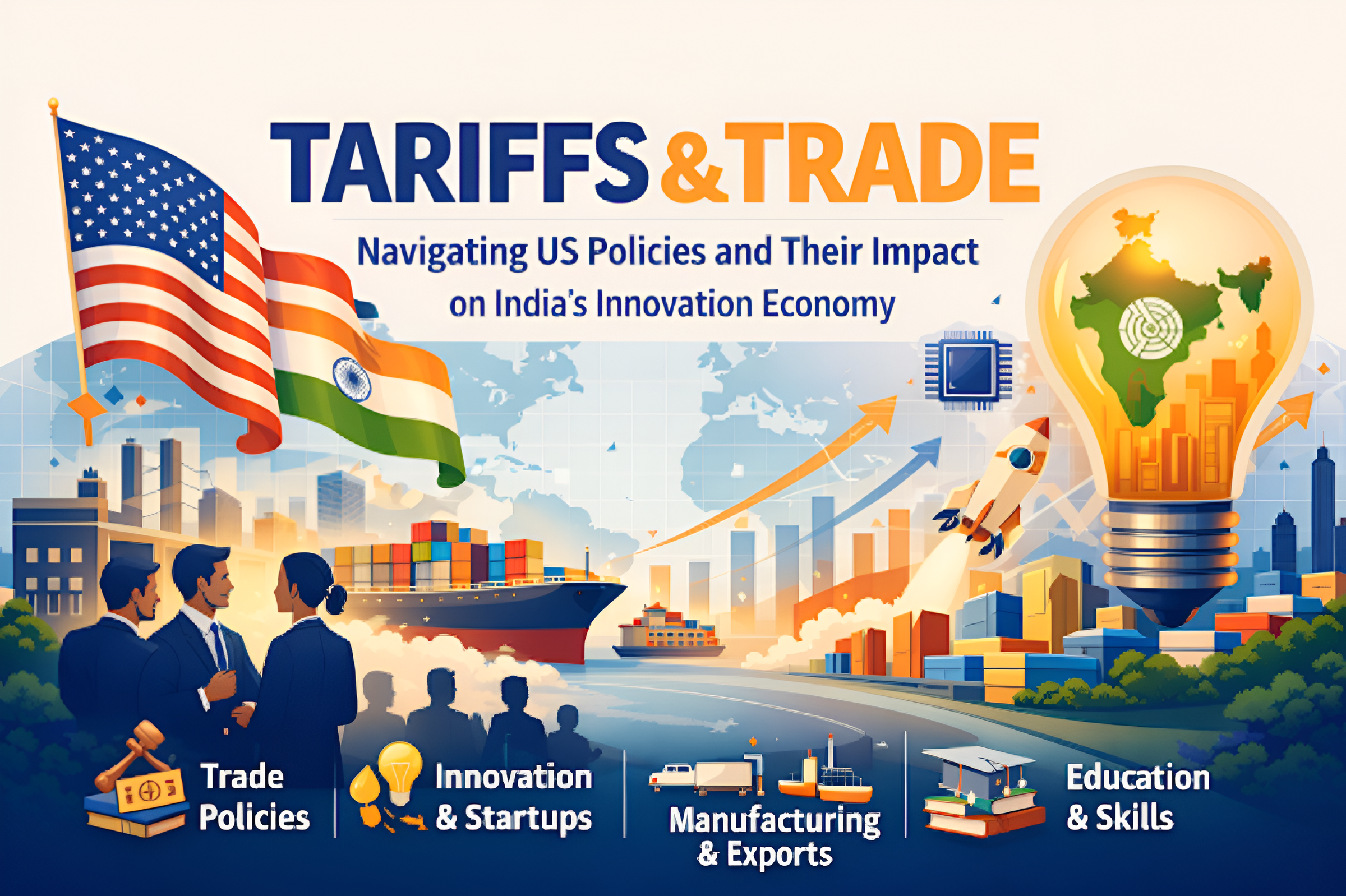
At a time when global trade is being reshaped by shifting tariff regimes and geopolitical realignments,
ICTRD convened a timely Virtual Round Table titled “Tariffs & Trade: Navigating US Policies and Their
Impact on India’s Innovation Economy”. The session brought together policymakers, economists, industry
leaders, academicians, entrepreneurs, and students to examine how evolving US tariff policies influence
India’s manufacturing strength, startup ecosystem, innovation capacity, and long-term global
competitiveness.
The discussion was anchored in ICTRD’s core mission of fostering an innovation-driven knowledge economy by creating a platform where policy, research, industry, and entrepreneurship intersect.
Also Read: Beyond Degrees: ICTRD Leads the Conversation on Employable Education
Setting the Context: Leadership Perspectives
The meeting commenced with a warm welcome by Siddharth Roy, who greeted all participants and
formally welcomed Dr. A. B. Ashish Sasankar, Chairman, and Dr. Ketan Mohitkar, Member Secretary
of ICTRD. He then invited Dr. Sasankar to deliver the Opening Remarks.
Dr. Sasankar emphasized that discussions on tariffs and trade are no longer confined to economics
alone, they directly influence innovation, employment, education, and national resilience. He highlighted
the need for India to view global trade challenges not as constraints, but as opportunities to strengthen
domestic capabilities, enhance skill ecosystems, and build globally competitive innovation hubs. The
round table, he noted, was designed to generate ideas that translate into action, collaboration, and policy
relevance.
Dr. Ketan Mohitkar reinforced this vision by stating that ICTRD’s long-term objective is to bridge
technology, innovation, and policy. He stressed that trade literacy, innovation readiness, and industry
alignment must become integral to education systems if India is to emerge as a resilient and self-reliant
global economy. Collaboration, he emphasized, is the cornerstone of meaningful national progress.
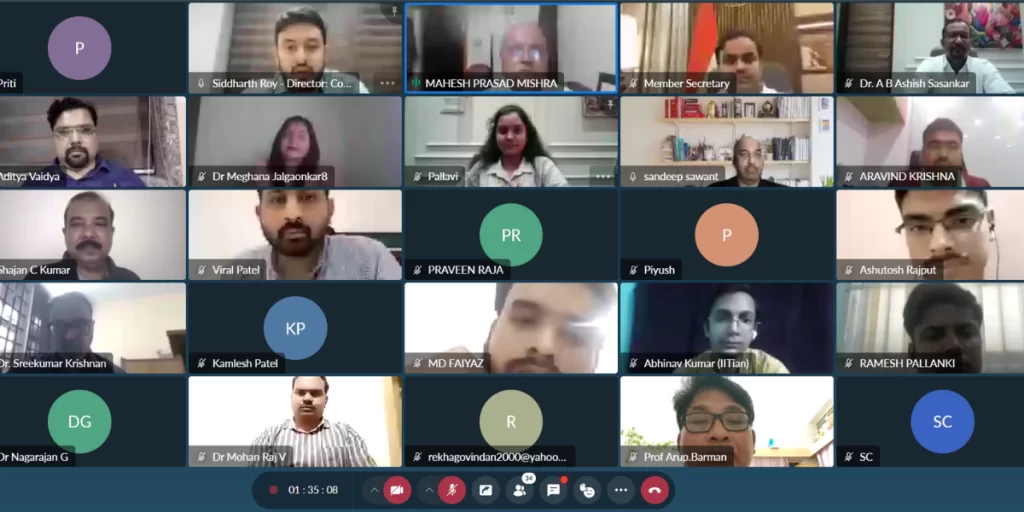
Shajan C Kumar highlighted how tariffs have evolved beyond traditional sectors like steel and oil to
directly affect innovation-driven industries such as IT, gaming, and creative sectors. India’s greatest
strength, he noted, lies in its global manpower presence and innovation talent. Initiatives such as Make in
India and Startup India provide a strong foundation, but sustained competitiveness will depend on skill
enhancement, quality improvement, and strategic global negotiations.
Focusing on entrepreneurship, Dr. Aravind Krishna emphasized that India is increasingly viewed as one
of the most attractive markets for global trade and investment. With strong government backing and
international interest—particularly from regions like the Middle East, Indian startups are well positioned to
scale globally despite tariff barriers.
From a consumer and macroeconomic lens, Ajay Sudharsan L explained how tariffs indirectly fuel
inflation, impacting essentials such as electronics, fuel, and pharmaceuticals.He stressed that startups and MSMEs must play a key role in developing affordable substitutes and driving innovation-led self-
reliance, while policymakers balance trade negotiations with consumer interests.
Dr. Meghana Jalgaonkar underscored the growing complexity of modern trade, which now involves data
flows, supply chains, and strategic interests.She highlighted the critical role of academia and research in building policy literacy, analytical skills, and real-world exposure among students—creating a future
pipeline of capable policymakers and trade experts.
Adding a pragmatic industry view, Aditya Vaidya observed that while US tariffs have created short-term
challenges, they have also opened opportunities for Indian manufacturers to diversify markets, improve
quality standards, and reduce over-dependence on any single geography. He emphasized that such
pressures can strengthen India’s long-term trade resilience.
Education, Innovation, and the Road Ahead
The round table also drew strong parallels between trade resilience and education reform. Academic
leaders and industry voices highlighted the need for experiential learning, innovation labs, and policy
awareness to prepare students for an interconnected global economy. The interactive Q&A session
further reinforced the idea that India’s response to global tariffs must be rooted in skill development,
innovation, collaboration, and strategic thinking.
The ICTRD Virtual Round Table reaffirmed that tariffs and trade policies are not merely economic
instruments—they shape innovation, education, consumer welfare, and national competitiveness. By
convening diverse stakeholders, ICTRD continues to strengthen its role as a thought leader and catalyst
at the intersection of policy, trade, and innovation, laying the groundwork for actionable insights, policy
briefs, and future collaborations that support India’s innovation economy.
[…] Also Read:Tariffs & Trade: Navigating US Policies and Their Impact on India’s Innovation Econo… […]