

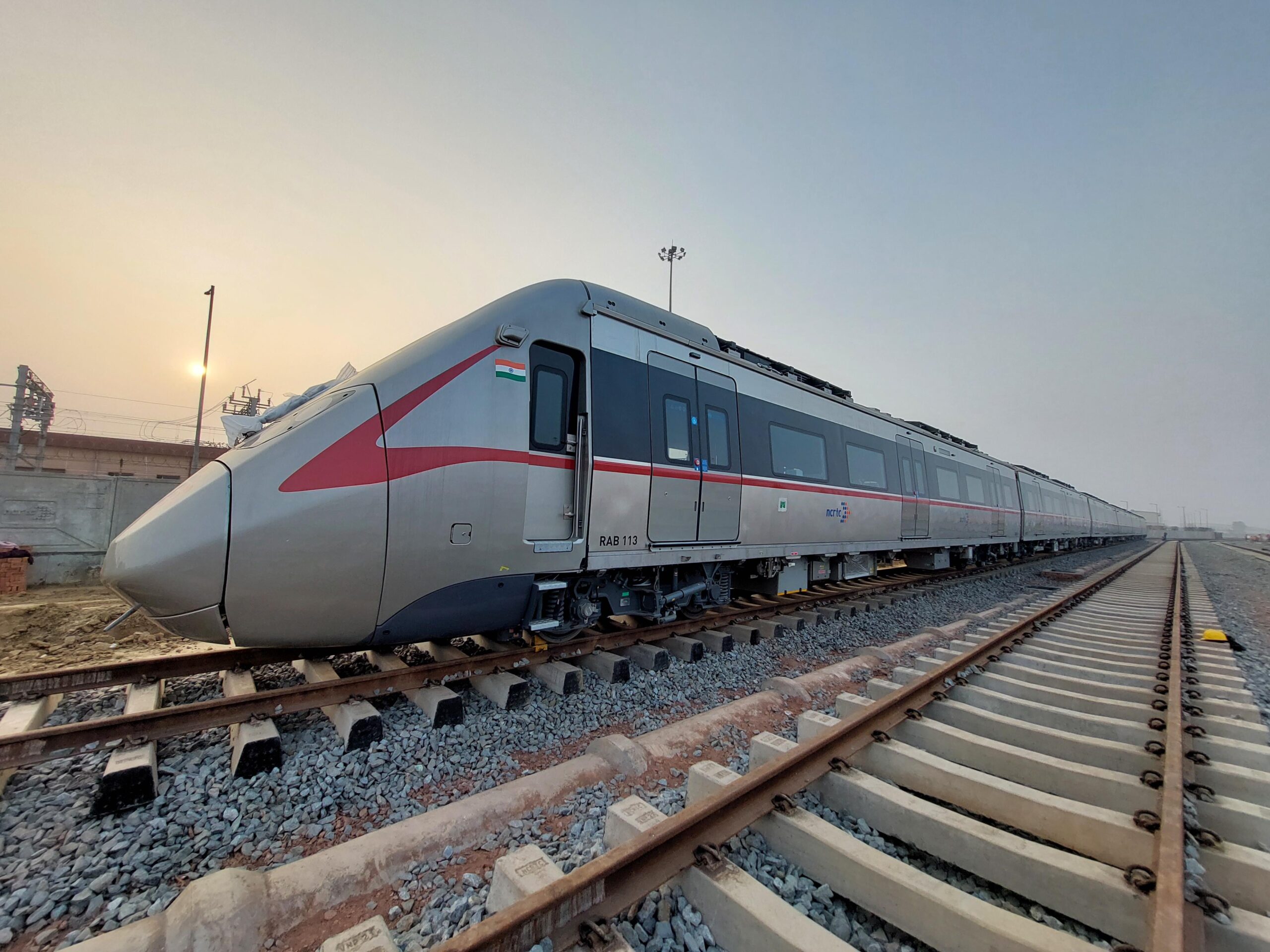
Narendra Modi launched two key transport projects in Uttar Pradesh — India’s first fully operational Regional Rapid Transit System (RRTS) corridor connecting New Delhi and Meerut, and a new metro service for Meerut city. India Authorities designed the project around a shared-track model that allows both the high-speed regional trains and the metro to use the same rail infrastructure. This integrated system will provide faster intercity travel while also supporting efficient daily urban commuting.
When the prime minister visited Meerut on Sunday, February 22, most headlines focused on the inauguration of the complete 82-km Delhi–Meerut Namo Bharat RRTS corridor, a flagship high-speed regional mobility project. However, alongside this major launch, he also inaugurated the Meerut Metro network. Officials describe the metro as a crucial step toward improving local public transport, reducing travel time within the city, and strengthening last-mile connectivity for commuters using the rapid rail service.
Also Read: Portrait row over Shivaji Maharaj sparks controversy in Haryana
Together, the dual launch marks a significant push to modernise regional mobility, promote integrated transport planning, and create a seamless travel system that links long-distance rapid transit with city-level metro services.
India’s high-speed urban metro network across India
Narendra Modi flagged off the Namo Bharat RRTS and the Meerut Metro in one visit, activating two rail systems on the same track in Meerut. The high-speed RRTS links Delhi with Meerut, while the metro supports daily intra-city travel with a higher number of stations along the shared corridor. With this rollout, Meerut became the first city in India where regional rapid rail and metro services operate on common infrastructure, strengthening connectivity across the National Capital Region.
Officials say the integrated system will cut travel time, ease congestion on roads, and offer smoother last-mile connectivity for commuters. The shared-track model also improves efficiency by reducing construction costs and optimising rail capacity. Authorities expect the twin network to support economic activity, encourage urban expansion, and set a template for future multi-modal transport projects in other Indian cities.
Also Read: Major East Coast snowstorm in the US cancels 5,000 flights