

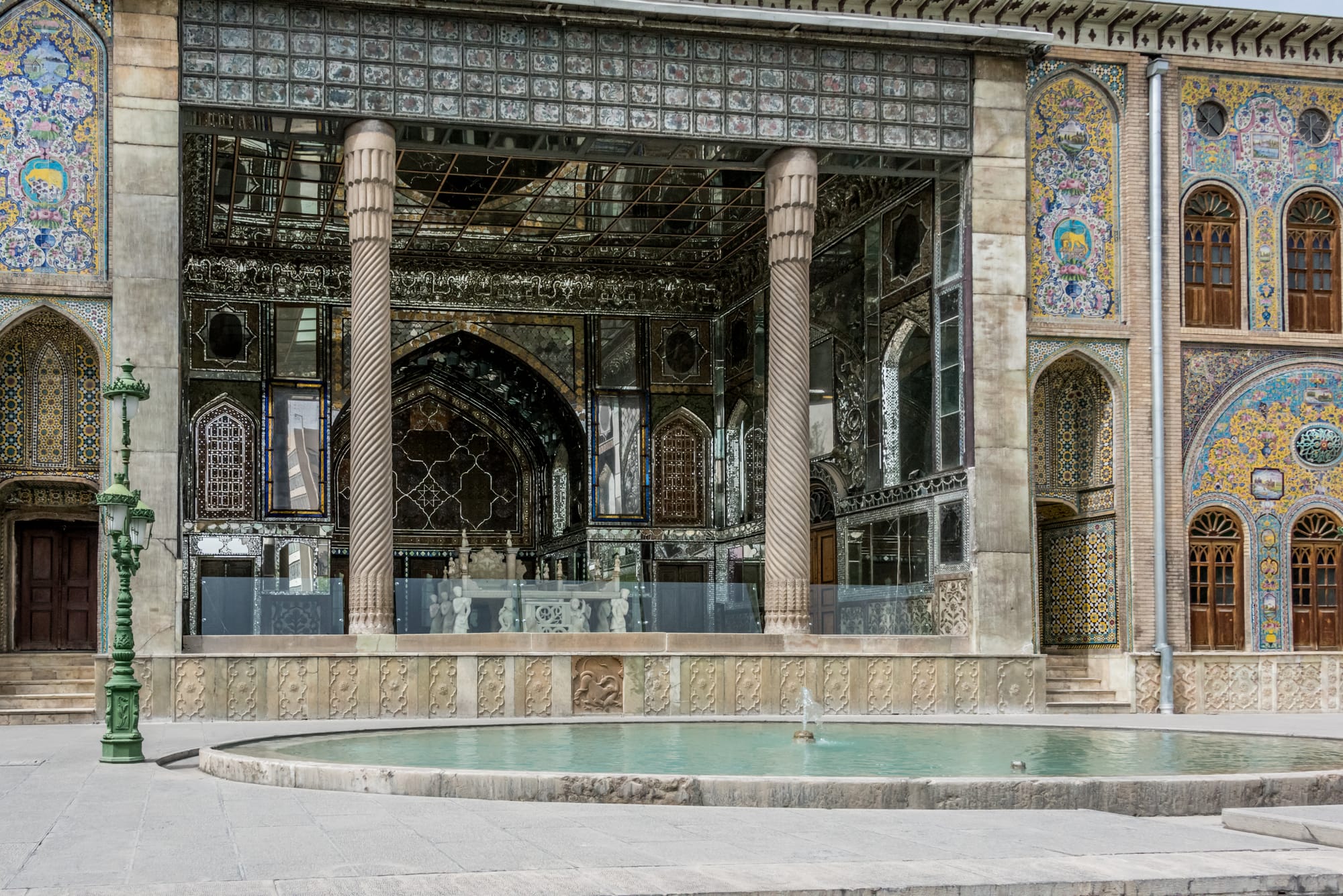
Golestan Palace, often called the “Versailles of Iran,” has suffered damage during the recent regional conflict. Reports and images shared on social media show that parts of the historic complex in Tehran were affected after nearby airstrikes carried out by the United States and Israel on March 2, 2026.
Although the palace was not directly targeted, powerful explosions at nearby locations sent shockwaves through the surrounding area. These blasts damaged some of the palace’s delicate interiors. The impact shattered sections of the famous mirror decorations and affected parts of the structure that had remained preserved for centuries.
Golestan Palace holds great historical and cultural importance in Iran. It once served as a major royal complex during the rule of the Qajar dynasty. The palace reflects a unique mix of traditional Persian design and European architectural influences, which developed during the 19th century.
One of the palace’s most remarkable features is its ayeneh-kari, a traditional Iranian decorative art. In this technique, artisans carefully place thousands of small mirror pieces to create detailed geometric patterns and reflective surfaces. These mirror designs gave the palace interiors a bright and elegant appearance, often described as heavenly.
However, the recent shockwaves from nearby strikes have damaged some of these intricate mirror works. The incident has raised concerns about the safety of the historic site and the preservation of one of Iran’s most treasured cultural landmarks.
Also Read : Tata Consultancy Services Revises Criteria for Pay Raises and Promotions
Golestan Palace Hit Sparks Heritage Worries
People on social media have expressed sadness over the damage to Golestan Palace. Many users shared the before-and-after photos and highlighted the cultural value of the historic site.
One user said the damage was tragic and noted that the palace represented years of skilled craftsmanship. The person added that cultural heritage is extremely valuable and hoped experts could restore the palace to its original beauty.
Another user explained that the damaged mirrors were not ordinary decorative pieces. They were part of ayeneh-kari, a traditional Persian craft that uses thousands of small handcrafted mirrors to create detailed and bright patterns. This technique has also been used in parts of India.
The user also pointed out that Iran still has artisans who know this traditional craft. However, rebuilding the damaged mirror work will take many years and require significant resources and restoration efforts.
Also Read : Air India Seeks Pilot Duty Relief from Directorate General of Civil Aviation