

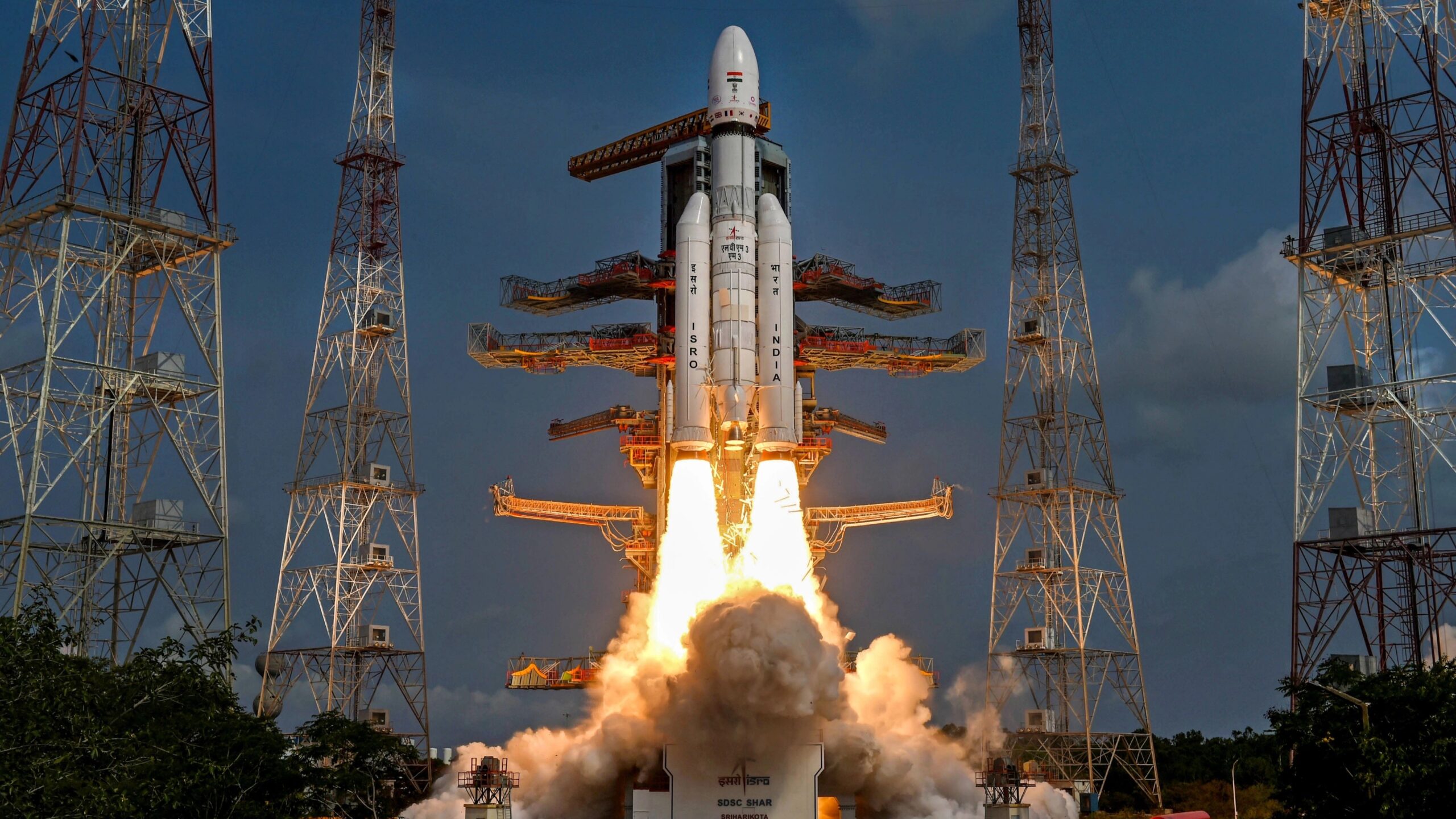
Researchers from IIT Kharagpur, working with Physical Research Laboratory, have made an important discovery about the Moon’s interior. Their findings could help scientists better understand the Moon’s early history and support future missions like Chandrayaan-4.
The study focuses on a rare type of rock called ilmenite-bearing cumulates (IBC). These rocks are rich in iron and titanium and likely formed around 4.3 to 4.4 billion years ago. At that time, the Moon was covered by a vast ocean of molten rock, known as a magma ocean. As this molten layer cooled, heavier minerals sank deep inside the Moon. These layers preserved valuable information about how the Moon formed and evolved.
To study these rocks, scientists recreated conditions similar to the Moon’s interior in a laboratory. They exposed samples to extremely high pressure, up to 3 gigapascals, and temperatures above 1,500°C. These experiments helped researchers understand how IBC rocks behave deep inside the Moon.
The IIT team found that these rocks can partially melt and interact with surrounding materials. This process produces magma similar to the titanium-rich basalt seen on the Moon’s surface. According to lead researcher Sujoy Ghosh, these findings provide a strong scientific basis to understand lunar samples better.
Also Read: Air Canada Plane Collision at LaGuardia Leaves 4 Injured
The research offers valuable insights for future missions that aim to bring samples back from the Moon. Scientists published the study in the journal Geochimica et Cosmochimica Acta, highlighting its importance for ongoing lunar exploration efforts.
IIT Study Reveals Lunar Magma Secrets
Researchers explained that different melting conditions inside the Moon produce different types of magma. At higher temperatures, moderately titanium-rich melts directly form intermediate-titanium basalts. At lower temperatures, very high titanium melts first change into even more titanium-rich and magnesium-poor forms before mixing with other rising magmas. This complex process eventually creates the high-titanium basalts that earlier missions have detected on the Moon’s surface.
The study also shows how magma moves deep inside the Moon. At lower pressure levels, molten material rises to the surface and contributes to volcanic activity. At higher pressures, some magma sinks back into the mantle. This movement, known as mantle overturn, reveals that the Moon has a dynamic internal system with both upward and downward flows.
These findings will play an important role in future missions like Chandrayaan-4. Scientists will use this knowledge to identify areas rich in titanium and select better landing sites. The research will also help them understand lunar samples more accurately when they are brought back to Earth.
Experts believe this study will improve how scientists read data collected by spacecraft and better predict the Moon’s geological features. Lead researcher Sujoy Ghosh said the team aims to understand how these unusual magmas form deep inside the Moon and reach the surface, which will help explain the Moon’s history in greater detail.
Also Read: Trump Deploys ICE for Airport Security Duties
[…] Also Read: IIT Finds Ancient Moon Clue, Aids Chandrayaan-4 […]