

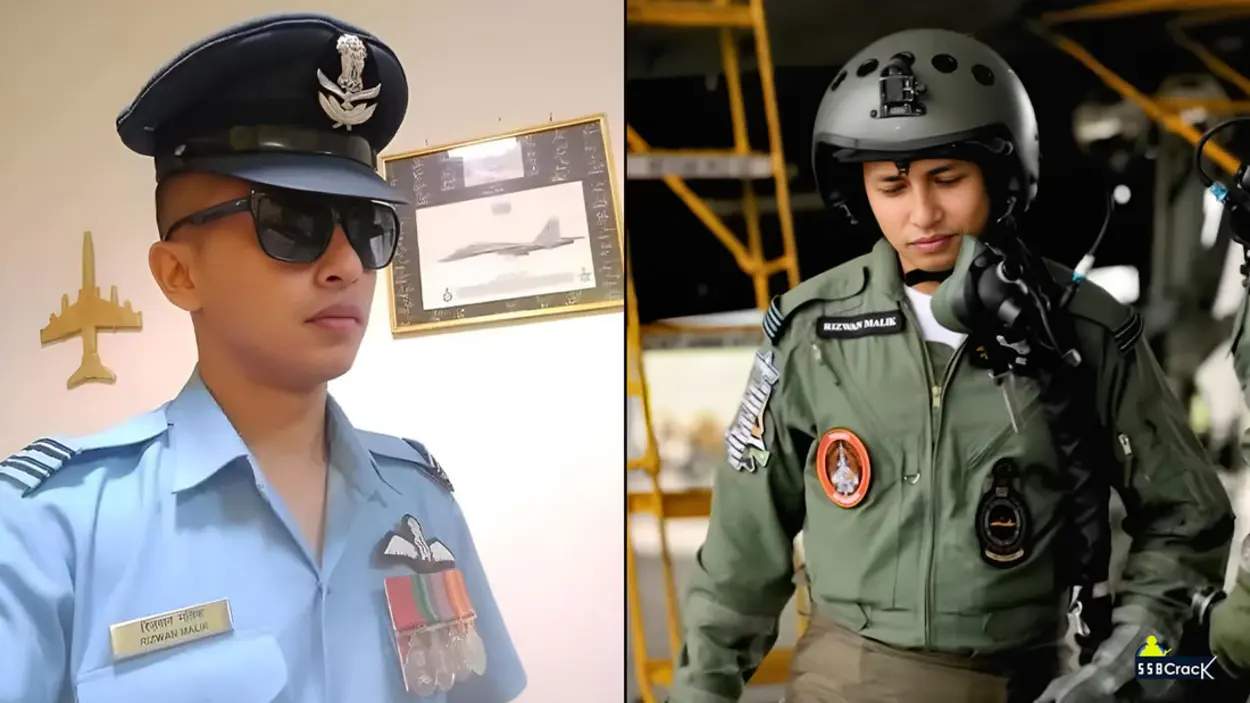
Operation Sindoor Rizwan Malik became one of the biggest defence stories after details of the Indian Air Force mission surfaced during the first anniversary of the operation. Squadron Leader Rizwan Malik reportedly flew a high-risk midnight sortie targeting terror infrastructure inside Pakistan during the 2025 strike operation. The mission was launched weeks after the deadly Pahalgam terror attack that killed several civilians in Jammu and Kashmir. Malik flew a Sukhoi Su-30MKI through heavily monitored airspace while facing radar locks and enemy air defence systems. Despite the threats, he successfully carried out precision missile strikes on terror camps linked to extremist organisations. Military sources described the operation as focused, strategic, and designed to avoid civilian areas. His courage and combat performance later earned him the prestigious Vir Chakra award from the Government of India.
From Manipur Village To Fighter Cockpit
Rizwan Malik started his journey in Manipur’s Imphal East district and later joined the Indian Air Force with strong determination. He trained rigorously during his early flying years and quickly developed expertise in deep-strike missions and air superiority operations. Senior officers recognised his calm decision-making skills during complex combat exercises. Over the years, he gained experience in handling advanced fighter aircraft under difficult operational conditions. His dedication and discipline helped him rise through the ranks and become a Squadron Leader in the Indian Air Force.
The officer continued sharpening his tactical skills through multiple operational deployments and training programs. He focused heavily on night combat flying, precision targeting, and high-speed mission planning. Defence experts believe these abilities played a major role during Operation Sindoor. Malik maintained composure even while operating in heavily defended zones during the strike mission. His performance reflected the professionalism and preparedness expected from frontline fighter pilots in modern aerial warfare.
Also Read: Ektaa Kapoor supports Akshay Kumar’s 4-films-a-year pace
Precision Mission Under Enemy Surveillance
The Indian Air Force planned Operation Sindoor with careful coordination and accurate intelligence inputs. The mission targeted terror launch pads and infrastructure linked to extremist groups operating from Pakistan and Pakistan-occupied Kashmir. Pilots involved in the operation flew under extreme pressure because enemy radar systems constantly monitored the airspace. Rizwan Malik reportedly entered the combat zone during the night to reduce the chances of detection and improve strike accuracy. He navigated dangerous aerial routes while maintaining communication discipline throughout the operation.
During the mission, hostile defence systems attempted to track and intercept the aircraft involved in the strikes. Malik continued the operation despite repeated threats from ground-based systems and aerial monitoring units. He aligned the fighter jet for precision weapon release and destroyed the assigned targets successfully. Reports suggest the strikes created confusion among hostile operators and disrupted planned terror activities. The operation demonstrated the Indian Air Force’s ability to conduct accurate deep-strike missions in hostile territory.
Also Read: IIT Mandi Opens Applications for One-Month AI, Robotics and IoT Programme
Nation Honoured The Brave IAF Officer
After details of the mission became public, people across the country praised the courage shown by the Indian Air Force team. Rizwan Malik received special recognition for displaying exceptional bravery during one of the most dangerous phases of the operation. The Government of India awarded him the Vir Chakra for his role in executing precision strikes against terror infrastructure. Citizens from Manipur also celebrated his achievement and appreciated his contribution to national security.
Defence analysts described Operation Sindoor as an important example of modern military preparedness and rapid response capability. Military veterans highlighted the importance of highly trained fighter pilots in such sensitive cross-border operations. Malik’s story inspired many young Indians who dream of serving in the armed forces. His successful mission showcased determination, strategic execution, and professional excellence under intense battlefield conditions. The operation continues to remain a significant chapter in recent Indian military history.