

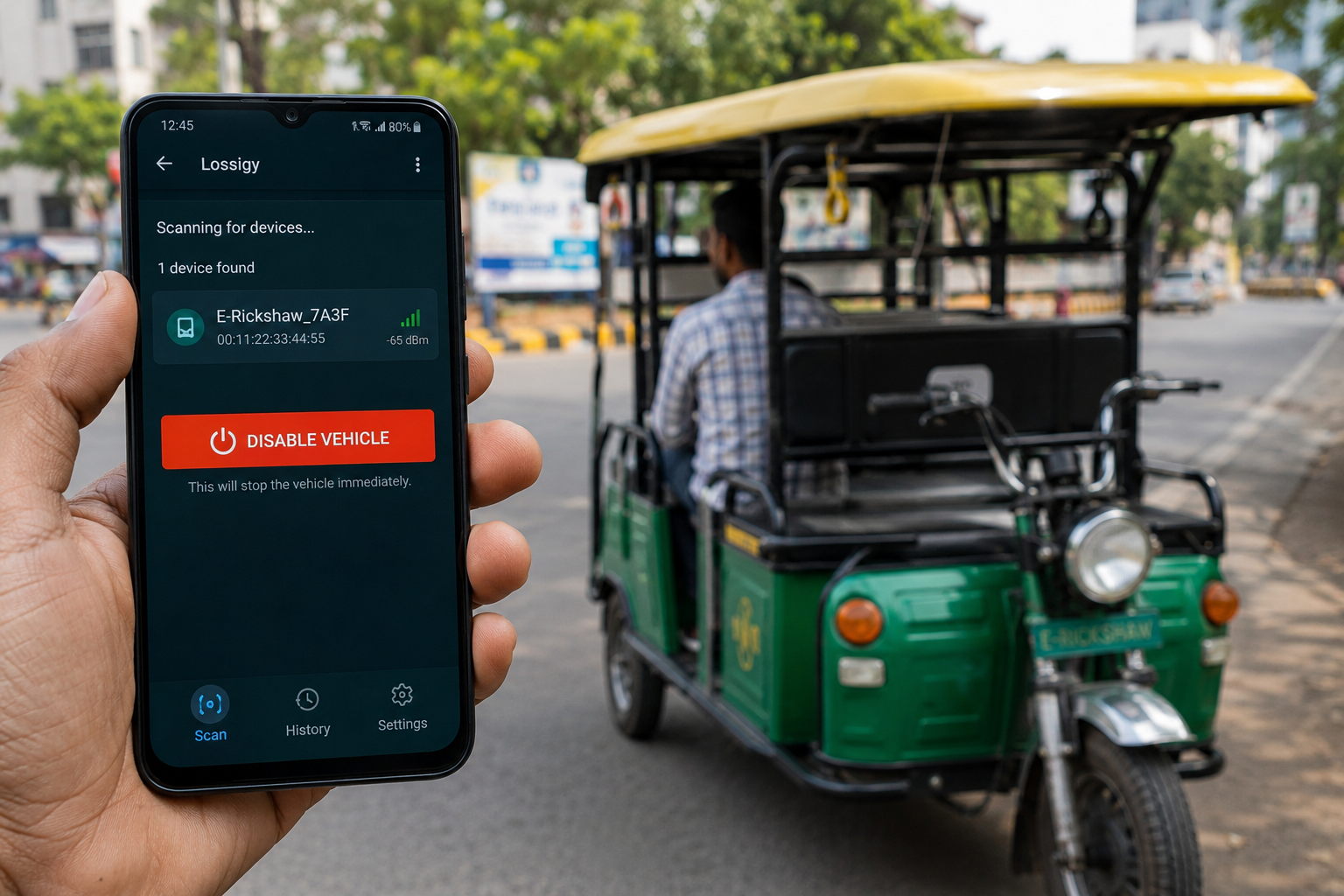
The government ordered the removal of three mobile applications allegedly misused against e-rickshaws. Sources said authorities targeted BAT-BMS, Lossigy, and Epoch-i-ion through the latest directive. Officials also decided to block similar applications enabling unauthorized control over battery-operated vehicles. Authorities acted after repeated reports highlighted sudden vehicle shutdowns across several locations. Viral videos showed people approaching e-rickshaws and switching them off during active journeys. The incidents raised fresh concerns about passenger safety and driver security on busy roads. Officials considered the misuse a serious threat to India’s growing electric mobility ecosystem. Authorities believe these applications exceeded their intended battery management functions through unauthorized access. Drivers faced unexpected interruptions while transporting passengers across cities and towns. The government responded quickly after evidence suggested widespread misuse through publicly available mobile applications. Officials expect the removal order to reduce such incidents and improve commuter safety nationwide.
Also read: Over ₹9,300 Crore Unclaimed in 31 Lakh EPF Accounts Across India
Drivers Report Sharp Rise in Misuse
Drivers said e-rickshaws remained vulnerable to unauthorized shutdowns for several years before recently. They noticed a sharp increase after prank videos spread rapidly across social media platforms. Many videos showed individuals deliberately stopping moving e-rickshaws while recording the incidents for entertainment. Drivers claimed these acts disrupted daily operations and damaged public confidence in electric transport. Several operators reported financial losses because interrupted trips reduced passenger trust and earnings. One application, Lossigy, reportedly located nearby compatible vehicles before disabling them instantly. Reporters tested the application with a driver’s permission during their investigation into the issue. The application successfully stopped an e-rickshaw through its wireless battery management connection. Drivers warned that sudden shutdowns created dangerous situations on crowded roads and intersections. They urged authorities to strengthen security standards and prevent further misuse through stronger regulations immediately.
Developers originally created these applications to monitor lithium-ion battery performance and overall system health. The applications display battery charge, voltage, current, temperature, cycle count, and operational status continuously. They also maintain charging records and provide detailed battery performance information for vehicle owners. Most applications connect through Bluetooth technology without requiring passwords or user authentication procedures. Anyone standing within Bluetooth range can establish a connection with compatible battery systems. Unauthorized users can interrupt power delivery through a single command using their smartphones instantly. BAT-BMS supports Bluetooth-enabled lithium batteries and operates within a wireless range of fifteen metres. The application also allows monitoring of multiple batteries under compatible operating conditions simultaneously. Experts said the missing authentication process creates significant cybersecurity weaknesses for connected electric vehicles. They urged manufacturers to introduce secure pairing systems before allowing battery access.
Also read: Himachal Rain Fury: 4 Killed, 49 Roads Closed; Orange Alert Till July 5
Officials Examine Security Concerns
Government officials started examining the reported security weaknesses before issuing the application removal directive. Sources said the Union Ministry of Electronics and Information Technology reviewed the matter carefully. Officials assessed whether these applications violated safety expectations through inadequate security protections and controls. A senior Delhi government official highlighted concerns involving Chinese-manufactured battery management systems currently. The official said many systems lacked essential cybersecurity protections against unauthorized Bluetooth connections completely. Authorities believe several users deliberately exploited these weaknesses for mischief instead of legitimate purposes. Officials stressed that battery management software should never allow unrestricted public access remotely. They also encouraged manufacturers to strengthen digital protections across future battery management systems immediately. Authorities continue reviewing additional applications that might present similar security vulnerabilities for users. They plan further action whenever investigations identify comparable threats affecting electric vehicle safety nationwide.
Experts described the incident as a warning about hidden cybersecurity risks within affordable electric vehicles. They argued that manufacturers should prioritize digital security alongside battery performance and operational efficiency. Weak software protections can expose drivers, passengers, and vehicles to unnecessary safety threats daily. Experts recommended mandatory authentication before allowing Bluetooth access to battery management systems everywhere. They also supported stronger encryption and regular software updates across connected electric vehicles nationwide. Industry specialists urged regulators to establish uniform cybersecurity standards for battery management technologies immediately. They said stronger regulations would discourage misuse while improving confidence in electric transportation systems. Drivers also welcomed government intervention and requested permanent safeguards against future digital vulnerabilities nationwide. Experts believe secure technology will strengthen India’s expanding electric mobility sector over coming years. They emphasized that robust cybersecurity remains essential for protecting connected vehicles and public safety.