

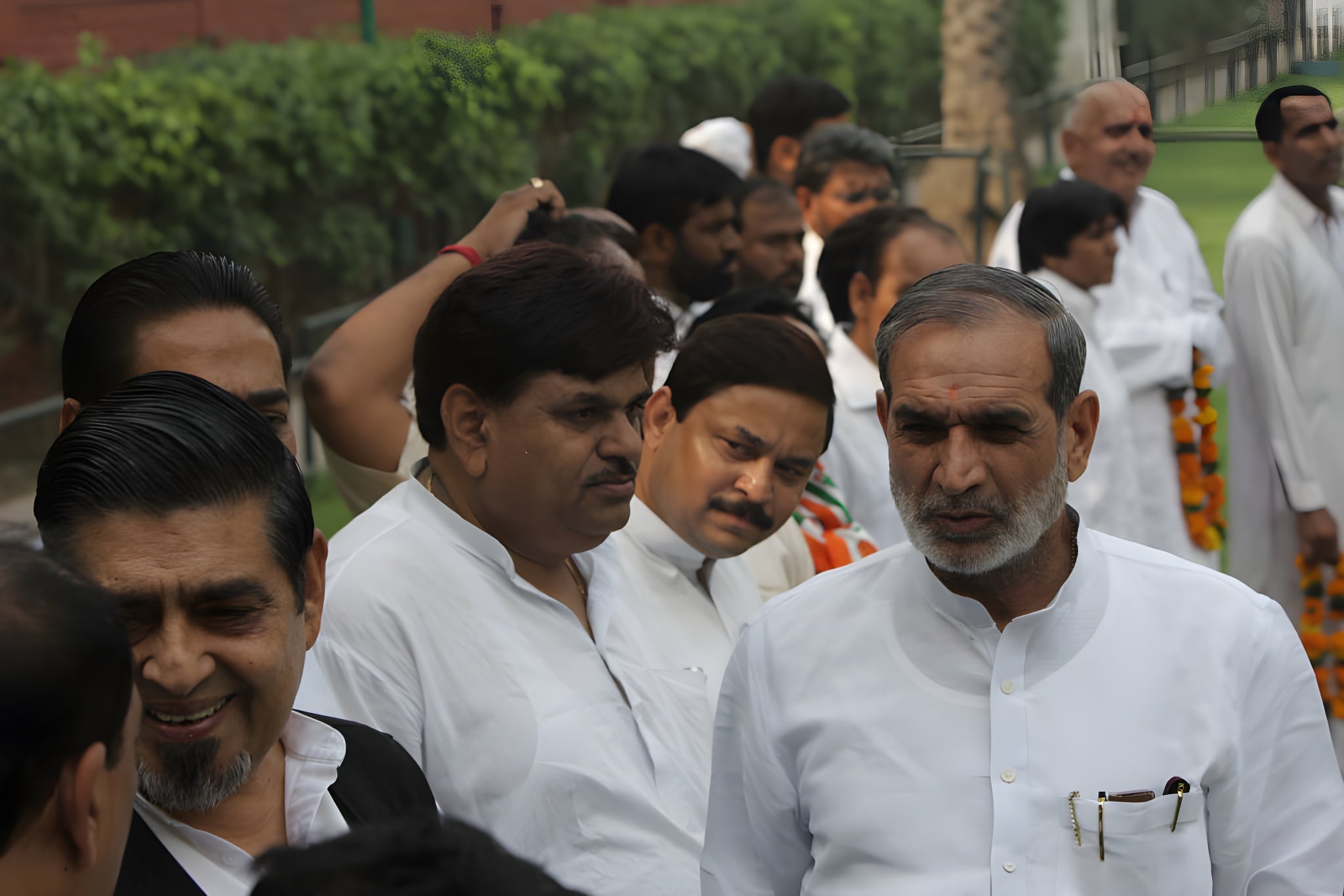
Former Congress MP Sajjan Kumar died while serving a life sentence in a 1984 anti-Sikh riots case. He died at Safdarjung Hospital in Delhi. In February 2025, a Delhi court convicted him for the murders of Jaswant Singh and his son Tarundeep Singh in Saraswati Vihar on November 1, 1984. The killings took place during the violence that erupted in Delhi and other parts of the country after then Prime Minister Indira Gandhi was assassinated on October 31, 1984. The Justice Nanavati Commission, which investigated the riots, had also examined allegations against Kumar. Its report referred to credible material against him and pointed to his probable involvement based on witness accounts.
Also read:Sukhbir Badal Injured in Hand After Kirpan Attack in Maharashtra
Nanavati Commission’s Findings on Sajjan Kumar
The Justice Nanavati Commission conducted an extensive inquiry into the violence and examined police records, affidavits and witness testimonies. The report described Sajjan Kumar as an influential local Congress leader who allegedly remained present during violence in several parts of west Delhi. Witnesses named him in connection with incidents in Palam Colony, Raj Nagar, Mangolpuri and Sultanpuri. Some witnesses alleged that Kumar addressed crowds or gave directions during the violence. Jagdish Kaur, a resident of Raj Nagar, told the commission that she heard Kumar allegedly address a crowd near Mandir Mangla Puri. The commission also recorded allegations from Mangolpuri and other areas. After examining the available material, it said credible evidence existed against Kumar and Balwan Khokhar and concluded that they were probably involved as alleged by several witnesses.
The commission devoted considerable attention to the Delhi Cantonment police station area, which included Palam Colony, Raj Nagar, Sadh Nagar, Sagarpur and Mahavir Enclave. According to the report, the area suffered extensive violence between October 31 and November 5, 1984. The commission cited police records that put the number of Sikh deaths in the area at 246, while other estimates placed the figure higher. The report also documented the destruction of six gurdwaras, hundreds of houses and shops, and several vehicles. Despite the scale of the violence, police records showed only five FIRs in the area. Raj Nagar resident Sudershan Singh alleged that he saw Kumar near a mob and claimed that Kumar supervised the operation. Amarjit Kaur also accused Kumar of leading the mob that killed her husband, Captain Nazar Singh Mangat.
Evidence From Mangolpuri and Sultanpuri
The commission also examined allegations connected to Mangolpuri, where violence continued for several days. Mangolpuri resident Niranjan Singh submitted an affidavit alleging that Kumar and some of his associates visited a gurdwara in the area. His account alleged that the Guru Granth Sahib was burned and that the gurdwara was later set on fire. The commission also recorded another affidavit concerning the incident and examined claims about who led the mob. Sultanpuri also featured in the report, with witnesses alleging that Kumar addressed meetings of Congress workers and made statements blaming Sikhs for Indira Gandhi’s assassination. The commission recommended a fresh examination of cases in which witnesses had named Kumar but police had either failed to file chargesheets or had closed the cases without properly investigating them.
Kumar defended himself before the commission by pointing to his acquittals in several earlier criminal cases. He argued that some witnesses had not named him before the police or had failed to support the allegations in court. However, the commission said those acquittals did not prevent it from assessing the broader evidence placed before it. The report highlighted serious shortcomings in the police investigation, including failure to register complaints, examine eyewitnesses properly and record the names of influential accused persons. It also found that victims sometimes could not properly identify or name their alleged attackers in official records. The commission therefore recommended further examination of cases involving Kumar. Decades later, a separate criminal prosecution led to his conviction in the Saraswati Vihar murders, for which a Delhi court sentenced him to life imprisonment in February 2025.
Also read:Raghav Chadha Faces Questions Over Delhi Tender Allegations, Team Rejects Claims
[…] Also read:Sajjan Kumar Dies: What the Nanavati Commission Report Said About His Role in the 1984 Rio… […]