

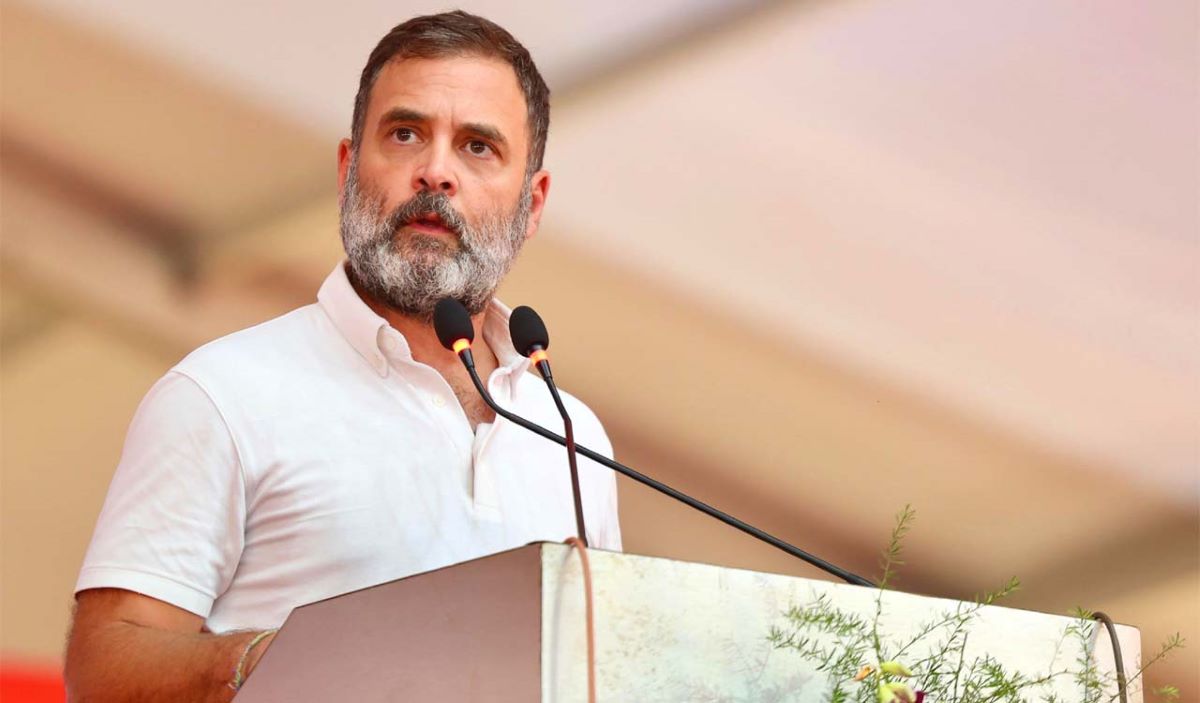
Congress leader Rahul Gandhi accused the BJP-led government of interfering with Indian businesses and undermining their independence. The Leader of Opposition in the Lok Sabha alleged that business leaders feared speaking publicly against government actions. His remarks followed a growing controversy surrounding N Chandrasekaran’s proposed reappointment as Tata Sons Executive Chairman. Gandhi claimed that the Tata Group faced serious challenges while business leaders remained silent over the dispute. In a post on X, he questioned whether corporate leaders would continue remaining silent until authorities controlled their businesses. He also insisted that Indian companies should not become instruments of the ruling party’s political interests. Gandhi described the situation as a serious threat to business independence and corporate confidence across India. His comments intensified the political debate surrounding corporate governance, government influence, and the ongoing leadership disagreement within Tata Sons.
Also read:Indian Developers to Present Projects at Moscow International Game Week
Rahul Gandhi Accuses BJP Government of Undermining Indian Businesses
Union Finance Minister Nirmala Sitharaman responded sharply to Gandhi’s allegations, accusing him of politicising commercial and legal matters. She argued that public figures should avoid describing corporate disagreements as criminal activities without establishing supporting evidence. Sitharaman also accused Gandhi of repeatedly questioning Indian entrepreneurs’ achievements and creating distrust towards the country’s industrial sector. She questioned whether he wanted business leaders to join his criticism of the government and Indian industry. The Finance Minister contrasted previous Congress governments’ economic policies with the current administration’s approach towards entrepreneurship and investment. She claimed that earlier governments weakened entrepreneurial ambitions through restrictive policies associated with the Licence-Quota Raj. According to Sitharaman, those policies contributed to widespread poverty and discouraged businesses from expanding their operations. She maintained that the BJP-led government supported industrial development, encouraged investment, and viewed businesses as important employment generators. Sitharaman urged Gandhi to discuss economic issues constructively instead of making allegations she considered politically motivated.
Sitharaman emphasised that political leaders, governments, institutions, and parties shared responsibility for strengthening India’s economic future. She highlighted the importance of supporting industries, protecting farmers’ interests, and creating better opportunities for young people. The Finance Minister also defended India’s judicial system while responding to Gandhi’s criticism of the government. She argued that the Constitution guaranteed justice to citizens and entrusted courts with protecting their legal rights. Sitharaman accused Gandhi, his party, and former Congress prime ministers of weakening public confidence in judicial institutions. She urged him to respect established legal processes instead of making accusations against individuals or organisations. Her response framed the Tata Sons controversy as a commercial and legal matter requiring appropriate institutional consideration. Meanwhile, Gandhi’s remarks presented the dispute as evidence of broader concerns about corporate independence under the current administration. Their public exchange highlighted competing political narratives about business freedom, government responsibility, and institutional accountability.
Also read:A.R. Rahman Recalls Fan Who Predicted His Ramayana Collaboration 12 Years Ago
Noel Tata Challenges Chandrasekaran’s Reappointment at Tata Sons
The controversy centres on Tata Trusts Chairman Noel Tata’s objections to N Chandrasekaran’s proposed reappointment as Tata Sons Executive Chairman. In an October 26 letter, Noel Tata challenged the validity of a resolution passed during the September 17 board meeting. He argued that the circulated agenda did not explicitly identify Chandrasekaran’s reappointment as an item for discussion. Noel also claimed that Tata Sons had withheld meeting recordings, final minutes, and a certified resolution copy despite repeated requests. He maintained that the company had failed to follow relevant provisions within Tata Sons’ Articles of Association. According to his letter, the board had not received recommendations from a Selection Committee established under Article 118. He further argued that directors appointed under Article 104B had not provided the affirmative votes required under applicable provisions. Noel also questioned whether the company could treat the resolution as final while unresolved conditions and objections remained outstanding.
Noel Tata also challenged the handling of meeting records and questioned how Tata Sons documented Chandrasekaran’s proposed reappointment. He said the original agenda described item seven as a briefing from the Nomination and Remuneration Committee. According to Noel, subsequent agenda revisions still failed to mention the reappointment explicitly despite adding other matters. He described the meeting’s audio and video recordings as essential evidence for establishing what directors discussed. Noel claimed that the company had ignored two written requests seeking those recordings over more than three weeks. He also questioned the circulation and filing of a certified resolution before the board finalised its minutes. Noel requested meeting recordings, revised minutes, voting details, formal notices, agenda versions, and relevant regulatory filings within seven days. He additionally asked Tata Sons to notify the Registrar of Companies that a director formally disputed the resolution’s validity. Noel urged the company to suspend further action until officials resolved the disputed records and outstanding procedural objections.
Also read:Bihar MLC Election 2026: Neeraj Singh Leads in Patna, BJP Ahead in Tirhut