

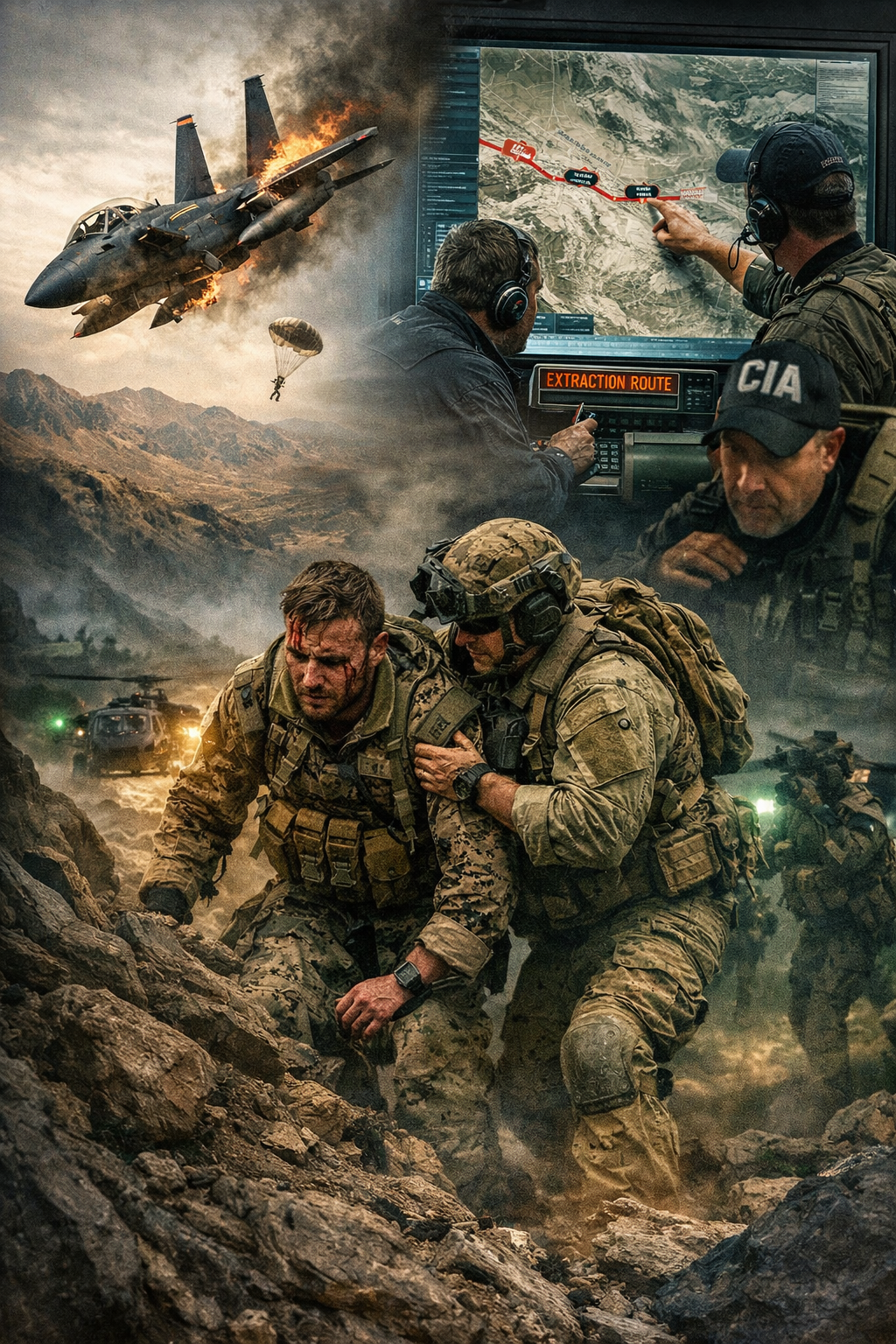
The F-15E pilot rescue in Iran shocked defense experts as details of the high-risk operation emerged. A US weapons systems officer survived for more than 24 hours after ejecting into hostile Iranian territory. He hid in rugged mountainous terrain while Iranian troops and civilians actively searched for him. The pilot used limited communication to avoid detection and relied on survival techniques to stay alive. His three-word message initially raised suspicions among US officials, who feared a trap. However, intelligence teams later confirmed his identity and location using advanced surveillance tools. The US military then launched a carefully planned rescue mission under extreme conditions. This operation highlighted coordination between intelligence agencies and special forces.
CIA Deception Played Key Role in Rescue
The Central Intelligence Agency (CIA) actively executed a deception strategy to protect the stranded officer. Agents spread false information across Iranian channels claiming that rescuers had already located the pilot. They suggested that forces were moving him through a different route, which misled Iranian search teams. This tactic successfully redirected attention away from the officer’s real position. As a result, US forces gained valuable time to organize the rescue mission.
The CIA maintained constant coordination with military units during the operation. Intelligence officers monitored Iranian troop movements and adjusted their strategy in real time. They ensured that the misinformation campaign remained believable and consistent. This approach reduced the risk of confrontation near the extraction zone. The deception ultimately created a safer path for special forces to reach the pilot. It demonstrated how intelligence operations can directly influence battlefield success.
Also Read: Soldierathon : Delhi Metro to run 3 AM services
Three-Word Message Sparked Confusion
The downed officer sent a short but powerful message: “God is good.” US officials initially questioned the transmission because it sounded unusual under combat conditions. Some feared that Iranian forces might have intercepted communications and used them to lure rescuers into an ambush. This uncertainty delayed immediate response planning. Analysts worked quickly to verify the authenticity of the message.
Experts later confirmed that the message reflected the pilot’s personal beliefs rather than a coded signal. The clarification reassured military leadership and allowed them to proceed with confidence. Communication teams continued to use secure channels to stay in contact with the officer. The pilot minimized radio use to avoid detection while still providing critical updates. His discipline and clarity helped rescuers locate him accurately. This moment highlighted the importance of secure and verified communication in combat situations.
Also Read: Ranbir Kapoor to Play Two Roles in Ramayana Shares Insight About Second Role
200 Troops Carried Out Night Rescue Mission
The US military deployed nearly 200 troops for the F-15E pilot rescue in Iran. Special forces units led the nighttime mission to reduce visibility and avoid enemy detection. They entered Iranian territory after confirming the officer’s exact location. Helicopters and ground teams coordinated closely to execute the extraction. The forces moved quickly and efficiently despite the high-risk environment.
Rescue teams successfully reached the officer and secured the area within a limited time window. They evacuated him safely while avoiding direct confrontation with Iranian forces. The operation followed an earlier daytime rescue of the pilot, which added complexity to the mission. Military leaders praised the coordination and precision shown during the extraction. The success of the mission demonstrated the capability of US forces to operate under extreme pressure. It also reinforced the importance of planning, intelligence, and teamwork in modern warfare.