

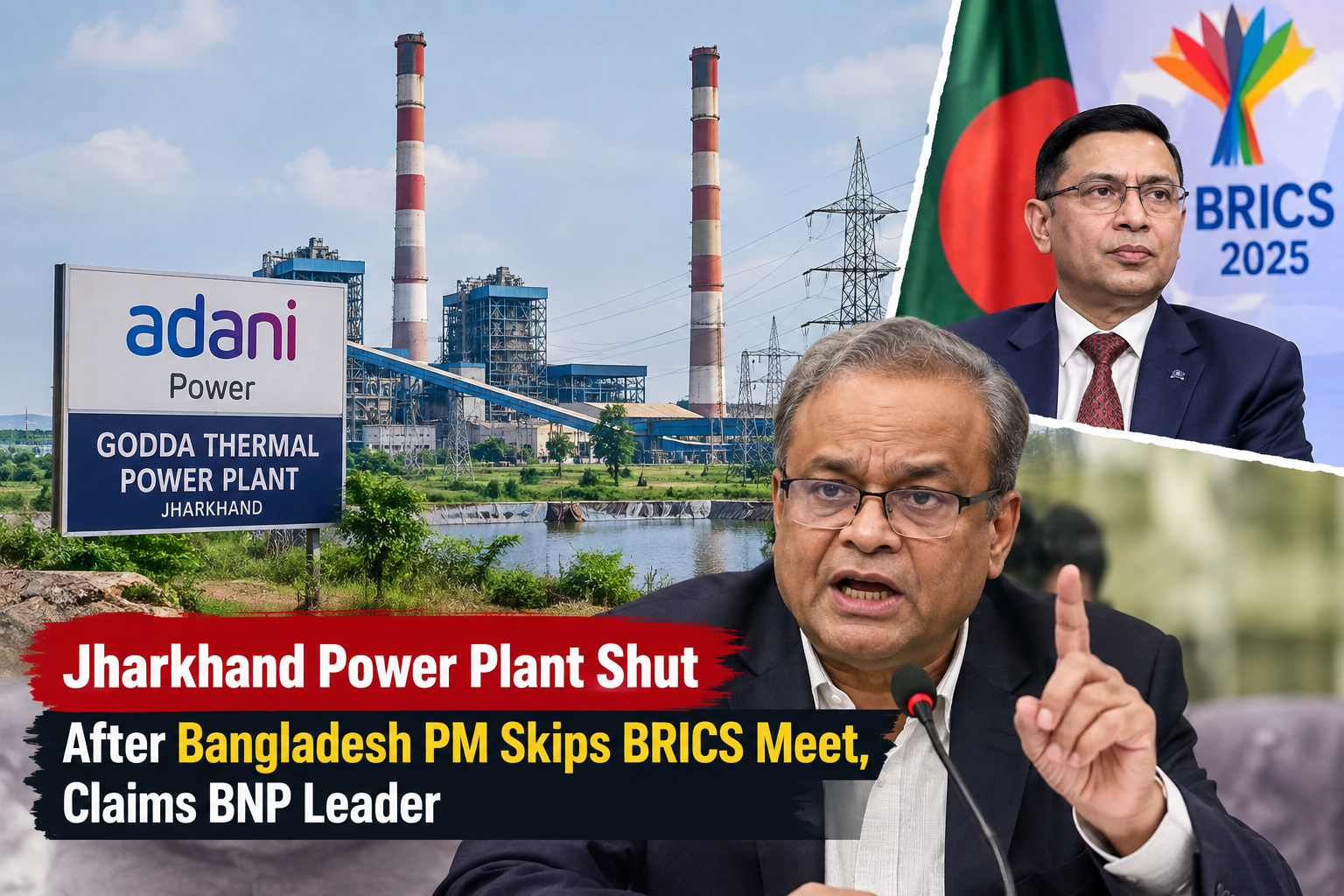
A unit of Adani Power’s Godda thermal power plant in Jharkhand, which supplies electricity to Bangladesh, was shut down after a boiler-related technical fault. The outage reduced the power available to Bangladesh at a time when the country was already facing an electricity shortage. BNP Acting Secretary General Ruhul Kabir Rizvi linked the shutdown to Prime Minister Tarique Rahman’s decision not to attend the BRICS Summit in New Delhi. Rizvi questioned the timing of the incident and suggested that the two developments could have a connection. The affected unit went offline on September 10 and returned to the grid on September 13 after engineers repaired the fault. The Godda plant has a total capacity of 1,600 MW and supplies a major share of its electricity to Bangladesh. The temporary shutdown further increased pressure on Bangladesh’s power system, where several areas were already experiencing lengthy power cuts.
Also Read : From Farms to Factories: How AI Is Transforming India’s Food Supply Chain
Power plant Godda Unit Restored After Boiler Fault
The Godda plant operates two units with a combined capacity of 1,600 MW. One unit developed a boiler problem on September 10, forcing the plant operators to take it offline. The shutdown reduced the electricity supplied to Bangladesh from around 1,496 MW to below 800 MW. Engineers repaired the problem and restored the unit to the grid on September 13. The outage came during a difficult period for Bangladesh’s energy sector. Reports indicated that the country faced a power deficit of nearly 2,500 MW, while several regions experienced daily outages lasting between three and 10 hours. Rizvi had previously raised concerns over technical problems affecting Bangladesh’s energy infrastructure. He also questioned repeated disruptions at other facilities, including the Maheshkhali LNG terminal. However, available reports identified technical faults as the immediate cause of the Godda unit shutdown. The unit’s restoration within three days helped restore the plant’s electricity supply.
Rizvi raised the Godda plant issue while addressing a protest programme near Dhaka’s Jatiya Press Club. According to Bangladeshi media reports, he connected the shutdown with Tarique Rahman’s decision not to travel to New Delhi for the BRICS Summit. Rizvi questioned why the plant unit stopped operating shortly after the Bangladesh prime minister decided not to attend the meeting. He also argued that the plant’s location in India gives Indian authorities control over its operations. Rizvi had earlier questioned technical disruptions in Bangladesh’s energy infrastructure and asked whether authorities should investigate the repeated failures. He referred to the Godda shutdown along with problems at the Maheshkhali LNG terminal. However, Rizvi did not present evidence showing that the power plant outage resulted from the BRICS decision. The reported technical fault remains the stated reason for the temporary shutdown, while Rizvi’s comments represent his political allegation about the timing of the incident.
Also Read : Swara Bhasker Criticises Padmaavat’s Jauhar Sequence, Questions Its Message About Women
Rizvi Raises Questions Over BRICS Decision
The BRICS invitation has also become a separate point of discussion between Bangladesh and India. Rizvi said Tarique Rahman’s decision not to attend the summit reflected Bangladesh’s position on independence and sovereignty. India, however, has maintained that Bangladesh received invitations for different engagements. External Affairs Ministry spokesperson Randhir Jaiswal said Bangladesh received two separate invitations. One concerned bilateral engagement, while another invited Rahman to the BRICS Outreach session in his capacity as the current BIMSTEC chair. Jaiswal clarified the position after questions emerged over the nature of the invitation. The Outreach session did not make Bangladesh a BRICS member or partner country. The two sides have therefore presented different views about the invitation and Rahman’s decision. Meanwhile, the Godda plant issue remains connected to the wider political debate because Rizvi cited the shutdown while criticising India’s approach toward Bangladesh.
The Godda shutdown occurred while Bangladesh dealt with broader problems in its electricity and gas sectors. Earlier, a fire at the Maheshkhali LNG terminal damaged electrical cables connected to its boiler system and disrupted gas supplies. The terminal later resumed operations but faced another technical problem in August. Rizvi referred to these incidents while questioning whether authorities should examine the repeated disruptions. However, the available reports do not establish a connection between these technical problems and political decisions involving India or the BRICS Summit. The Godda unit returned to service after engineers addressed its boiler fault, which supports the reported technical explanation for the outage. The episode has nevertheless drawn attention because Bangladesh depends on electricity supplied by the Godda plant. It has also added another issue to ongoing discussions surrounding India-Bangladesh relations, energy cooperation and Bangladesh’s power shortage. For now, Rizvi’s claim remains an allegation, while the reported cause of the Godda shutdown remains a technical fault.
Also Read : From Farms to Factories: How AI Is Transforming India’s Food Supply Chain