

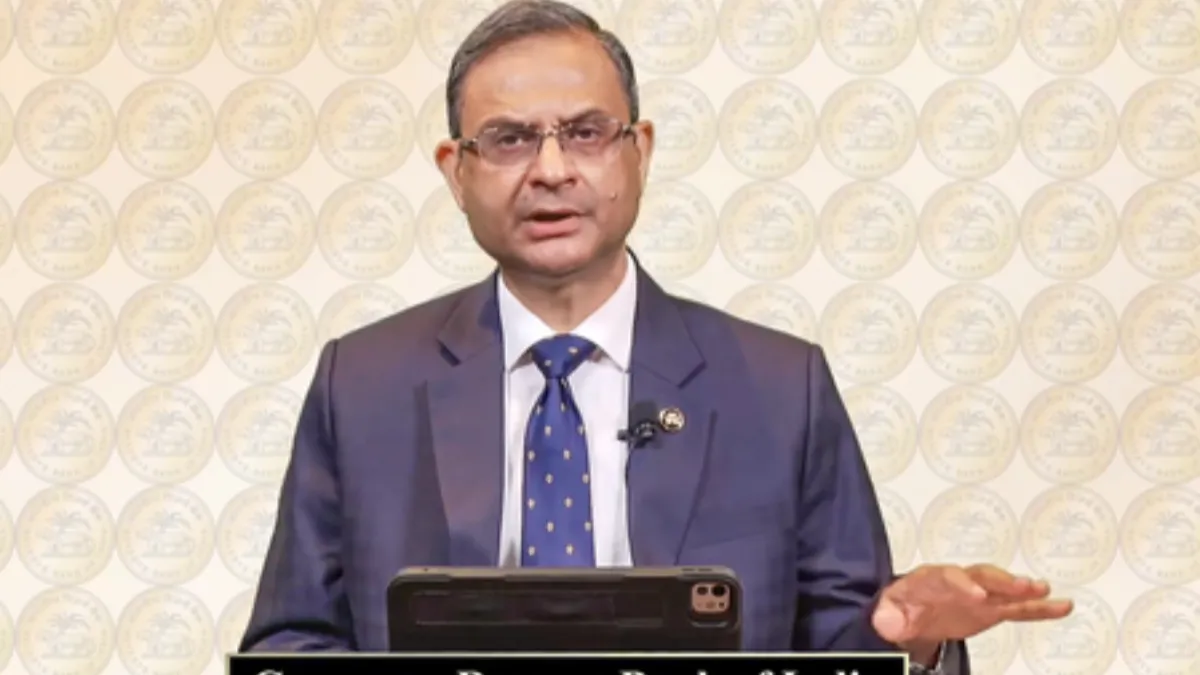
The Reserve Bank of India (RBI) has kept the repo rate unchanged at 5.25% after its three-day Monetary Policy Committee meeting. RBI Governor Sanjay Malhotra announced the decision on Wednesday. He said India remains the world’s fastest growing large economy. He added that the economy continues to show resilience despite rising global challenges. Therefore, the central bank decided to maintain stability while supporting growth.
Governor Malhotra said headline inflation will increase in the coming months. Higher food and crude oil prices will drive this rise. However, he explained that inflation is not broad-based. Instead, it remains limited to specific sectors. He expects inflation to peak during the third quarter. After that, inflation should begin to ease gradually. The RBI repo rate 5.25% decision reflects this balanced outlook.
RBI keeps the repo rate at 5.25% as Governor Sanjay Malhotra highlights India’s strong growth despite inflation and global uncertainties.
Meanwhile, global risks continue to affect economic conditions. The conflict in West Asia has disrupted trade routes and supply chains. As a result, market volatility has increased. Business confidence has also weakened. In addition, fresh US tariffs have created more uncertainty in global trade. These developments continue to influence financial markets and investment decisions.
The RBI also noted that global growth may slow in 2026. Inflation could remain higher than in 2025 across several economies. Some central banks have tightened monetary policy, while others remain cautious. Furthermore, crude oil prices and currency markets continue to fluctuate. These factors may create additional pressure on inflation and economic activity worldwide.
Despite these challenges, the RBI repo rate 5.25% decision signals confidence in India’s economic strength. The central bank believes domestic growth remains healthy. It will continue to monitor inflation, global developments, and financial conditions closely. Moreover, future policy decisions will depend on incoming economic data. This approach aims to support stable growth while keeping inflation under control.