

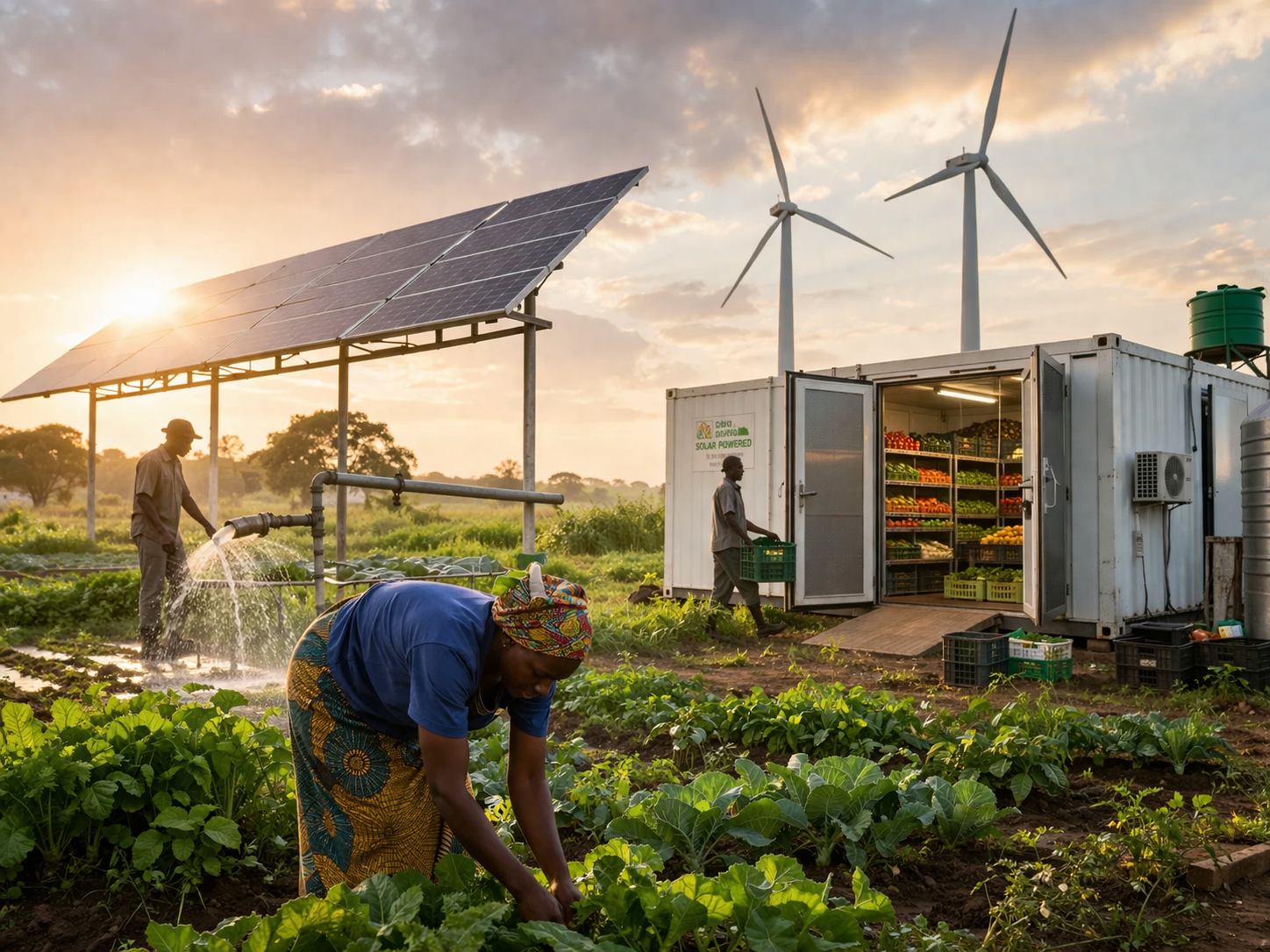
Renewable energy is reaching more households across Africa than ever Sector before, but the growth has not yet translated into widespread economic prosperity. Experts say technologies such as solar irrigation systems, cold storage units and agro-processing tools can significantly improve the livelihoods of smallholder farmers. These solutions help reduce post-harvest losses, increase productivity and allow farmers to access higher-value markets.
Also Read : Face as passport: Bengaluru tests biometric travel system
Evidence from several regions shows the strong potential of these technologies. In some cases, farmers using solar-powered cooling and storage systems have managed to protect perishable products and sell them at better prices. Similar initiatives in countries like India have demonstrated that renewable-powered equipment can boost farm income and improve rural supply chains.
Solar-powered farming technologies show promise but face challenges in scaling and investment.
Despite the clear benefits, the number of companies delivering productive-use renewable energy solutions for agriculture remains limited. Only a handful of firms have managed to scale their operations across multiple regions. As a result, millions of farmers who could benefit from irrigation, cold storage and processing technologies still lack access to these services.
Investment trends also highlight the sector’s slow growth. Funding in solar irrigation and cold-chain businesses has remained relatively stagnant over the past few years. A large share of available capital has flowed to a few market leaders, while smaller companies struggle to secure funding beyond small grants and early-stage investments.Industry experts point to several structural barriers that prevent the sector from expanding quickly. High upfront costs of solar-powered equipment make it difficult for many farmers to adopt the technology. At the same time, companies must build complex business models that include financing, logistics and distribution systems, which require significant capital and operational capacity.
Solar farm tech grows slowly despite strong potential.
Another challenge lies in weak consumer awareness. Many farmers are still unfamiliar with solar irrigation or cold storage technologies, forcing companies to invest heavily in education and outreach programs. This increases operational costs and slows down the pace of adoption in rural communities.Agriculture itself also brings significant risks for companies and investors. Climate variability, unpredictable rainfall and fluctuating crop prices can reduce farmers’ incomes and their ability to repay loans or invest in new technologies. In addition, fragile agricultural supply chains often limit the benefits these technologies can deliver if other support systems are missing.
Experts say the sector needs stronger financial support and coordinated policies to unlock its full potential. Development organizations and investors could provide grants, concessional funding and long-term capital to help companies experiment with business models and scale their operations. Governments can also support adoption through awareness campaigns and targeted subsidies.
Also Read : Amazon.com AI Revenue Hits $15 Billion
If these challenges are addressed, renewable energy technologies could play a major role in transforming agriculture in developing regions. By expanding access to irrigation, cooling and processing solutions, the sector has the potential to improve farm productivity, reduce food waste and create sustainable income opportunities for millions of smallholder farmers.
[…] Also Read: Productivity Barriers: Causes of Slowdown and How Businesses Can Respond […]