

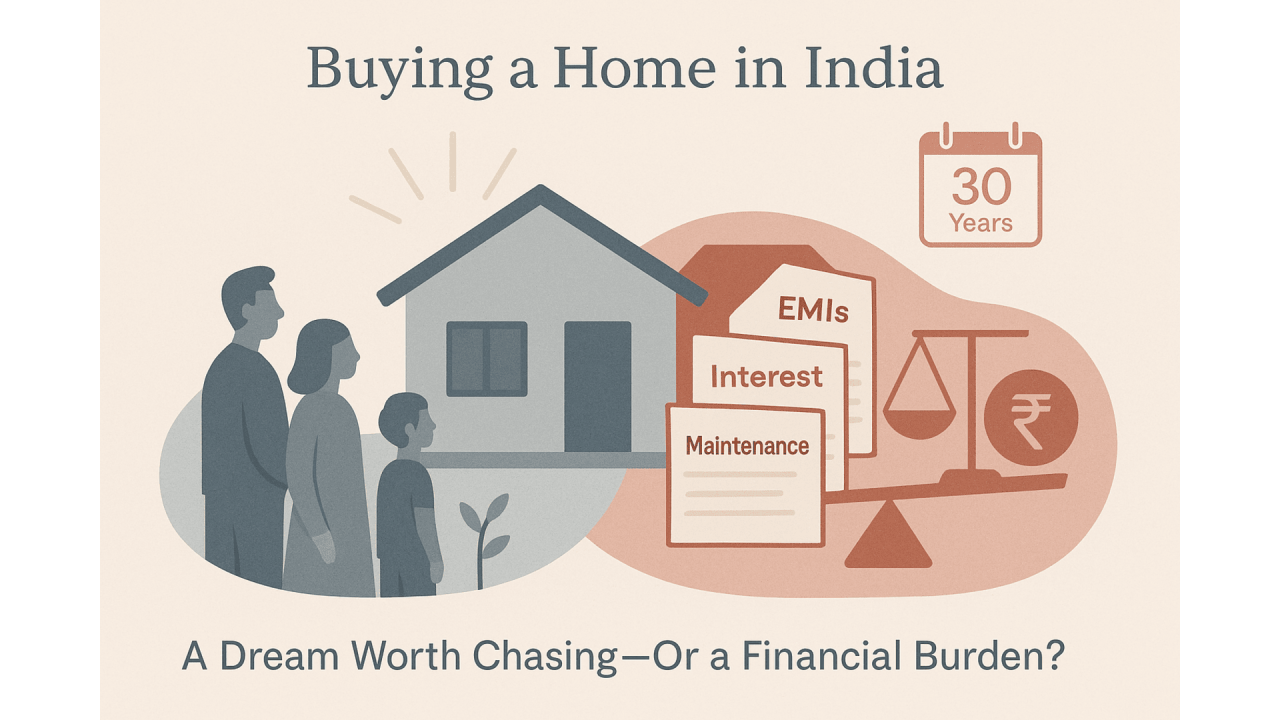
India’s housing market is witnessing a major shift as rising property prices push buyers to depend more on loans than savings. Instead of saving for years before purchasing a homes, many homebuyers now begin by checking how much they can borrow from banks. Loan eligibility often determines the type of property they choose and the amount they are willing to spend.
Also Read : Iran and US Exchange Fresh Air Strikes Across Gulf Region
In major cities such as Mumbai, Delhi-NCR, Bengaluru and Hyderabad, buyers increasingly base their decisions on borrowing capacity rather than affordability. Financial experts warn that many people mistake the maximum loan amount offered by banks for what they can comfortably repay. As a result, they often underestimate additional costs such as maintenance charges, taxes and registration fees.
Homeownership dreams increasingly rest on long-term debt
Housing affordability has weakened significantly as property prices continue to outpace income growth. Economists note that home prices in several Indian cities now stand at seven to ten times annual household income, far above global affordability standards. To bridge this gap, buyers are opting for home loans with repayment periods of up to 30 years.
Longer loan tenures have made monthly EMIs more manageable, but they have also increased households’ dependence on future earnings. Many families now dedicate 40% to 50% of their monthly income to loan repayments. This leaves limited room for savings, investments, retirement planning and emergency funds, creating long-term financial pressure.
Experts also highlight the growing risk of carrying housing debt into retirement. As loan tenures stretch over decades, many borrowers may continue paying EMIs long after they stop working. This situation could reduce funds available for healthcare, daily expenses and other essential needs during retirement.
The challenge becomes even greater for households that rely on two incomes to support large mortgages. Any disruption such as job loss, illness or career breaks can quickly create financial stress. Financial planners warn that buyers who depend heavily on future salary growth may struggle if economic conditions change or income expectations are not met.
Also Read : Pooja Singh High Jump: How India’s New Record Holder
Despite strong demand for homeownership, experts believe affordability should not be measured solely by access to credit. Sustainable homeownership requires a balance between loan repayments, savings and financial security. As property prices rise, many Indians are increasingly financing homes with income they hope to earn in the future, raising concerns about long-term financial stability.
[…] Also Read : Indians Are Purchasing Homes on Future Income […]