

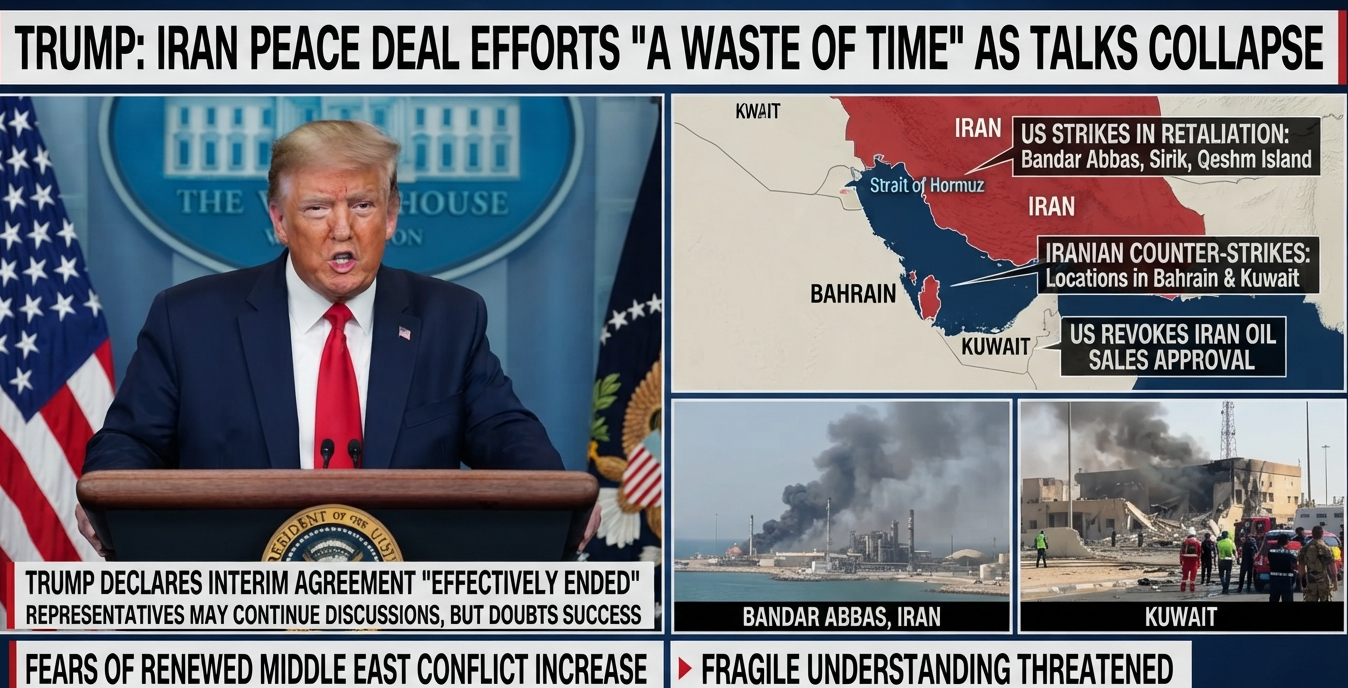
US President Donald Trump declared the interim agreement with Iran effectively ended. He said American representatives could continue discussions despite his doubts about success. Trump made the remarks after launching major strikes against Iranian locations recently. The United States targeted assets in Bandar Abbas, Sirik, and Qeshm Island. Officials described these attacks as retaliation for Iranian actions near Hormuz. Washington also removed approval for Iranian oil sales abroad. Iran responded by striking locations in Bahrain and Kuwait. These developments increased fears of renewed conflict across the Middle East. The situation threatened the fragile understanding that had temporarily reduced fighting. Leaders now face pressure to prevent another dangerous escalation.
Also read: Why Is KPS Gill Trending? The Controversial ‘Supercop’ and the Story of Punjab ’95
Trump Declares US-Iran Deal Over, Allows Talks To Continue
Trump questioned Iran’s willingness to reach a lasting agreement through negotiations. He said continuing talks appeared unnecessary and unlikely to produce results. The president made comments during the NATO summit in Ankara, Turkey. He criticized Iranian leadership and expressed strong opposition toward Tehran’s actions. Trump stated that he considered the previous understanding finished permanently. However, he allowed United States officials to continue diplomatic conversations. He warned that such efforts might not achieve meaningful progress. His statements followed American military operations against Iranian targets. The strikes reportedly exceeded previous attacks in size and intensity. Officials called the operations punishment for attacks on commercial vessels. The actions created fresh uncertainty about future negotiations.
The United States conducted powerful strikes against Iranian military positions near Hormuz. Reports suggested the attacks were several times stronger than earlier operations. American officials linked the strikes to Iranian attacks on shipping routes. The military campaign risked starting another cycle of retaliation between nations. Negotiations had planned to address major disputes after Khamenei’s funeral. Discussions would focus on reopening Hormuz and limiting Iran’s nuclear activities. The latest attacks created serious obstacles for diplomatic progress. Neither country immediately confirmed leaving the negotiation process completely. Iran reported explosions across several locations after the American strikes. Officials confirmed damage and casualties in different affected areas. Tehran promised a strong response against the United States.
Negotiations Face Setbacks After Fresh Military Escalation
Iranian leaders rejected pressure and promised resistance against American actions. Parliament speaker Mohammad Bagher Ghalibaf condemned the recent military strikes. He accused Washington of violating commitments under the agreement. Ghalibaf claimed American actions prevented meaningful diplomatic progress between countries. He said Iran would not surrender because of external pressure. Iranian military officials also criticized the attacks as aggressive actions. They promised a strong response against any future interference. Tehran insisted it would control security arrangements around Hormuz. Iranian forces warned against unauthorized movements through the strategic waterway. The confrontation increased concerns among regional governments and global markets. Countries feared further instability from expanding military operations.
Iran later targeted Bahrain and Kuwait after American strikes occurred. Both countries issued missile warnings following reported Iranian military actions. Bahrain hosts the United States Navy’s Fifth Fleet operations. Kuwait also supports American military forces within the region. Iran’s Revolutionary Guard confirmed attacks against military facilities there. Officials in the Gulf criticized Tehran’s response as dangerous escalation. UAE diplomat Anwar Gargash condemned Iran’s actions against neighboring countries. He said the attacks showed problems with reducing regional tensions. The latest developments created uncertainty about future peace efforts. International leaders urged restraint to avoid broader conflict. The Middle East remained under heightened security concerns following clashes.
Also read: 17-Year-Old Fan of Pawan Kalyan Dies Just Days After Emotional Meeting With the Actor