

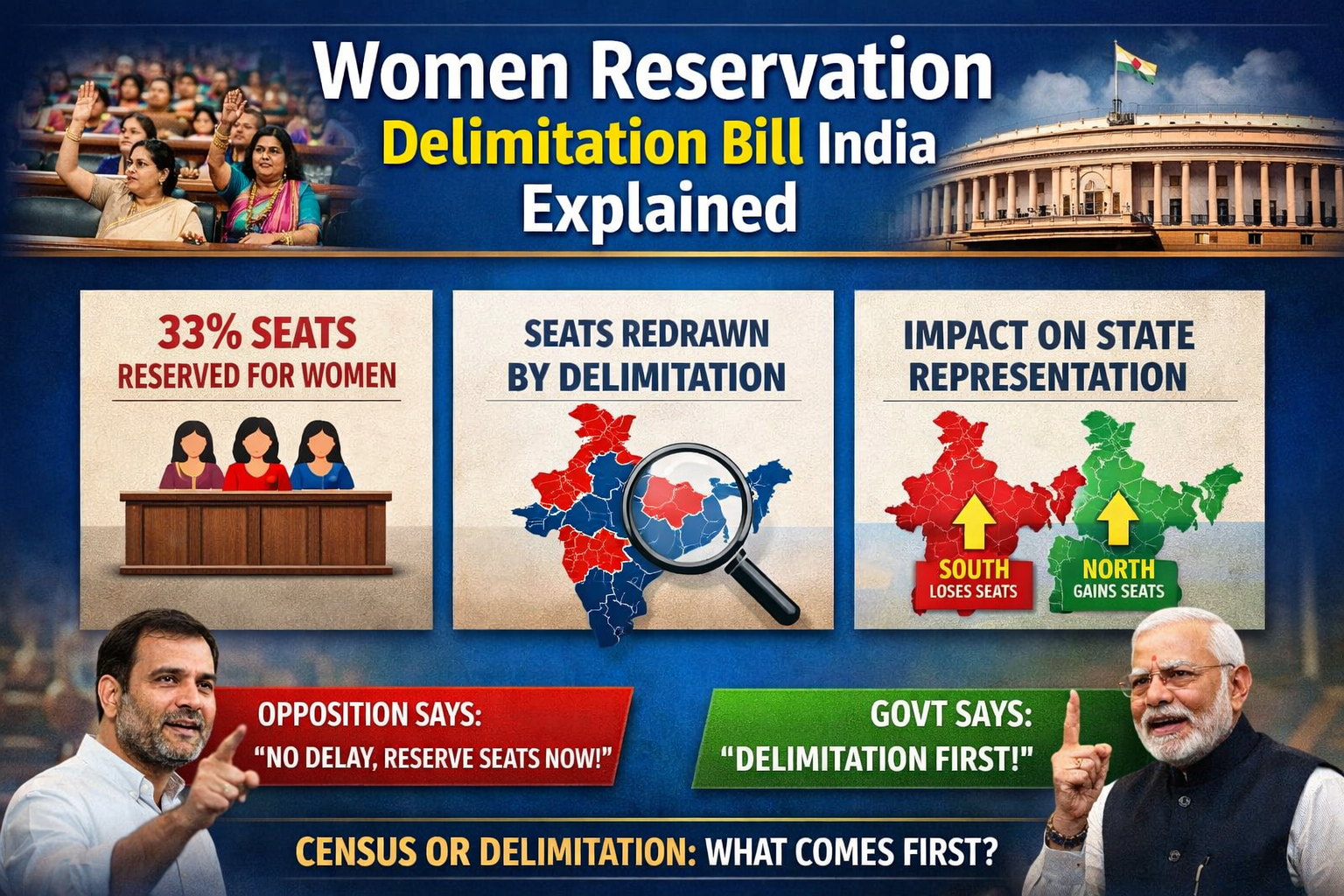
The Women Reservation Delimitation Bill India has triggered a major political debate across the country. The central government has proposed 33% reservation for women in Parliament and state assemblies. However, it has linked the implementation to delimitation and census data, which has raised serious concerns. Opposition parties have questioned the timing and intent behind this move. Experts believe this bill goes beyond women’s empowerment and could reshape India’s political structure. Several states have also expressed concerns over seat redistribution. As a result, the issue has become a key national discussion point.
Key Provisions of Women Reservation Delimitation Bill India
The government aims to reserve 33% of seats for women in the Lok Sabha and state assemblies through this bill. It will also apply this reservation within SC and ST categories. The government has clearly stated that it will implement the reservation only after delimitation. Authorities will redraw constituencies as part of this process. The bill may also increase the total number of seats.
The government wants to improve women’s political participation through this reform. It plans to implement the reservation for a period of 15 years. Parliament can extend this duration if required. The system will rotate reserved seats across constituencies. This approach will give opportunities to women from different regions.
Controversy Over Delimitation and Census
Opposition parties have strongly criticized the decision to link reservation with delimitation. They argue that this condition will delay the actual implementation of women’s quota. Many leaders have also raised concerns about which census data the government will use. This lack of clarity has created uncertainty. Legal experts have also warned about possible constitutional challenges.
Southern states have expressed serious concerns over seat redistribution. They believe population-based allocation may reduce their political representation. States that controlled population growth may face disadvantages. This situation could disturb the regional balance of power. Therefore, the debate has intensified across political circles.
Also Read: Gautam Gambhir’s tough call on Kohli, Rohit
Political and Social Impact
The bill can significantly transform India’s political landscape. Increased participation of women can bring more diversity in decision-making. It can also strengthen social representation in governance. Many experts consider this a progressive step toward equality. However, some critics see it as a strategic political move.
The future of this bill depends on how the government handles the concerns raised. Opposition parties will continue to challenge its provisions. Citizens are also closely following the developments. If implemented effectively, this reform could become a historic milestone for Indian democracy.
[…] Also Read: Women Reservation Delimitation Bill India Overview […]