

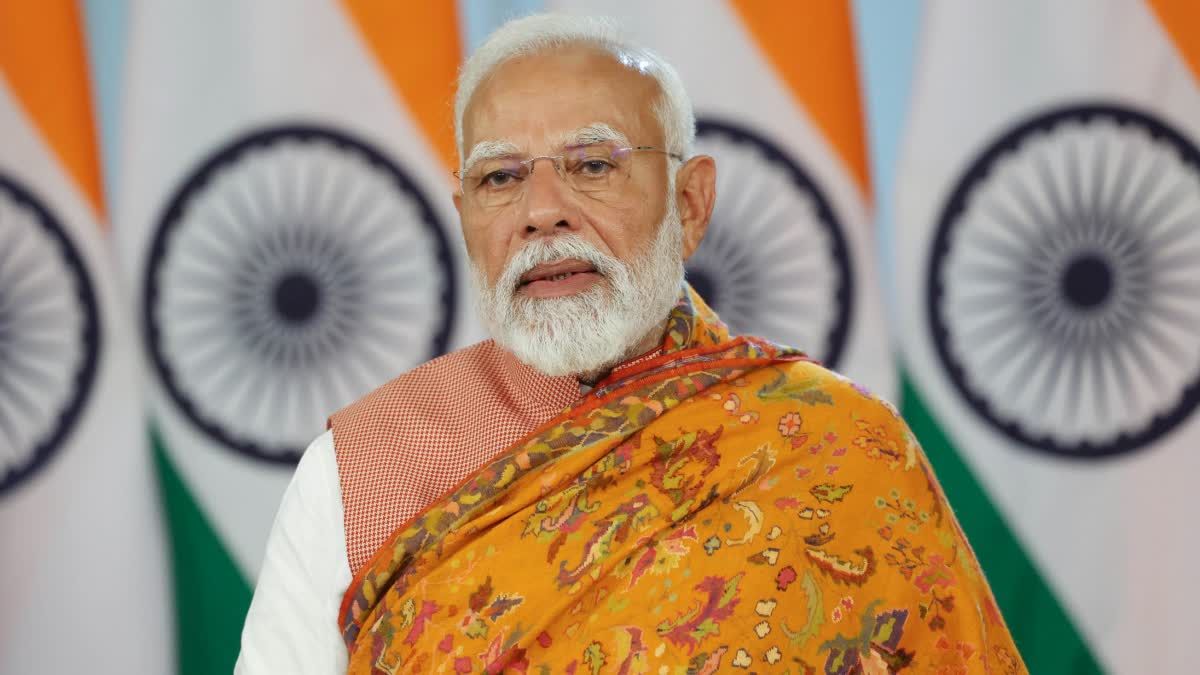
Prime Minister Narendra Modi inaugurated the Navi Mumbai International Airport on Wednesday, calling it a symbol of India’s growing infrastructure. This marks a major development in the country’s rapidly expanding aviation sector. Set to begin operations in December, the airport will make Mumbai the only metro in India with two international airports. It aims to reduce pressure on the heavily crowded Chhatrapati Shivaji Maharaj International Airport. The new airport is expected to become a major hub for both passengers and cargo, improving connectivity across Asia.
Also read: Dhanashree Verma Responds to Chahal’s Denial, Says She Caught Him Cheating Early On
PM Modi Navi Mumbai Airport to Ease Congestion and Boost Connectivity
Developed by the Adani Group at a cost of $2.2 billion, the airport highlights India’s efforts to modernize transport infrastructure. Over the last decade, the government has built and upgraded dozens of airports to link smaller cities. The number of airports in India has more than doubled—from 74 in 2014 to 160 in 2024. This growth is part of a larger strategy to boost the economy by making air travel more accessible. The new airport will also help meet rising travel demands and support regional development.
In his speech, Modi described the project as a reflection of a confident and advancing nation. India is now the third-largest air travel market, behind only the U.S. and China. In 2024, around 174 million passengers flew within or from India, accounting for over 4% of global air traffic. With a growing middle class and affordable airfares, domestic air travel has surged. Government schemes like UDAN have helped connect remote towns, fueling aviation growth. The new airport will further support this upward trend in travel demand.
Also read: Sources: Mohsin Naqvi Presents Trophy to UAE Board as BCCI Considers Impeachment Action
India’s Aviation Push: From 74 to 160 Airports in a Decade
The Adani Group said the airport will initially handle 20 million passengers annually, with future capacity reaching 90 million. Officials expect the new facility to serve as a key aviation and logistics center in South Asia. Located in Navi Mumbai, the airport will offer easy access to nearby cities and business hubs. It features advanced infrastructure, smart design, and high-end amenities. Authorities believe it will ease congestion, reduce delays, and improve air cargo movement. The project aligns with India’s goal to make aviation a growth engine.
Navi Mumbai International Airport will be India’s first airport with water taxi connectivity. It will also be linked through metro, highways, roads, and high-speed trains. These multimodal transport systems aim to reduce road traffic and cut down travel time. The airport’s unique integration of various transport modes showcases innovation in planning. It also supports sustainable development by offering green mobility options. This connectivity will help passengers travel more comfortably and efficiently. The government envisions this model as the future of transport infrastructure across Indian cities.
Also Read : Nitin Gadkari Major Warning After Operation Sindoor: ‘World War III Could Erupt Anytime
[…] Also Read : PM Modi Inaugurates Mumbai’s Second International Airport […]