

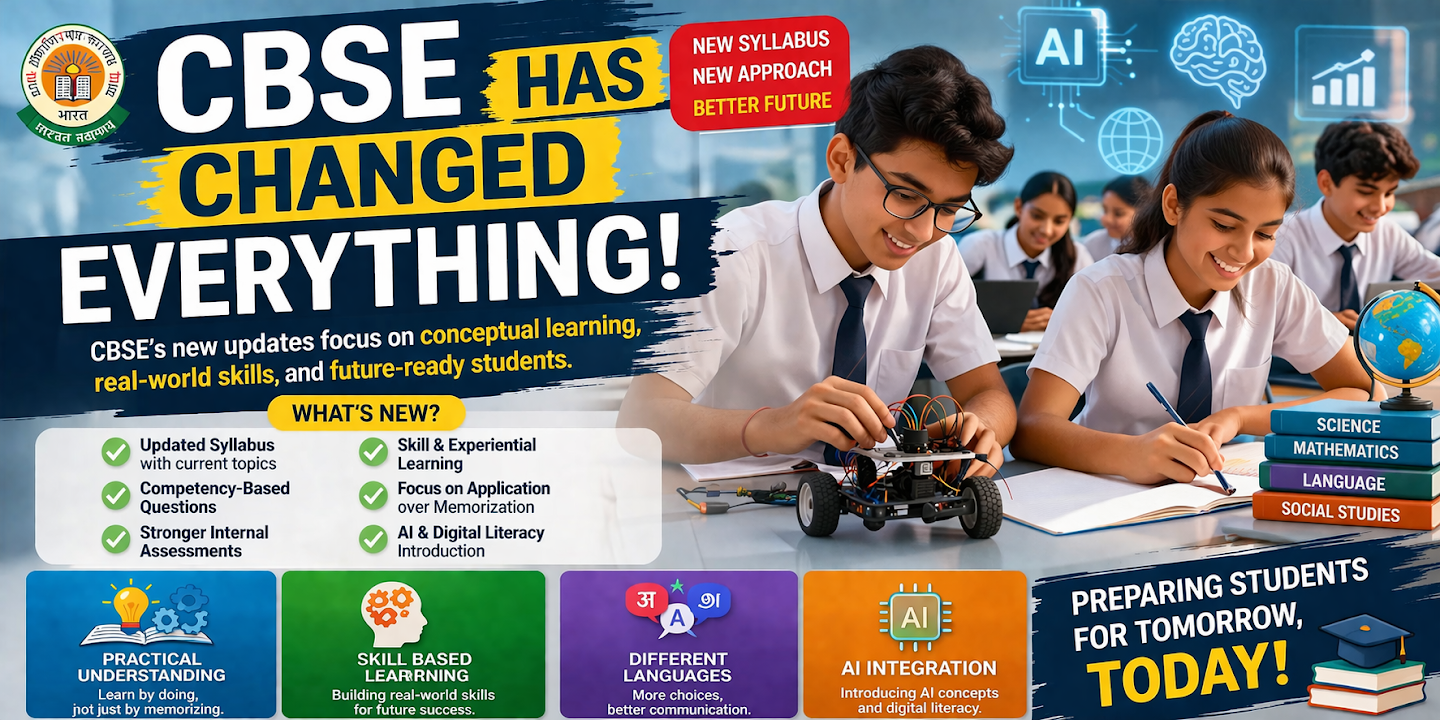
The Central Board of Secondary Education (CBSE) has introduced significant updates to its academic structure and syllabus. These reforms aim to improve student learning outcomes by promoting practical knowledge, analytical thinking, and creative problem-solving in classrooms nationwide. The board emphasized the importance of moving away from rote memorization toward student-centric, skill-based education. Teachers are encouraged to adopt interactive teaching methods that engage students actively and strengthen conceptual understanding. Parents are also advised to support students in adapting to the new curriculum changes at home effectively.
Also Read: BBC inside scam compound using fake police and soldiers identities
CBSE Launches Syllabus and Structure Reforms to Enhance Student Learning
The revised syllabus introduces modern topics across science, mathematics, social studies, and language subjects to make learning more relevant. Students will experience experiential learning opportunities, including projects, experiments, and group activities designed to enhance comprehension. New assessment patterns focus on continuous evaluation, practical applications, and regular feedback to track performance more accurately. Digital tools and online resources are recommended to enrich classroom lessons and promote interactive learning. The CBSE is also conducting workshops for teachers to ensure smooth implementation of the updated curriculum.
CBSE’s reforms emphasize holistic development alongside academic achievement, integrating co-curricular activities, life skills, and creative arts. Students will now receive opportunities to develop leadership, communication, and critical thinking skills alongside traditional knowledge. Teachers are expected to implement student-centric methodologies that foster engagement, experimentation, and independent reasoning. Assessment now includes practical tasks, oral presentations, and project-based evaluations for a comprehensive evaluation of students’ abilities. The board has highlighted the importance of equitable access to resources, ensuring all students benefit from the new educational framework.
Also Read: Amaravati Named Andhra’s Sole Capital
Modern Curriculum and Assessment Strategies
Training programs, instructional guides, and sample lesson plans will help educators implement changes effectively in schools nationwide. Collaborative learning strategies and peer-to-peer activities will promote active participation and enhance students’ problem-solving skills. Monitoring frameworks will track teaching effectiveness and learning outcomes to ensure adherence to new guidelines. Digital learning platforms will supplement traditional lessons, providing flexibility and personalized learning opportunities. Experts believe these reforms will prepare students for higher education and global competition by enhancing creativity and practical skills.
In summary, CBSE’s syllabus and structure reforms mark a major step toward modern, student-focused education. By emphasizing practical learning, analytical skills, and holistic development, the board aims to cultivate capable, confident, and innovative learners. Continuous assessment, experiential learning, and skill-based evaluation will replace outdated rote learning methods. Teachers, parents, and students must work together to maximize the benefits of these changes. The reforms reflect CBSE’s commitment to preparing students for academic success, lifelong learning, and global competitiveness.
Also Read: BBC inside scam compound using fake police and soldiers identities
[…] Also Read: CBSE Introduces Syllabus and Structure Reforms for Better Learning Outcomes […]