

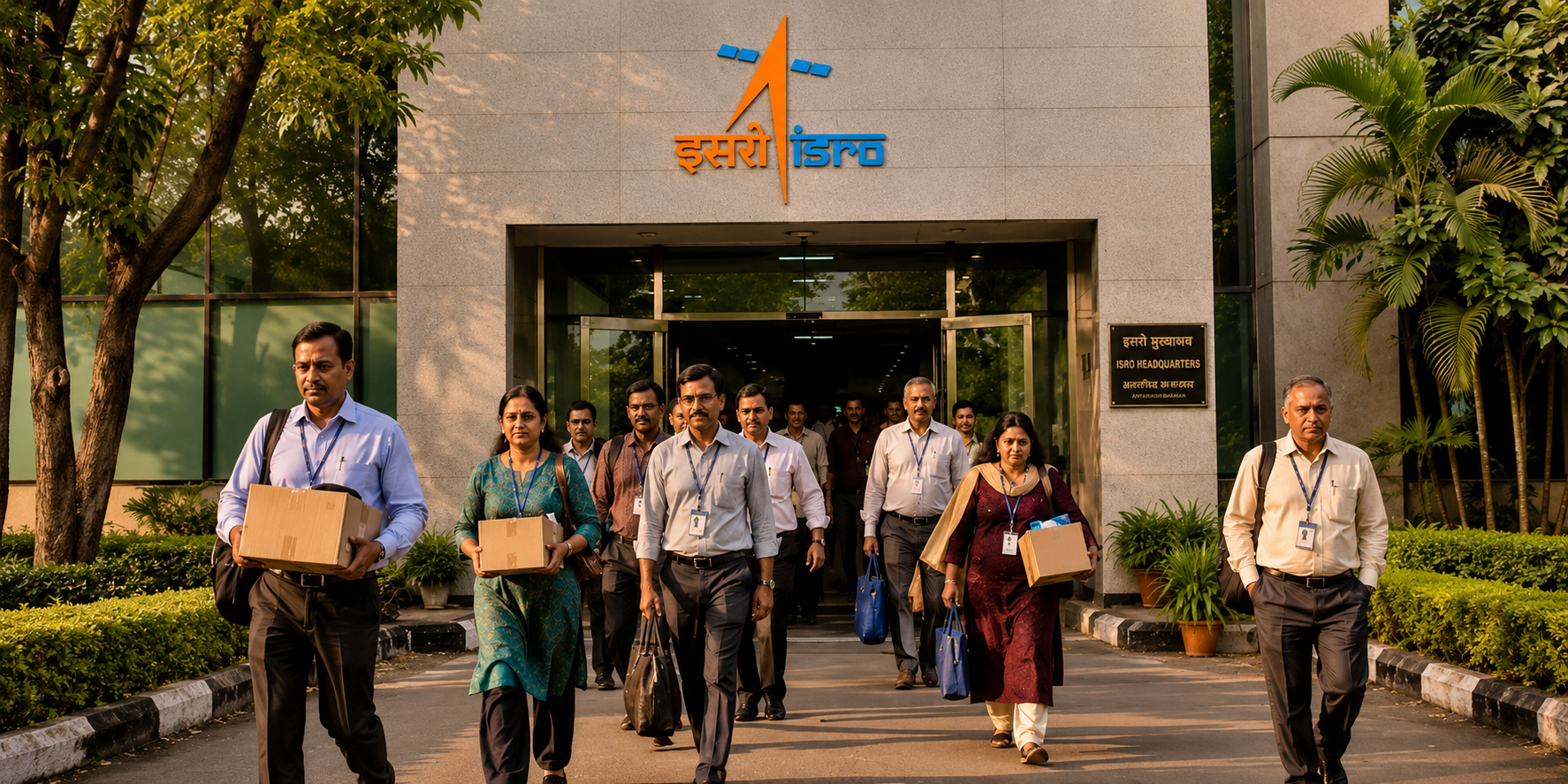
India’s ambitious space programme is facing a new challenge as more than 100 scientists have resigned or opted for voluntary retirement from the Indian Space Research Organisation (ISRO) in recent months. The growing number of departures has prompted the Department of Space (DoS) to tighten resignation rules, especially for scientists working on flagship missions such as Gaganyaan. Under the revised policy, employees associated with critical national projects must now obtain approval directly from the Department of Space before leaving the organisation. While the move aims to protect strategic missions, it has also sparked discussions about the reasons behind the increasing talent migration. Experts believe the issue extends beyond resignations and reflects broader changes within India’s rapidly evolving space sector.
Also Read : U.S. Launches More Strikes on Iran as Tensions Rise; Bangkok Pub Fire Kills 27
Why ISRO Scientists Are Leaving: Low Salaries and Limited Career Growth
The expansion of India’s private space industry has emerged as one of the biggest reasons behind the growing exodus from ISRO. Since the government opened the space sector to private participation in 2020, companies such as Skyroot Aerospace, Agnikul Cosmos, Pixxel, Bellatrix Aerospace, Dhruva Space, and Digantara have created exciting career opportunities for aerospace professionals. These organisations offer significantly higher salaries, stock options, faster career progression, and greater flexibility than traditional government employment. Scientists also receive opportunities to lead projects at an earlier stage while working with cutting-edge technologies. Former ISRO veterans have further strengthened this ecosystem by founding and mentoring private startups, making the industry increasingly attractive for experienced engineers and researchers seeking professional growth.
Apart from better financial rewards, several organisational challenges within ISRO have also influenced employee decisions. Recent delays involving important missions, including Gaganyaan G1, SSLV-L1, GSLV-F17, and PSLV-N1, have slowed project execution across the organisation. Industry experts suggest that increasing centralisation of administrative and technical decisions has affected operational flexibility and delayed approvals for major programmes. Some current and former officials have privately expressed concerns that decision-making now takes longer than before, reducing opportunities for innovation and independent leadership. Although ISRO continues to deliver world-class achievements, internal structural issues have encouraged many experienced scientists to explore opportunities where projects move faster and decision-making remains more agile.
The Growing Brain Drain Threatens India’s Space Research Ambitions
Space policy experts have suggested that ISRO could benefit from adopting employment models similar to those used by agencies such as NASA and the European Space Agency. These organisations combine permanent staff with project-based specialists and contractors, allowing them to retain institutional expertise while maintaining flexibility. Experts believe ISRO can increasingly focus on strategic missions, including human spaceflight, deep-space exploration, reusable launch vehicles, and advanced propulsion technologies, while collaborating more closely with private companies for commercial activities. A hybrid workforce model could improve innovation, accelerate project execution, and create more attractive career pathways for talented scientists who currently prefer private-sector opportunities over traditional government positions.
Although the recent departures represent only a small share of ISRO’s workforce of more than 14,600 employees, their impact remains significant because many departing scientists possess specialised expertise gained through landmark missions such as Chandrayaan-3, SpaDeX, and Gaganyaan. Replacing years of technical experience requires far more than recruiting new graduates. The ongoing talent shift reflects the transformation of India’s space ecosystem, where private companies now compete alongside the national space agency for highly skilled professionals. As India’s space ambitions continue to expand, ISRO faces the dual challenge of attracting exceptional talent while creating an environment that encourages experienced scientists to build their long-term careers within the organisation.
Also Read : U.S. Launches More Strikes on Iran as Tensions Rise; Bangkok Pub Fire Kills 27