

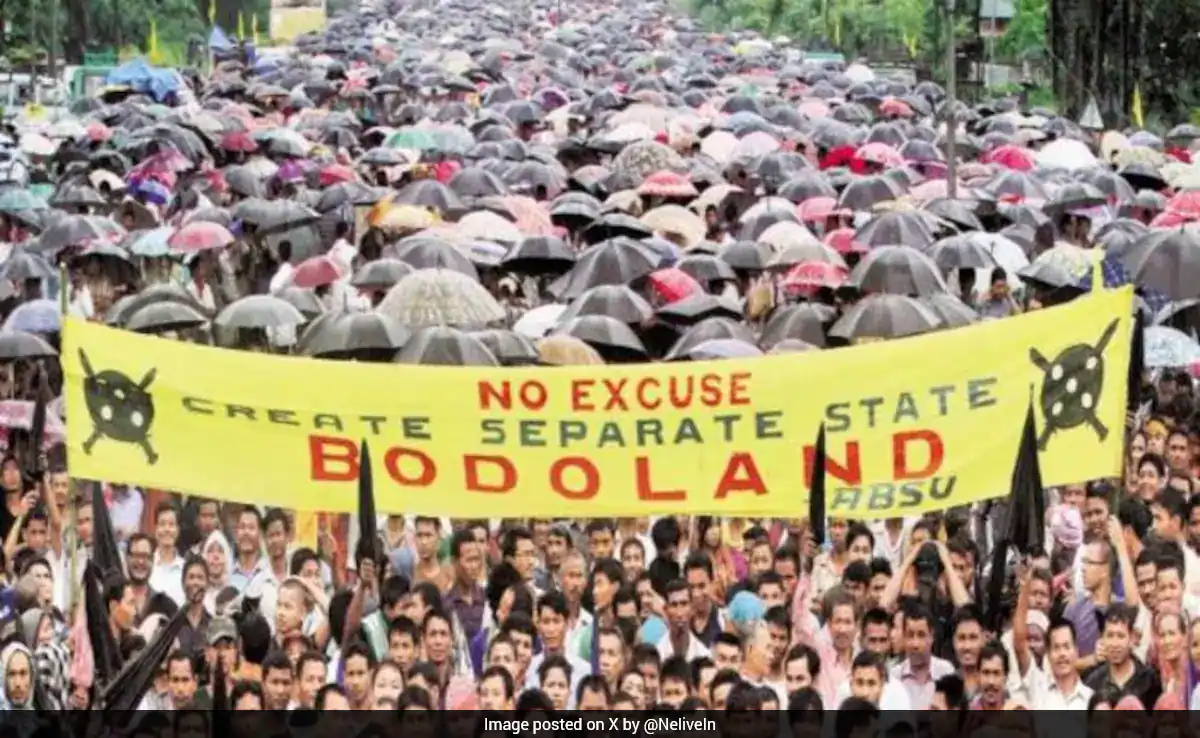
The Bodoland movement arose from the Bodo community’s demand for political recognition, cultural preservation, and greater autonomy in Assam. Once marginalized in the state’s administration, the Bodos’ concerns gained momentum in the 1960s, especially after Assamese was declared the sole official language. Over time, the movement became a platform to assert their identity and safeguard their language and culture.
The Bodos’ core demands included the creation of a separate state called “Udayachal” or Bodoland, Scheduled Tribe status, recognition of the Bodo language (achieved in 2003 in the Eighth Schedule in Devanagari script), and greater control over local resources. The All Bodo Students’ Union (ABSU), formed in 1967, played a central role, initially addressing social issues and later leading political mobilization under leaders like Upendranath Brahma in the 1980s.
Frustration over unfulfilled demands turned the movement violent, leading to clashes, displacement, and loss of life. The rise of militant groups such as the National Democratic Front of Bodoland (NDFB) and the Bodo Liberation Tigers reflected the community’s anger, while involvement by other insurgent outfits like ULFA escalated armed conflicts. Many Bodos felt excluded from the Assam Accord (1985), which addressed illegal immigration but overlooked Bodo grievances.
Also Read: Sooryavanshi Turns Dravid Advice into Bumrah Masterclass
Bodoland Movement in Assam: Struggle, Violence, and Peace Accords”
Several peace accords attempted to resolve the conflict. The 1993 Bodoland Autonomous Council (BAC) offered limited local governance, while the 2003 Bodoland Territorial Council (BTC), established under the Sixth Schedule, provided clearer boundaries and more administrative powers, though it fell short of full statehood. Many former militants then joined mainstream politics, contributing to the formation of the Bodoland People’s Front.
The 2020 Bodoland Territorial Region (BTR) agreement marked a significant step toward autonomy, involving ABSU, NDFB factions, and the United Bodo People’s Organisation. It included development packages, rehabilitation measures, and expanded self-governance. In 2023, the Assam government further strengthened Bodo representation by including additional Bodo-majority villages in the BTR, granting the Bodo language associate official status, and ensuring independent cultural and sports representation.
Also Read: Gold Surges After Trump Signals Iran Ceasefire
[…] Also Read : Bodoland Movement & Peace Agreements […]
[…] Also Read : Bodoland Movement & Peace Agreements […]
[…] Also Read: Bodoland Movement & Peace Agreements. […]