

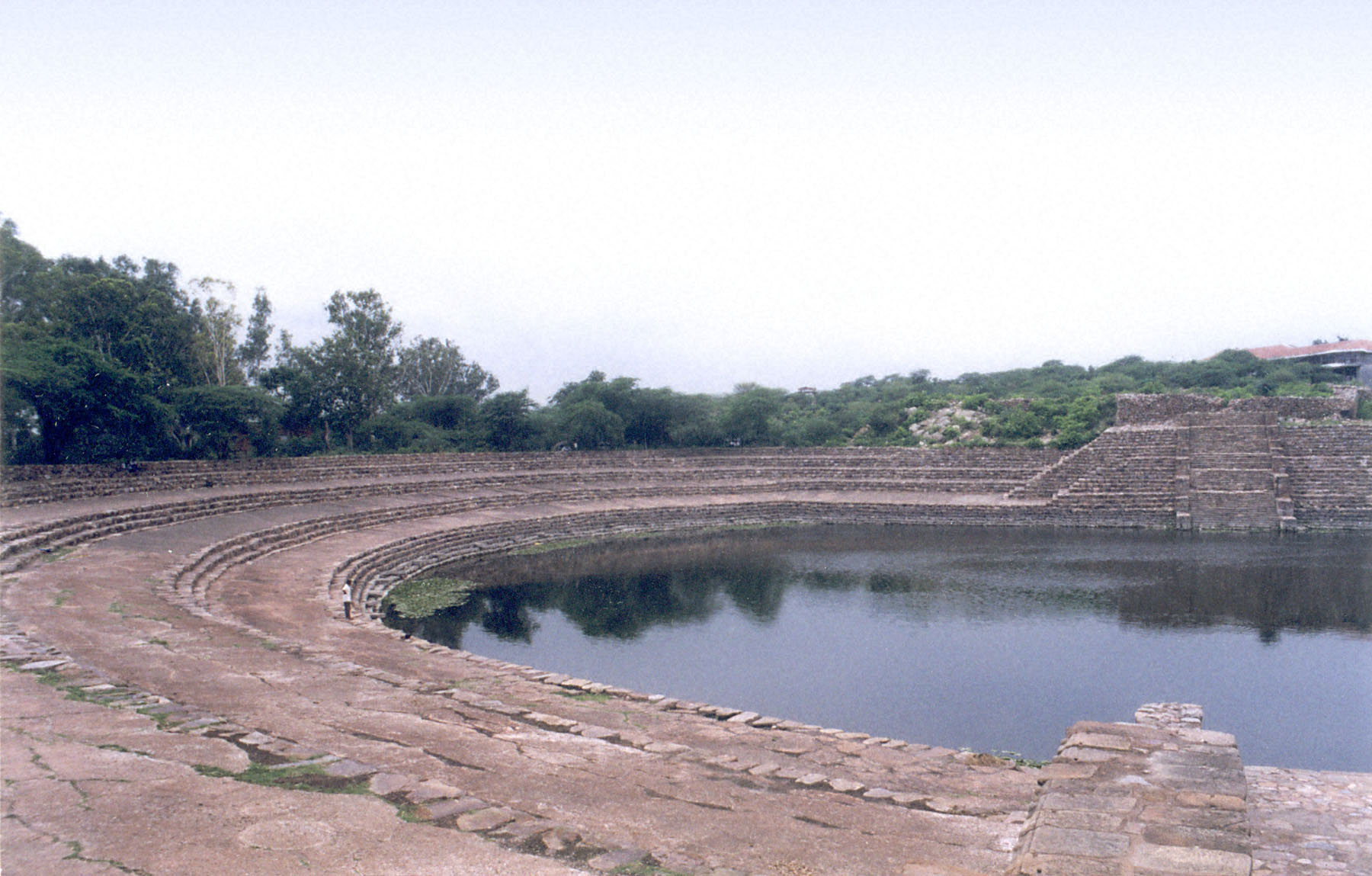
An India Today team explored the early history of Delhi and reached its southern edge, where a hidden 1,100-year-old dam stands quietly in the Aravalli Range. This ancient structure tells the forgotten story of the Tomars, one of the earliest known ruling clans of the region. The nearby village of Anangpur, believed to have been an early settlement and later a Tomar capital, holds deep historical importance.
In ancient times, people in Delhi depended on interconnected water systems like hauz, baolis, and embankments. These systems helped manage seasonal water flow, especially in areas where water availability was limited. The team’s journey formed part of a three-part series that explores Delhi’s early beginnings, long before the Sultanate and Mughal periods.
The team travelled nearly five kilometres from the historic Surajkund reservoir, moving through rough and rocky terrain. As the path became narrower and more challenging, the Aravalli hills surrounded them. Eventually, they reached the site at the southern entrance of Delhi. What they found was not just a ruin but a well-preserved hydraulic structure from the early medieval period.
The Anangpur Dam, built around the 10th century, reflects the engineering skills of the Tomars. Historical records suggest that this dynasty ruled the region for several centuries, with many rulers shaping its development. The dam’s strong wall, still standing after centuries, highlights the durability of ancient construction techniques.
Also Read: Nitish Kumar Resigns from Bihar Council, Who Will Be Next CM?
Archaeological findings indicate that this region saw human settlement as early as 10,000 BC, with organised habitation developing by the 6th century. Standing at the site, the team felt that the structure was more than just a relic. Surrounded by the ancient Aravallis, the dam stands as a powerful reminder of Delhi’s earliest history and human ingenuity.
Delhi Site Raises Concern Over Damaged Heritage Record
The India Today team first arrived at the site where the ancient dam stands in Delhi. At the entrance, they noticed troubling conditions. The information board installed by the Archaeological Survey of India was damaged, and parts of the text had been scratched out.
Local residents claimed that references to the Tomar dynasty were deliberately removed. Some people described the damage as intentional and linked it to possible social or political reasons. Others pointed to tensions related to caste and local identity. While it remains unclear whether the damage resulted from vandalism or neglect, the situation has clearly affected how the site presents its history.
After briefly observing the entrance, the team moved ahead toward the structure. The dam slowly came into view and did not look like a typical water barrier. Instead, it appeared more like a strong embankment built between two low hills of the Aravalli Range.
The structure stretches around 101 metres in length. Its width changes from about 19.8 metres at the top to nearly 27.4 metres at the base. In several sections, the wall looks wide and solid, suggesting that builders designed it to hold heavy pressure rather than simply control water flow.
The dam rises to a height of over 10 metres from its base. Built using large stone blocks, it reflects early techniques of water management suited to rocky landscapes. Its position between hill slopes allows rainwater to collect naturally, showing the practical engineering skills of the time.
Also Read: Trade Before Talks: Pakistan’s Comeback in West Asia Conflict