

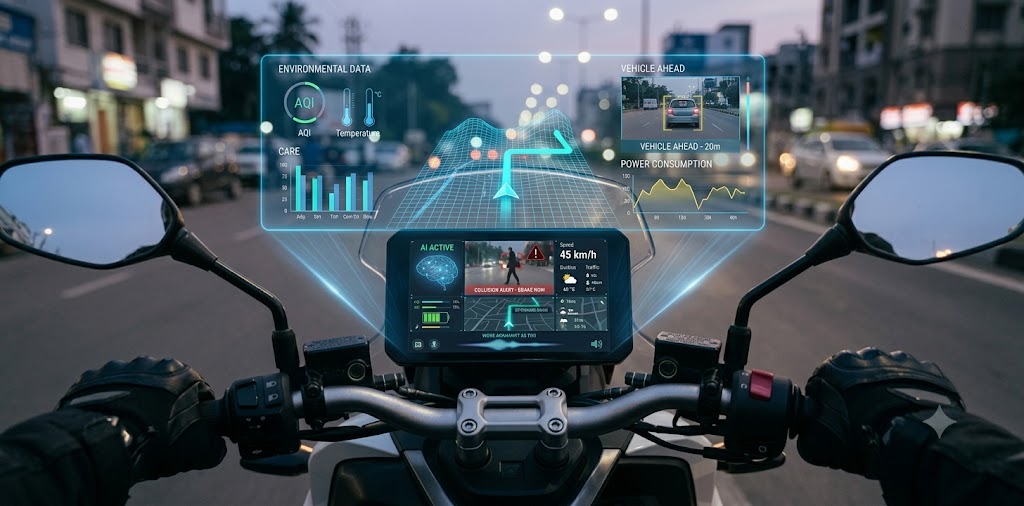
Artificial intelligence (AI) is transforming the everyday two-wheeler riding experience by improving safety, maintenance, and convenience. Riders often worry about battery health, traffic conditions, and unexpected vehicle problems before starting a journey. AI-powered systems can check vehicle health, identify potential issues, and suggest solutions before a breakdown occurs. They can also recommend suitable routes and charging stops based on riding habits. With millions of Indians relying on two-wheelers, these technologies could make daily travel more reliable and safer.
Also Read : Trump Pauses Russia Sanctions, Boosting India Trade Deal Hopes and Easing Tariff Threat
AI-Powered Maintenance and Smarter Navigation
AI-based diagnostic systems can monitor battery temperature, vehicle performance, and other important components. They can alert riders to potential problems before these issues lead to costly repairs or unexpected breakdowns. Connected vehicles can also recommend routes and charging points to make journeys more convenient. These features help riders plan trips with greater confidence and reduce the uncertainty of daily commuting. As a result, preventive maintenance can become easier and more efficient.
Indian roads often present challenges such as potholes, sudden braking, heavy traffic, and unpredictable driving behaviour. AI-powered cameras and sensors can identify potential hazards and warn riders about obstacles ahead. Smart displays can combine navigation and safety alerts, helping riders avoid frequent phone checks. Riding feedback can also help users improve habits such as harsh braking and sudden acceleration. By combining intelligent technology with stable vehicle design, manufacturers can improve the overall riding experience.
Also Read : Mona Agarwal, Avani Lekhara Win Gold and Silver for India at Asian Para Games
The Future of AI-Enabled Two-Wheelers
AI can also improve emergency response when accidents occur. Crash detection systems can identify serious impacts and send location details to emergency contacts or response services when necessary. However, these systems must distinguish actual accidents from minor impacts to avoid false alarms. GPS tracking, geofencing, and movement alerts can also help owners monitor parked vehicles and respond quickly to suspicious activity. Together, these features can strengthen rider safety and vehicle security.
Connected two-wheelers can improve over time through software updates and data-driven maintenance recommendations. Manufacturers can refine vehicle features and adapt certain functions to riders’ needs. However, companies must design these technologies for Indian conditions, including monsoon weather, crowded roads, and unreliable network coverage. They should also protect personal information and explain clearly how they collect and use rider data. Ultimately, manufacturers should make essential safety features accessible to all riders rather than limiting them to premium models.
Also Read : Trump Pauses Russia Sanctions, Boosting India Trade Deal Hopes and Easing Tariff Threat