

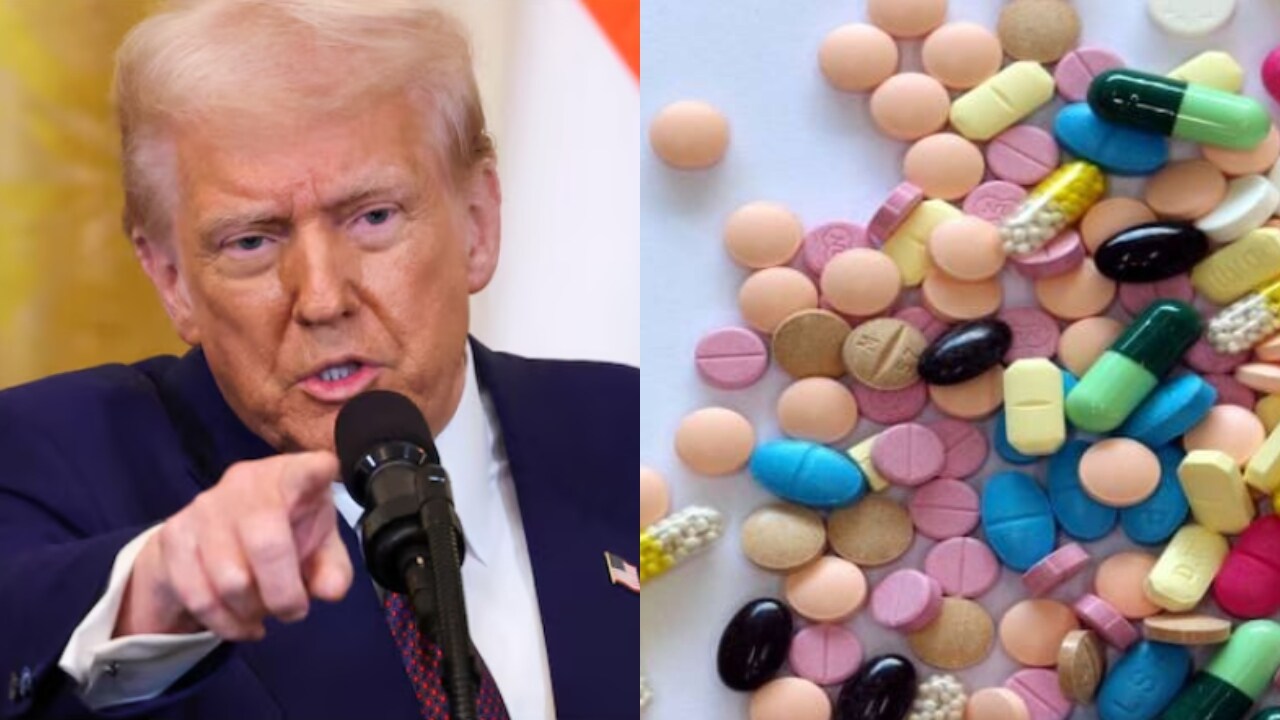
Indian drugmakers export nearly $9-10 billion worth of generic medicines annually to American consumers. President Donald Trump announced phased tariffs Wednesday, giving manufacturers two years to relocate production inside America.
The plan would eventually impose steep duties, potentially threatening India’s pharmaceutical exports and global market position. Trump said generic medicines would retain zero tariffs from August 2026 through August 2028. The United States would then impose 100% tariffs from August 2028 until August 2029. From August 2029, the tariff would double again, reaching 200% on imported generic medicines. Trump wants pharmaceutical companies to build American manufacturing facilities and reduce dependence on overseas production networks. He said the policy would reshore generic pharmaceutical manufacturing and protect American patients from foreign supply risks.
Also Read : US Strikes Iran for 10th Straight Night, CENTCOM Targets
India’s Generic Medicines Face US Tariff Risk
India faces significant exposure because Indian companies supply nearly 40% of America’s generic medicines. India’s commerce ministry reported $10.5 billion in pharmaceutical exports to America during the 2024-25 financial year. The Global Trade Research Initiative estimated India exported $9.7 billion worth of pharmaceuticals to America during 2025. Indian generic medicines treat major conditions, including hypertension, diabetes, cancer, infections and several mental health disorders. The proposed tariff roadmap gives manufacturers a clear deadline for shifting production into American facilities. Generic drugmakers typically operate with thin margins, limiting their ability to absorb extremely high import duties.
Companies also depend heavily on global manufacturing networks to maintain affordable prices and reliable medicine supplies. Major manufacturers, including Sandoz, Teva and Viatris, currently produce substantial volumes outside the United States. Industry executives warn that steep tariffs could raise medicine prices and reduce access for American patients. India and America previously agreed to pursue negotiated outcomes concerning generic medicines and pharmaceutical ingredients during trade discussions. However, officials have not confirmed whether future negotiations will provide Indian manufacturers exemptions or reduced tariffs. Trump’s latest announcement increases pressure on generic drugmakers to invest in American manufacturing or face punitive duties.
Also Read : Delhi-NCR Traffic Hit Hard as CJP Protest and Farmers’ March Cause Massive Congestion
[…] Also Read : 0, 100, 200: How Trump’s Latest Generic Medicine Tariffs Could Affect India […]